

How cheaply can you live in a hotel for a month? Using 2026 measured OTA listed prices, this article breaks down what a month of hotel living actually costs and how to bring that figure down to the minimum.
“Hotel living” means staying in a hotel long-term while enjoying the quality of service hotels provide. It is said to appeal mainly to people with a certain level of income, and to those who work primarily remotely and are not tied to a particular location.
Using a comfortable space as if it were your own home has a number of advantages.
This article covers the following:
- The advantages and disadvantages of hotel living
- What one month of hotel living costs
- How to keep the cost of a month of hotel living down
If you are curious about hotel living, which differs in several ways from living in a conventional rental apartment, read on.
2026 Measured Data: What One Month of Hotel Living Actually Costs (Major Cities)
First, let us look at the real-world level for “staying continuously at the standard per-night rate,” based on 2026 measured data. The table below shows the monthly average OTA listed price for business hotels in major cities (for stays in September 2026, two guests per room, per room, tax included) and the equivalent 30-night total.
| Prefecture | Listed price per night (average) | 30-night equivalent | Properties in sample |
|---|---|---|---|
| Tokyo | ¥18,496 | approx. ¥554,900 | N=949 |
| Osaka | ¥14,241 | approx. ¥427,200 | N=521 |
| Aichi | ¥18,926 | approx. ¥567,800 | N=290 |
| Fukuoka | ¥14,112 | approx. ¥423,400 | N=342 |
| Hokkaido | ¥19,123 | approx. ¥573,700 | N=398 |
For capsule hotels, the Tokyo average is ¥14,187 per night (N=32 properties, same basis, stays in September 2026), or approximately ¥425,600 for 30 nights — about 23% below business hotels. That said, these are all figures based on standard per-night listed prices. In actual hotel living, two factors change the picture: (1) single rooms for one guest tend to be cheaper than the two-guest basis shown above, and (2) consecutive-night plans, long-stay plans and monthly contracts carry substantial discounts. Depending on the property and the city you choose, it is possible to bring the monthly cost down to around ¥100,000. The second half of this article covers the specific ways to reduce it, along with example properties.
If you are looking specifically for budget properties under ¥30,000, or want to know what a two-week stay costs, HotelBank covers both topics separately in Japanese. This article focuses on the cost of one month and how to keep it low.
The Advantages and Disadvantages of Hotel Living

Hotel living differs greatly from conventional housing. What are its advantages, and what are the disadvantages you should be aware of? We look at each in turn.
Advantages of Hotel Living
[Advantages of hotel living]
- No move-in costs or relocation expenses
- Room cleaning and bed-making service
- Meal service and laundry/dry-cleaning service
- On-site restaurants and fitness gyms
- Excellent locations
The first advantage of hotel living is that you incur none of the costs required to set up a household — move-in costs and relocation expenses. Moving into a typical rental home in Japan tends to involve a large upfront outlay: a security deposit (shikikin) and key money (reikin), a brokerage fee paid to the real estate agent, and the cost of furnishing the place with furniture and appliances. On top of that, utilities such as water, gas and electricity are all billed to you at cost.
With hotel living, by contrast, you simply pay a room rate based on the number of nights, and that rate already includes utilities — so there are no contracts to sign and no separate bills to pay. Many modern hotels also come with internet access included, which means you can keep your communications costs down as well.
Another advantage is that everything you would otherwise have to do yourself — room cleaning, bed-making, and at some hotels even meals and clothes cleaning — can be left to the staff. For people who are too busy with work to keep up with housework, or who simply would rather not do it, this can be close to an ideal way of living. Quite a few hotels also have on-site restaurants and fitness gyms, so you can put the time you free up to good use.
Finally, most hotels enjoy good transport links and sit close to a station, which means you can choose a well-located building of a kind that would be expensive — or hard to find at all — on the rental market. And because, as noted above, there is no cost to relocate, you can re-base yourself somewhere that suits your lifestyle whenever you like.
Disadvantages of Hotel Living
[Disadvantages of hotel living]
- It costs more
- You cannot register your residence there
- You cannot bring non-guests into the room
- You cannot alter the interior or bring in furniture of your choosing
The first disadvantage of hotel living is how much it costs.
Room rates vary widely with the hotel’s location, but within Tokyo it is not unusual to pay around ¥10,000 a day, which works out to roughly ¥300,000 for a one-month stay. Because staying on standard terms adds up to a large sum like this, you need to make good use of hotels that offer plans aimed at long-stay guests.
You can also generally have mail forwarded to the hotel and receive it there. However, no matter how long you live in a hotel, it is treated as a temporary place of stay, so you cannot register your residence (juminhyo) at that address. That means you may be unable to access certain municipal services, which is another drawback of hotel living.
Beyond that, you cannot freely invite friends or family into your room — you have to meet them in the lobby or lounge — and you cannot change the interior or bring in furniture you like. That lack of freedom is a point of concern. Things you could do as you pleased in a rental home have to give way to the hotel’s rules if you want to keep staying there.
Note in particular that many people considering hotel living work remotely, and hotel living will not be comfortable unless the environment you need is properly in place.
Compared with an ordinary rental home, there is also far more foot traffic from staff and from people using the on-site facilities, which makes infection control harder — another disadvantage worth weighing.
What One Month of Hotel Living Costs

Having covered the advantages and disadvantages of hotel living, the decisive factor when you start planning seriously is what it will actually cost. As a rule of thumb, think of it as the room rate for the number of nights you stay, plus food and laundry. Hotels rarely have kitchen facilities, so you cannot cook for yourself and will be relying on eating out. Rooms with a washing machine are rare too, so you will need to use a coin laundry.
On that basis, here is a rough breakdown for a one-month stay at a hotel costing ¥8,000 a night, with food at ¥2,000 a day and ¥1,000 a week for the coin laundry.
| Unit price | 30 days | |
| Room rate | ¥8,000 | ¥240,000 |
| Food | ¥2,000 | ¥60,000 |
| Laundry (once a week) | ¥1,000 | ¥4,000 |
That comes to roughly ¥300,000 in total. It depends on the property, but if you rented a home at ¥100,000 a month, you could probably keep the total to just under ¥200,000 even allowing for utilities and communications billed at cost — so hotel living may work out slightly more expensive. However, as noted above, you do not have to do the cleaning or other housework, and given the locations and facilities involved you can make far better use of your time, so the gap is arguably smaller than the raw numbers suggest. For a period-by-period comparison of whether a hotel or a rental works out cheaper once rent, utilities and communications are all included, see Is Hotel Living Cheaper Than Rent in Tokyo? Break-Even at 24 Nights, which tests the question against listed prices across Tokyo’s 23 wards.
How to Cut the Cost of a Month of Hotel Living

To keep the cost of a month of hotel living down, the key is to choose a hotel suited to long stays — one where the discount deepens with the number of nights you book. As noted above, the bulk of what hotel living costs is the room rate. Unless you bring that down, you will not get the overall cost down either.
Hotels also tend to occupy good locations as a rule, but even so, rates run higher the closer you get to a city centre and can be kept reasonably low out in the regions. If your work is remote, you travel little, and you spend most of your time in the room, a hotel without especially good transport links is unlikely to cause you much inconvenience. On the other hand, if you are not moving around much, it is preferable to have plenty of supermarkets and restaurants near the hotel. So when you want to hold the room rate down, the trick is to narrow your priorities to what actually matters for your own way of living.
Booking sites specialising in long stays, and hotels’ own monthly plans, are used mainly by people searching for a hotel for an extended period — hotel living, long business trips, workations. Use one of these plans and you pay a discount scaled to the length of your stay rather than simply the nightly rate multiplied by the number of nights, so you can hold the total down and get better value out of the hotel. For how many nights it actually takes before the discount kicks in, Japan Hotel Long-Stay Discounts: 15% at 7 Nights, 20% at 30 Nights tests the question night-count by night-count.
What Do You Do About Meals During a Month of Hotel Living?

Meals are the thing people worry about most when living in a hotel long-term. Facilities vary from hotel to hotel, and among people who have actually tried hotel living you find comments such as “I got tired of convenience-store bento every day” and “I couldn’t cook for myself so I ate out constantly, and started worrying about the calories.”
For people who are busy, or who do not normally cook, using nearby restaurants and in-hotel services is an advantage — though it does raise questions about health.
Some hotels have a mini-kitchen in the room, a shared space with a microwave, or a complimentary breakfast service designed with health in mind. If you are actually going to live in a hotel for a month, it is worth deciding in advance whether you will cook for yourself or rely on restaurants and hotel services.
Hotels are usually well located, with convenience stores nearby and local restaurants lining the surrounding streets. If you prefer to cook, you might cook for yourself most of the time and eat out occasionally; if you prefer to eat out, you can concentrate on work while still keeping an eye on the health side of your diet.
Costs also differ depending on whether you cook or eat out. Think about how much you can afford to spend on food each month, and make good use of the services and facilities the hotel offers. (For how to mix eating out, prepared food and in-room cooking, and the measured price gap against breakfast-included plans, see Hotel Long-Stay Meals in Japan: 3 Patterns & ¥565–2,174 Breakfast Gap.)
Services You Can Expect During a Month of Hotel Living

Here are the services you can expect to receive while living in a hotel.
Complimentary Breakfast Service
Food is a particular concern on a long stay. Going out for breakfast or preparing it yourself during the morning rush is a real chore. At a hotel with a complimentary breakfast service, meals can also support your health management. Hotels put considerable thought into this — a buffet you can choose from, daily-changing menus built around local ingredients — so you will not tire of it even if you eat there every day.
Laundry Service
Hotels offer a laundry service. Some also provide washing machines in a shared space, but if you are unable to handle housework yourself, a laundry service is extremely convenient. The details differ slightly by hotel, but there are perks such as being able to call the front desk before 10 a.m. and have your laundry collected. Rates are set separately for small items, shirts and so on, so you can split the load between what you wash yourself and what you hand to the hotel — which we recommend.
Use of Shared Spaces
On a long hotel stay you will find yourself needing appliances such as a washing machine and a microwave. Guest rooms almost never come with appliances for housework, but some hotels provide a shared space where residents can use a washing machine, a microwave and other household equipment whenever they like. If you would rather not spend money on paid services, or prefer to look after things yourself, a hotel with shared spaces is a good choice.
Cleaning and Bed-Making Service
Staying in a hotel means you receive room cleaning and a bed-making service. Not only your room but the whole hotel is kept clean, so you can relax in a consistently tidy environment throughout your stay — one of the real attractions.
Receiving and Sending Parcels
On a long stay, how to handle deliveries is a concern given that you cannot register your residence at a hotel. Most hotels have a service that handles receiving and sending parcels at the front desk. This is usually handled at the front desk, though some hotels will bring parcels up to your room. Shipping charges are at your own expense in either case, but it is an extremely convenient service for long-stay guests.
Other Services
Other services include loans of laptops and cables, and the use of open workspaces. Hotel facilities such as complimentary Wi-Fi are attractive both for working during a long stay and for everyday internet use. Many hotels also set aside space outside the guest rooms for meetings and work, which makes hotel living well suited to building an environment that lifts your motivation to work.
You Can Keep a Month of Hotel Living Under ¥100,000

Make use of long-stay plans and monthly contracts and there are hotels where a full month of hotel living comes to around ¥100,000 in room rates. Below we introduce hotels in Tokyo, Osaka and Okinawa where hotel living can be done cheaply. Note that the stay prices listed are reference figures for long-stay plans as of 2022. (All five properties were confirmed still in operation as of August 2026. Please check each property’s official website or a hotel booking site for current rates.)
[Tokyo] Hotel Tourist Inn Ueno Okachimachi (ホテルツーリストイン上野御徒町)
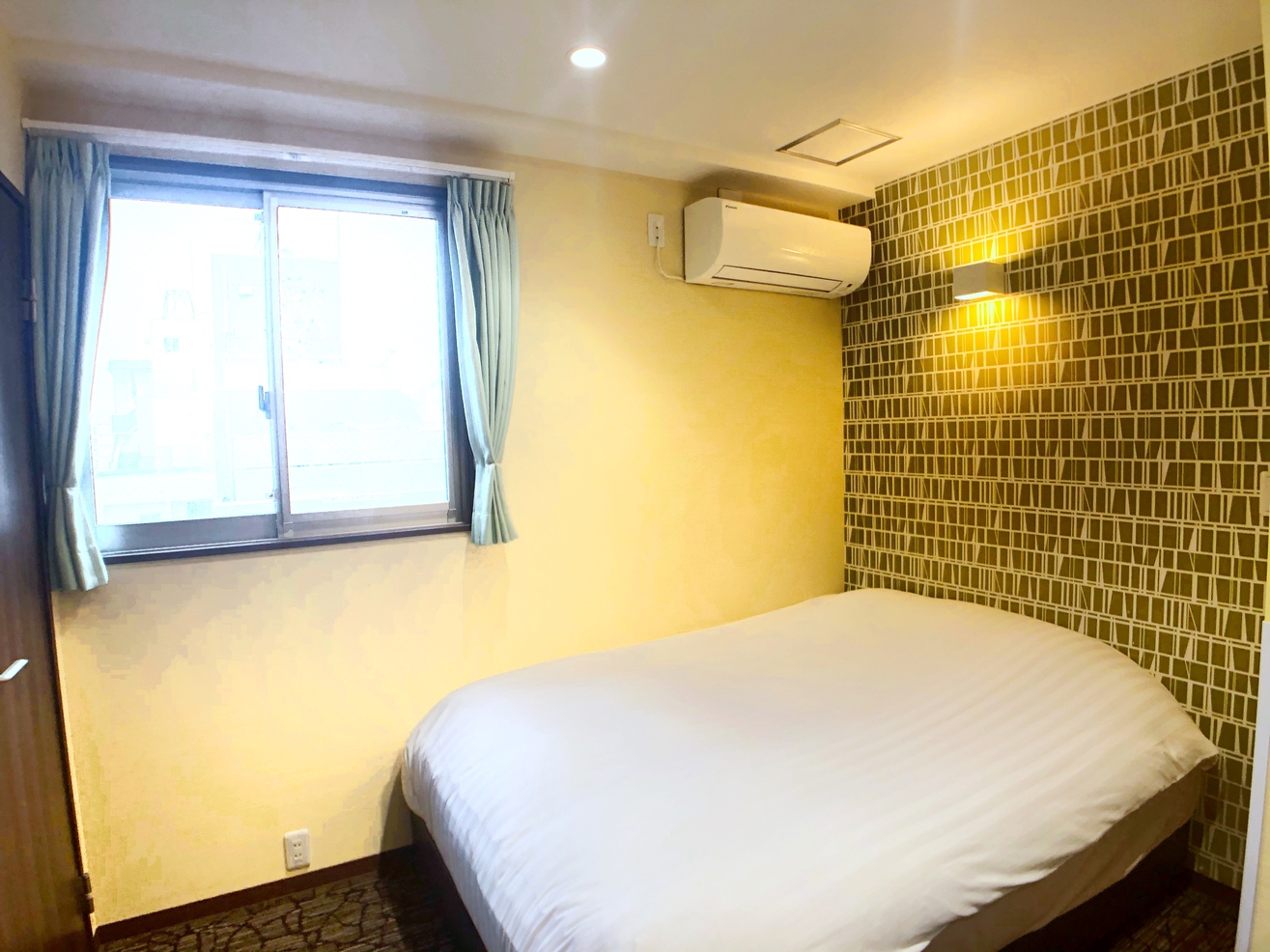
| Address | 2-20-4 Misuji, Taito-ku, Tokyo 111-0055 |
| Nearest station | Approx. 3 min walk from Exit A4, Shin-Okachimachi Station (Toei Oedo Line / Tsukuba Express) |
| Price for a one-week stay | From ¥24,500 |
| Price for a one-month stay | From ¥105,000 |
Located one station from Ueno, it is a good base for business travel too. In Tokyo and elsewhere, the cheaper options are often hostels — properties where you share the kitchen and certain other spaces — but at this hotel you can stay in a room with a semi-double bed for about ¥3,500 a night.
Do note, however, that there is no kitchen, so you cannot cook for yourself.
Find out more
Hotel Tourist Inn Ueno Okachimachi (official website)
[Tokyo] LYURO Tokyo Kiyosumi by THE SHARE HOTELS (LYURO 東京清澄)

| Address | 1-1-7 Kiyosumi, Koto-ku, Tokyo 135-0024 |
| Nearest station | 10 min walk from Exit A3, Kiyosumi-shirakawa Station (Hanzomon Line / Oedo Line); 10 min walk from Exit 4, Suitengumae Station (Hanzomon Line); 5 min walk from the “Kiyosumi 1-chome” Toei bus stop |
| Price for a one-week stay | From ¥9,996 |
| Price for a one-month stay | From ¥42,840 |
LYURO Tokyo Kiyosumi by THE SHARE HOTELS is a well-located riverside hotel within walking distance of Ueno and Asakusa. The Sumida River runs directly in front of it, and the hotel sits along its bank. Inside there is an open-air deck, and the rooms have view baths, so you can enjoy the Sumida River from a number of different angles. A grill restaurant and a brewery are attached as well — making this a hotel that keeps a long stay interesting while remaining accessibly priced.
Find out more
LYURO Tokyo Kiyosumi by THE SHARE HOTELS (official website)
[Osaka] Y’s Hotel Shin-Osaka (ワイズホテル新大阪)
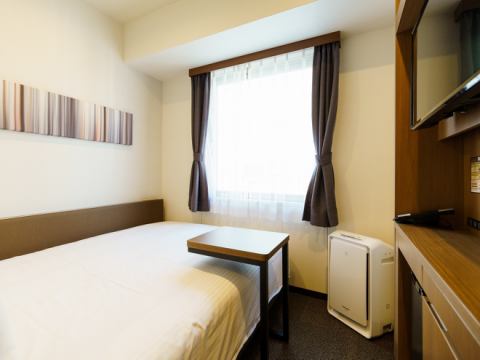
| Address | 7-12-2 Nishinakajima, Yodogawa-ku, Osaka-shi, Osaka 532-0011 |
| Nearest station | 7 min walk from JR Shin-Osaka Station; 5 min walk from Nishinakajima-Minamigata Station on the Midosuji Line |
| Price for a one-week stay | From ¥18,200 |
| Price for a one-month stay | From ¥78,000 |
A 7-minute walk from JR Shin-Osaka Station, this hotel works well as a base for both work and sightseeing. Amenities are generous, and although you get a roomy semi-double bed to relax on, the nightly rate works out at about ¥2,600 — right in the range that suits a long stay.
Find out more
Please check a hotel booking site for current rates and plans.
[Osaka] IMANO OSAKA SHINSAIBASHI HOSTEL

| Address | 1-13-28 Kitahorie, Nishi-ku, Osaka-shi, Osaka 550-0014 |
| Nearest station | Approx. 3 min walk from Yotsubashi Station (Yotsubashi Line / Nagahori Tsurumi-ryokuchi Line); 10 min walk from Shinsaibashi Station (Midosuji Line / Nagahori Tsurumi-ryokuchi Line) |
| Price for a one-week stay | From ¥9,800 |
| Price for a one-month stay | From ¥42,000 |
IMANO OSAKA SHINSAIBASHI HOSTEL is a stylish property on a narrow back street where you can choose between various types of dormitory room and private rooms. Private rooms have their own bathroom, while dormitory guests use shared showers, toilets and washbasins. There is a nightlife district nearby, so you can fit in some sightseeing between commitments — a hotel where you can pick the room that matches your own style of travel.
Find out more
IMANO OSAKA SHINSAIBASHI HOSTEL (official website)
[Okinawa] CABIN & HOTEL ReTIME (キャビン アンド ホテル リタイム)
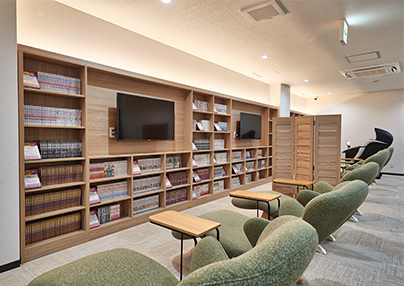
| Address | 14-10 Higashimachi, Naha-shi, Okinawa 900-0034 |
| Nearest station | Approx. 5 min walk from Asahibashi Station on the Yui Rail |
| Price for a one-week stay | From ¥15,400 |
| Price for a one-month stay | From ¥66,000 |
Okinawa too has hotels where a month of living can be kept under ¥100,000. This is a cabin-type property — closer in form to a capsule hotel than to a fully private room — but there is a desk and other fittings inside the partition, so it is fair to say you get a degree of private space. It comes in cheaper than a standard hotel, though it may not suit anyone who needs a properly enclosed private room to feel at ease.
Find out more
CABIN & HOTEL ReTIME (official website)
Summary

“Hotel living” — spending your days in the comfort of a hotel while receiving high-quality service — is drawing attention from remote workers and from people with a certain level of income. At a standard hotel the cost tends to run high, but at a hotel where a discount applies according to the length of your stay, you can achieve hotel living for something close to the rent on an ordinary apartment.
On 2026 measured OTA listed prices, staying 30 nights at a Tokyo business hotel on standard per-night terms costs about ¥554,900; combine long-stay plans with capsule- or hostel-type properties, however, and holding the month to around ¥100,000 is not out of reach. HotelBank also covers budget properties under ¥30,000 and the cost of a two-week stay in separate Japanese-language articles.
Frequently Asked Questions About a Month of Hotel Living
Q. How much does a month of hotel living cost?
A. On measured OTA listed prices (stays in September 2026, two guests per room, per room, tax included, monthly average), business hotels average ¥18,496 a night in Tokyo (N=949 properties) and ¥14,241 in Osaka (N=521 properties) — roughly ¥550,000 in Tokyo and ¥430,000 in Osaka for 30 nights. Single rooms for one guest tend to be cheaper than this, and by using long-stay plans or capsule- and hostel-type properties it is possible to bring the figure down to around ¥100,000 a month. On top of the room rate, budget for food (about ¥60,000 a month at ¥2,000 a day) and coin laundry.
Q. Are there tricks to making a month of hotel living as cheap as possible?
A. There are three. (1) Choose a long-stay plan or monthly contract that discounts according to the length of your stay. (2) Choose a lower-priced property type such as a capsule hotel or hostel — capsule hotels in Tokyo average ¥14,187 a night, about 23% below business hotels on the same basis. (3) Avoid the city centre and choose the suburbs or a regional city. HotelBank covers budget properties under ¥30,000 city by city in a separate Japanese-language article.
Q. Can I register my residence at a hotel while living there?
A. A hotel is treated as a temporary place of stay, so as a rule you cannot register your residence (juminhyo) there. Most hotels will accept mail on your behalf at the front desk, but you may run into difficulties accessing municipal services. If you plan to base your life in a hotel for more than a month, factor this in when you decide.
Related Reading
- Remote Work Hotel Living in Japan: 3 Options, ¥502,000 a Month
- Business Hotels for Long Stays: 6 Checks and ¥16,722 a Night in Tokyo
- Monthly Hotels in Japan: No Lease, 20% Off at 30 Nights (Aug 2026)
- Japan Hotel Long-Stay Discounts: 15% at 7 Nights, 20% at 30 Nights
- Is Hotel Living Cheaper Than Rent in Tokyo? Break-Even at 24 Nights
- 6 Downsides of Hotel Living in Japan: ¥502,000 per 30 Nights & Fixes
- How to Start Hotel Living in Japan: 5 Steps, ¥479,000 for 30 Nights
- One Week of Hotel Living in Tokyo: ¥88,200 for 7 Nights, Any Start Day
- Hotel Long-Stay Meals in Japan: 3 Patterns & ¥565–2,174 Breakfast Gap