


Kazeno Heritage Ltd. (風のヘリテージ株式会社) is an operating company of the Value Management Group that runs hotels and tourism-led town development built around the preservation and reuse of historic buildings. It was established on August 1, 2023 through a corporate split of Value Management Co., Ltd. (バリューマネジメント株式会社) and took its current name on February 14, 2026. In the same year the company launched the brand series “Kazeno Heritage,” opening Old Soma Residence Kazeno Heritage (旧相馬家 Kazeno Heritage) in Hakodate, Hokkaido on March 1 and Kazeno Kurayoshi (風の 倉吉) in Kurayoshi, Tottori on July 17. Drawing on the company’s official website, group announcements and an interview conducted by HotelBank, this article sets out the company profile, the structure of the brand, its properties and its business model.
• ADR (average daily rate) = an estimated settled rate (tax-excluded equivalent), calculated by applying a segment-specific adjustment factor to the lowest-plan price level each property publishes on OTAs (per room, two guests per room, tax included). Checked against the property-level results disclosed by listed hotel REITs (91 properties, most recent 3 months), the median error is about 7%. These are estimates and differ from each property's actual settled prices and accounting figures.
• Area-level ADR (prefecture or municipality) is the median of the estimated settled rates of the properties covered (the level of a typical property in the area).
• Where listed prices are mentioned, they are per-room prices for two guests per room (tax included).
• OCC (occupancy) = rooms sold as a share of total rooms in the area (an estimate based on OTA sales inventory).
• Source: MetroEngines Research (continuously tracks OTA published prices for approx. 168,000 properties in Japan, of which approx. 27,000 are confirmed to be operating)
- — Founded August 1, 2023; renamed February 14, 2026: a hotel operation and tourism town-development company created by a corporate split of Value Management Co., Ltd., led by representative Jun Tarikino.
- — Two categories: “Kazeno Heritage” (at Castle / at Villa), which offers exclusive use of castles and Important Cultural Property-class residences, and the distributed “Kazeno + place name” hotels, whose rooms are spread across a town.
- — Three properties launched in 2026: Old Soma Residence (Hakodate, 3 rooms, opened March 1), Kazeno Kurayoshi (2 buildings, 11 rooms, opened July 17) and Marugame Castle Enjukaku Annex (exclusive-use building, guests accepted from September 1).
- — Part of lodging revenue goes to conserving cultural properties: fire restrictions are handled by measures such as moving kitchens to separate buildings, under a stated goal of a “preservation and reuse model that does not depend on taxpayer money.”
- — Hakodate's estimated settled ADR was ¥8,790 in October 2026 (N=86): the typical level across the six cities and wards where the properties sit ranges from ¥5,356 (Kurayoshi) to ¥32,384 (Higashiyama Ward, Kyoto).
What Is Kazeno Heritage Ltd.? A Hotel and Town-Development Company Born from a 2023 Corporate Split
Start with how the company came about. The group's origin, Value Management, was founded on February 14, 2005 and, under the purpose of “weaving culture,” has operated banquet venues, hotels and restaurants in historic buildings. According to the company, it puts 115 historic buildings to use (as of February 12, 2026). The operating company responsible for hotel operation and tourism town development was newly created by a corporate split in August 2023, and on February 14, 2026, the group's 21st anniversary, it changed its name to Kazeno Heritage Ltd.
Banquet venues such as FUNATSURU KYOTO KAMOGAWA RESORT and Osaka Geihinkan in the Nishinomaru Garden of Osaka Castle, meanwhile, continue to be run by the splitting company, Value Management Co., Ltd. In other words, the two companies are described not as a vertical parent-subsidiary pair but as two companies within the same group dividing the work between lodging and town development on one side and weddings and banquets on the other. Jun Tarikino serves as representative of both. The name-change announcement calls the move a step into a “second founding period” and says the business is shifting its center of gravity from regenerating buildings to “passing culture on through translation and design.”
The table below summarizes the items listed in the company profile on the official website. Capital and headcount are not given on that page and are not covered here.
| Item | Details |
|---|---|
| Company name | Kazeno Heritage Ltd. |
| Former name | Value Management Co., Ltd. (same name as the splitting company until February 13, 2026) |
| Established | August 1, 2023 (established by a corporate split of Value Management Co., Ltd.) |
| Effective date of name change | February 14, 2026 |
| Head office | 6F–7F Urbannet Shijo Karasuma Building, 101 Kankoboko-cho, Shijo-dori Muromachi Higashi-iru, Shimogyo-ku, Kyoto |
| Osaka office | 17F Grand Front Osaka Tower A, 4-20 Ofuka-cho, Kita-ku, Osaka |
| Representative | Jun Tarikino |
| Purpose | Weaving culture |
| Main businesses | Preservation and reuse of historic buildings, hotel operation, tourism town development |
Source: Kazeno Heritage Ltd. official website, "About Kazeno Heritage"; Value Management Co., Ltd., "Notice of Name Change of the Operating Company for Hotel Operation" (February 12, 2026). Compiled by HotelBank Editorial Team (accessed November 11, 2026)
On management, a move to a CXO structure was announced together with the name change. At Kazeno Heritage Ltd., Yumi Ushiki is Chief Marketing Officer (CMO), Junichi Ikegami is Chief Regional Relations Officer (CRRO) and Ryosuke Matsuo is Chief Operating Officer (COO). According to the announcement, the structure puts both the guest experience and relationships of trust with local communities at the top of management priorities.
Two Categories: Exclusive-Use “Kazeno Heritage” and Town-Touring “Kazeno”
The brand series is divided into two categories according to the character of the building and the role of the stay. As the company explained in an interview with HotelBank, “Kazeno Heritage” is the category for staying with exclusive use of architecture or historic sites that symbolize their area, such as castles, shrines and temples, and residences of national Important Cultural Property class. The official website further splits this into “at Castle,” for staying in a castle, and “at Villa,” for staying in a historic residence.
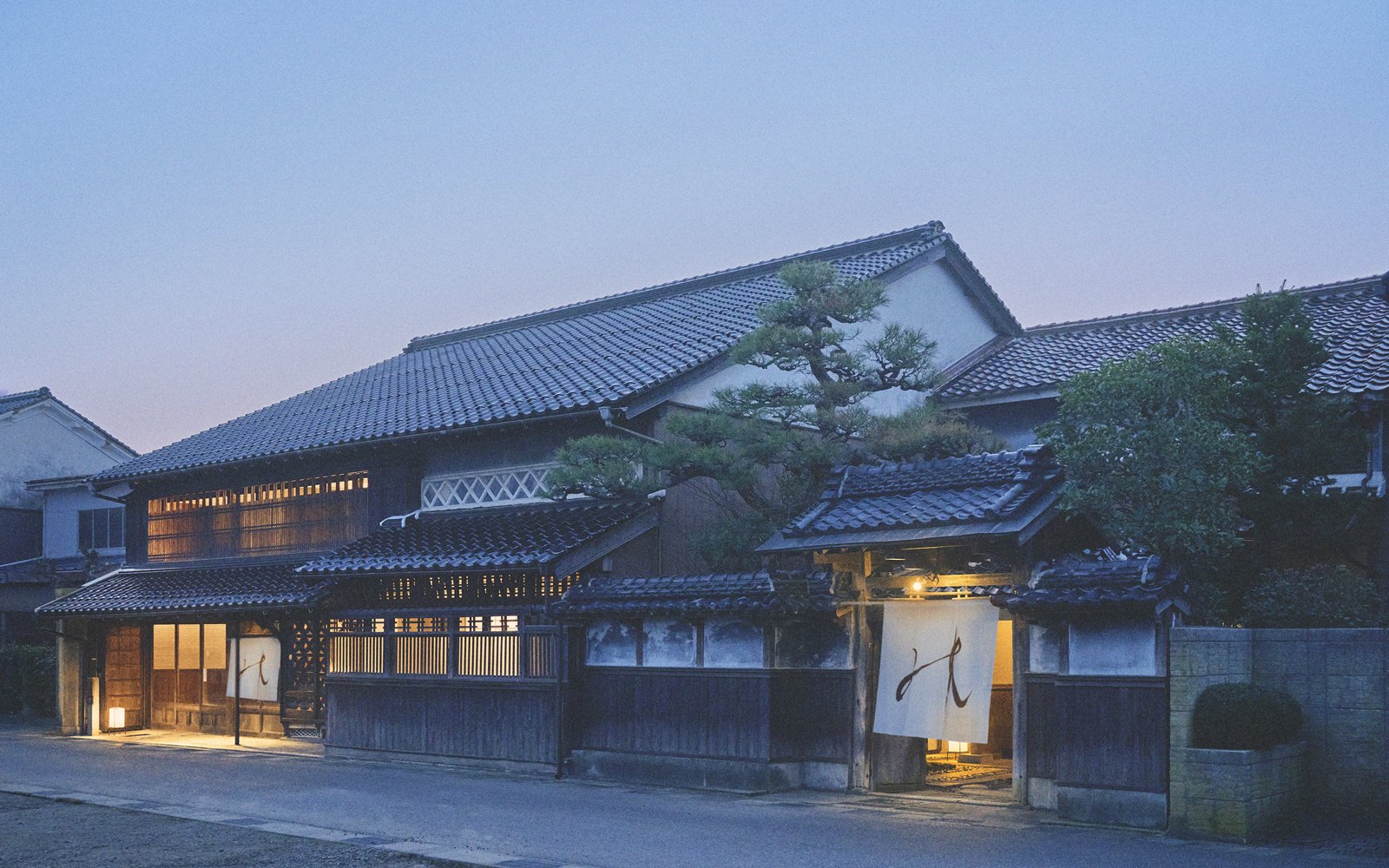
“Kazeno,” by contrast, is a distributed retreat hotel brand rolled out in the form “Kazeno + place name.” The front desk, rooms and dining are spread around the town, and the stay is designed around touring historic assets such as samurai residences, merchant houses and gardens while experiencing local traditions such as sake brewing and festivals. The difference is easiest to grasp this way: the former puts the immersion of occupying a building up front, while the latter makes moving around the whole town the value of the stay.
| Category | Buildings / areas covered | Role of the stay | Properties listed on the official website |
|---|---|---|---|
| Kazeno Heritage at Castle | Castles | "Castle stays" with exclusive use of the castle or surrounding facilities by one group | Ozu Castle (Ozu, Ehime), Marugame Castle (Marugame, Kagawa), Fukuyama Castle (Fukuyama, Hiroshima) |
| Kazeno Heritage at Villa | Residences and mansions of Important Cultural Property class | Stays in historic residences (all available for exclusive whole-building use) | Old Soma Residence (Hakodate, Hokkaido), Higashiyama Roji (Kyoto), Nene-no-Michi Bettei (Kyoto), Marugame Castle Enjukaku Annex (Marugame, Kagawa) |
| Kazeno | Areas with historic townscapes | Distributed retreat with front desk, rooms and dining spread across the town | Kazeno Kurayoshi (Kurayoshi, Tottori), Kazeno Naramachi (Nara), Kazeno Yame-Fukushima (Yame, Fukuoka) |
Source: Kazeno Heritage official website. Compiled by HotelBank Editorial Team (accessed November 11, 2026)
Properties: Old Soma Residence Opened March 1, Kazeno Kurayoshi July 17
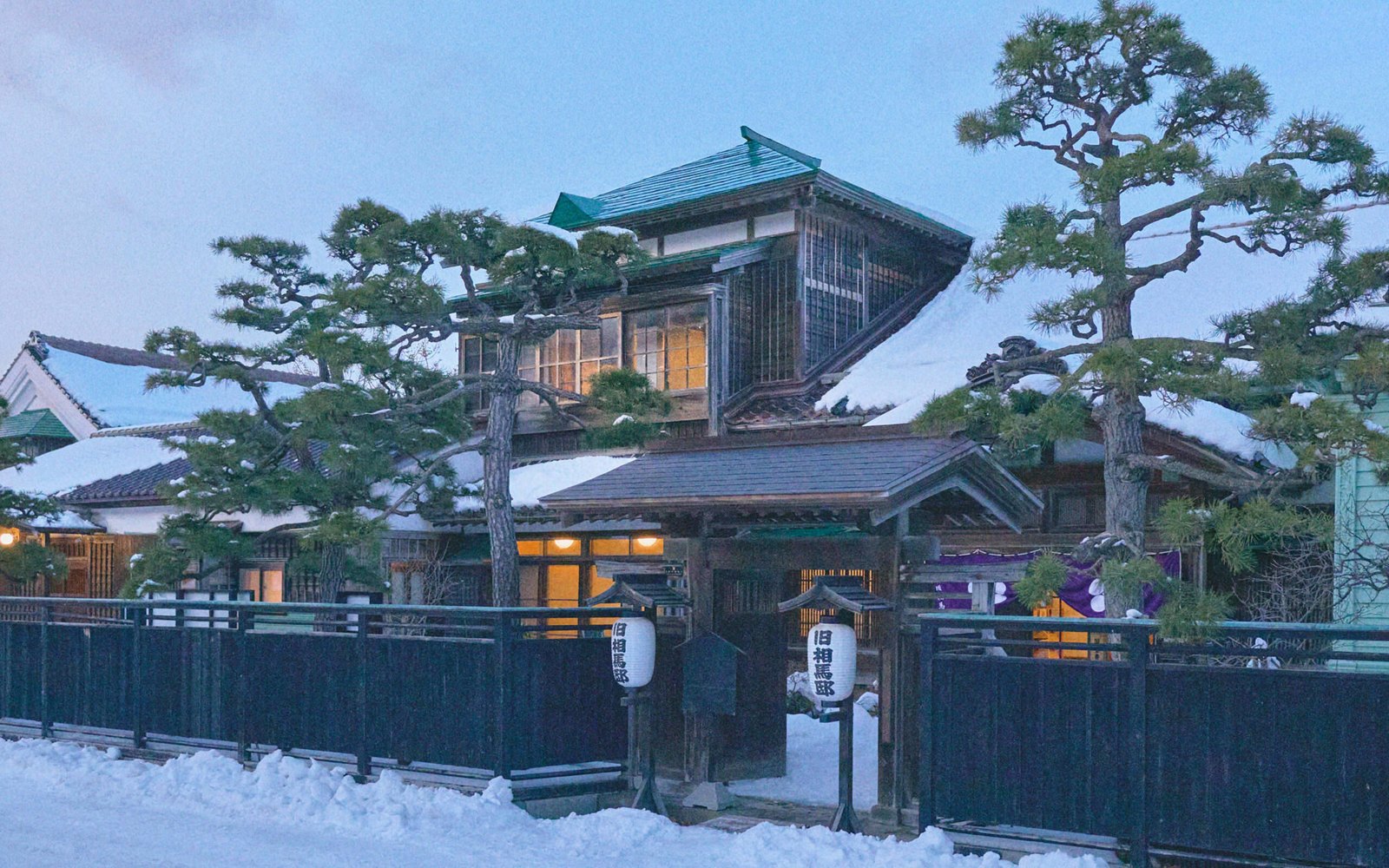
The first property of the new brand was Old Soma Residence Kazeno Heritage (33-2 Motomachi, Hakodate, Hokkaido), which opened on March 1, 2026. The setting is the Former Soma Family Residence, built in 1908 (Meiji 41) as the private home of the wealthy merchant Teppei Soma; its main house and storehouse were designated a national Important Cultural Property in 2018. According to the official website, one Important Cultural Property storehouse and the later-extended former private residence have been turned into three guest rooms of roughly 50 to 121 square meters, all of them suites. The inn takes a maximum of three groups a day, and from 8 to 10 a.m., before the building opens to the public, the main reception room is reserved as a lounge for overnight guests.
Kazeno Kurayoshi (1969 Kawaramachi, Kurayoshi, Tottori), described as “scheduled to open in 2026” at the time of the interview, held its grand opening on July 17, 2026. An opening reception was held on July 1 ahead of the launch, attended by the mayor of Kurayoshi and local stakeholders. The inn has 11 rooms in two buildings, preserving and reusing the Ogawa Residence, a Tottori Prefecture designated Protected Cultural Property, and the Former Takata Residence, a nationally Registered Tangible Cultural Property; it is the first property in the “Kazeno” category. Its Utsubuki-Tamagawa area is a national Important Preservation District for Groups of Traditional Buildings, and the Takata residence houses a dining room open to non-guests as well.
Other properties were announced after the interview. Marugame Castle Enjukaku Annex Kazeno Heritage in Marugame, Kagawa offers the Enjukaku Annex, which became a nationally Registered Tangible Cultural Property on July 9, 2026, for exclusive whole-building use by one group per day, and began accepting guests on September 1. The published price is ¥275,000 per night for two guests (tax included). In addition, NIPPONIA HOTEL Nara Naramachi was renamed Kazeno Naramachi on June 3, 2026, showing that existing properties are also being moved into the new categories.
| Property | Location | Building / townscape classification | Rooms | 2026 developments |
|---|---|---|---|---|
| Old Soma Residence Kazeno Heritage | Hakodate, Hokkaido | National Important Cultural Property (part) / Important Preservation District for Groups of Traditional Buildings | 3 rooms | Opened March 1 |
| Kazeno Kurayoshi | Kurayoshi, Tottori | Ogawa Residence (prefecture-designated Protected Cultural Property) and Takata Residence (nationally Registered Tangible Cultural Property, part) / Important Preservation District for Groups of Traditional Buildings | 11 rooms | Opened July 17 |
| Marugame Castle Enjukaku Annex Kazeno Heritage | Marugame, Kagawa | Nationally Registered Tangible Cultural Property (building) | Exclusive whole-building use (1–4 guests) | Began accepting guests September 1 |
| Kazeno Naramachi | Nara, Nara | Historic Landscape Maintenance and Improvement Plan area | 8 rooms | Renamed June 3 |
| Kazeno Yame-Fukushima | Yame, Fukuoka | Traditional buildings / Important Preservation District for Groups of Traditional Buildings | 7 rooms | — |
| Higashiyama Roji Kazeno Heritage | Kyoto, Kyoto | Important Preservation District for Groups of Traditional Buildings | 1 room | — |
Source: Kazeno Heritage official website property pages and notices. Compiled by HotelBank Editorial Team (accessed November 11, 2026). Classifications and room counts follow the official website
Beyond the properties carrying the brand name, the company operates other inns in historic buildings around Japan. Under “properties operated by Kazeno Heritage,” the company profile on the official website lists NIPPONIA HOTEL Hakodate Minatomachi, Sawara Merchant Town Hotel NIPPONIA, NIPPONIA Chichibu Monzenmachi, NIPPONIA HOTEL Ise Kawasaki Merchant Town, NIPPONIA HOTEL Iga Ueno Castle Town, NIPPONIA HOTEL Takehara Salt Town, NIPPONIA HOTEL Ozu Castle Town, Hotel Cultia Dazaifu, Ozu Castle Castle Stay, Fukuyama Castle Castle Stay and Marugame Castle Castle Experience, among others. In Hakodate, NIPPONIA HOTEL Hakodate Minatomachi is also run by the company in addition to Old Soma Residence, giving it two bases in the same city. Nene-no-Michi Bettei Kazeno Heritage and Hotel VMG Kyoto Kamogawa are listed on the same page as properties operated by Value Management Co., Ltd.
Changes in operating arrangements have also been announced. According to a notice dated November 9, 2026, Takeda Castle Town Hotel EN (Asago, Hyogo) will end operation by the company with the night of January 3, 2027, following the expiry of part of its lease period. For the same reason, Sasayama Castle Town Hotel NIPPONIA (Tambasasayama, Hyogo) will be operated by NIPPONIA Operations Co., Ltd. from January 4, 2027. Both are to be operated by the company as before until January 3, 2027.
Business Model: Part of Lodging Revenue Goes to Preserving and Repairing Cultural Properties
At the core of the company's model is a mechanism that cycles what guests pay for their stay back into maintaining cultural properties. In the interview, the company explained that it is building a system that allocates part of the revenue from stays and special experiences to the conservation, repair and protection of local tangible and intangible cultural properties. At Old Soma Residence Kazeno Heritage, it plans to offer a “stay certificate” recording that the guest helped with the building's restoration. The idea of positioning guests not as consumers but as “co-creators” in passing on culture is built into the stay experience in this way.
Its approach to the buildings themselves reflects the same policy. The company says it rejects so-called renovation in favor of restoration and preservation, keeping irreplaceable building materials wherever possible and making scratches on pillars and soot on walls part of the story of the stay. Because cultural properties come with strict constraints, starting with a ban on open flames, it reconciles protecting the building with making the stay pay through measures such as moving kitchen facilities elsewhere on the site (for example, to an annex). At Old Soma Residence, in fact, there is no in-house restaurant: breakfast is a basket delivered to the room, and dinner is handled by nearby company-run restaurants or arranged by the concierge.
Operations also require care specific to buildings that were never designed for overnight stays. Many of the company's buildings date from the mid-Edo period to before the early Showa era and have steps and steep staircases. The company says customer support explains maisonette layouts and level changes before the trip and proposes a different room on request. It also works with regional DMOs (destination management organizations) and local businesses to develop guest-only experiences, and the outcome it named as its goal was establishing a “preservation and reuse model for historic buildings that does not depend on taxpayer money.”
The institutional side of keeping cultural properties as inns is covered in detail in earlier HotelBank articles. For holding taxes and inheritance valuation, see our article on the tax treatment of registered cultural property inns; for the entry point to building confirmation, see our article on Building Standards Act exemption ordinances. The systems of Important Preservation Districts for Groups of Traditional Buildings and Registered Tangible Cultural Properties themselves are summarized by the Agency for Cultural Affairs, "Preservation Districts for Groups of Traditional Buildings" and Agency for Cultural Affairs, "Tangible Cultural Properties (Structures)".
Market Context: Hakodate ADR About ¥8,800 in October 2026; Small High-Value Inns Sit in a Different Price Band
Finally, consider the lodging market in Hakodate, home to the first property. According to MetroEngines Research data, Hakodate's estimated settled ADR was about ¥8,800 in October 2026 (N=86 properties), up 1.2% YoY from about ¥8,700 a year earlier (N=83 properties). Across the 2026 months, March was the low at about ¥6,400 and August the peak at about ¥11,000, a clear seasonal wave that runs high in summer and low from winter into early spring.
Hakodate estimated settled ADR (monthly, tax-excluded equivalent, median of properties covered, N=80–88 properties per month). Source: MetroEngines Research; compiled by HotelBank Editorial Team
The listed price (all-plan average, tax included) for the same October 2026, on the other hand, was about ¥20,000 (N=175 properties). That is a listing level covering every plan from room-only to meals-included, so both its definition and the properties it covers differ from the estimated settled ADR, which adjusts the lowest-plan level and expresses it on a tax-excluded basis. The two figures should therefore not be read as a gap to be explained but as two separate yardsticks.
Two indicators for Hakodate (January–October 2026). Estimated settled ADR = tax-excluded equivalent, N=82–88 properties; listed price = all-plan average, two guests per room, tax included, N=137–175 properties. Source: MetroEngines Research; compiled by HotelBank Editorial Team
| Indicator (Hakodate) | Oct 2026 | Oct 2025 | YoY |
|---|---|---|---|
| Estimated settled ADR (tax-excluded equivalent, median) | ¥8,790 (N=86) | ¥8,686 (N=83) | +1.2% |
| Listed price (all-plan average, tax included) | ¥20,021 (N=175) | ¥18,582 (N=139) | — (not compared; property counts differ) |
Source: MetroEngines Research; compiled by HotelBank Editorial Team (as of November 11, 2026)
The key point is that the city median shows the level of a typical Hakodate property. Old Soma Residence Kazeno Heritage, with three rooms, all suites, and at most three groups a day, differs from a typical property in both room count and stay design, and can be read as a product in a separate price band from the city median. That Marugame Castle Enjukaku Annex, in the same category, sells for ¥275,000 per night (two guests, tax included) also suggests the series is aimed at the high-value segment. Occupancy and revenue for the company's properties are not published, and this article does not estimate them.
Including locations beyond Hakodate, the market levels where the properties sit vary widely. Table 5 sets the October 2026 estimated settled ADR against the prior year for the six cities and wards that are home to the six properties in Table 3 (listed in Table 3 order).
| City / ward | Property located there | Oct 2026 | Oct 2025 | YoY |
|---|---|---|---|---|
| Hakodate, Hokkaido | Old Soma Residence Kazeno Heritage | ¥8,790 (N=86) | ¥8,686 (N=83) | +1.2% |
| Kurayoshi, Tottori | Kazeno Kurayoshi | ¥5,356 (N=15) | ¥5,158 (N=15) | +3.8% |
| Marugame, Kagawa | Marugame Castle Enjukaku Annex Kazeno Heritage | ¥6,604 (N=12) | ¥6,168 (N=11) | +7.1% |
| Nara, Nara | Kazeno Naramachi | ¥15,818 (N=60) | ¥15,890 (N=60) | −0.5% |
| Yame, Fukuoka | Kazeno Yame-Fukushima | ¥9,932 (N=8) | ¥9,695 (N=7) | +2.4% |
| Higashiyama Ward, Kyoto | Higashiyama Roji Kazeno Heritage | ¥32,384 (N=51) | ¥29,907 (N=45) | +8.3% |
Source: MetroEngines Research; compiled by HotelBank Editorial Team (as of November 12, 2026). Yame and Marugame are reference values because few properties are covered
The gap between the lowest, Kurayoshi (¥5,356), and the highest, Higashiyama Ward in Kyoto (¥32,384), is about sixfold, and YoY changes ranged from −0.5% in Nara to +8.3% in Higashiyama Ward. The company is placing properties with a common design, few rooms or exclusive whole-building use, into markets whose typical levels differ this much. All figures are medians for typical properties within each city or ward and do not indicate the prices or occupancy of the company's properties.
Summary: A “Second Founding Period” Shifting from Regenerating Buildings to Passing On Culture
To sum up, Kazeno Heritage Ltd. is the operating company responsible for hotel operation and tourism town development within the Value Management Group, and 2026 is the year its company name and brand were unified. With openings in succession, Old Soma Residence in March, Kazeno Kurayoshi in July and Marugame Castle Enjukaku Annex in September, together with the renaming of existing properties, the outline of the brand has rapidly taken shape.
For investors, local-government officers responsible for using cultural properties, and owners of historic buildings, the point to watch is how a model that cycles lodging revenue into preservation and repair will be run in highly constrained settings such as Important Cultural Properties and Important Preservation Districts for Groups of Traditional Buildings. As the hopes for stay-based tourism that the mayor of Kurayoshi voiced at the reception show, inns in cultural properties are also tied to local tourism strategies. HotelBank will continue to follow the company's property roll-out and its progress toward the “preservation and reuse model that does not depend on taxpayer money.”
Frequently Asked Questions
Q. What is Kazeno Heritage Ltd.?
A. A company whose businesses are the preservation and reuse of historic buildings, hotel operation and tourism town development. It was established on August 1, 2023 through a corporate split of Value Management Co., Ltd. and took its current name on February 14, 2026 (head office: Shimogyo-ku, Kyoto; representative: Jun Tarikino).
Q. Who is the parent company?
A. It is officially described as a Value Management Group company, an operating company newly created with Value Management Co., Ltd. (founded February 14, 2005) as the splitting company. Details of the capital relationship between the two are not given in the company profile on the official website.
Q. What is the difference between Kazeno Heritage and “Kazeno”?
A. “Kazeno Heritage” is the category for staying with exclusive use of castles, Important Cultural Property-class residences and the like, while “Kazeno” is a distributed retreat hotel brand rolled out as “Kazeno + place name,” with the front desk and rooms spread across a town.
Q. When did Old Soma Residence Kazeno Heritage open?
A. It opened on March 1, 2026. It is a three-room inn taking at most three groups a day, using the Former Soma Family Residence, a national Important Cultural Property in Motomachi, Hakodate, Hokkaido.
Q. Is Kazeno Kurayoshi open?
A. Yes. It held its grand opening on July 17, 2026, and has 11 rooms in two buildings, using the Ogawa Residence and the Former Takata Residence in Kurayoshi, Tottori.
Statements in this article about the company and its properties are based on information published by each company as of November 11, 2026 and on HotelBank's interview. Hakodate ADR figures are aggregates as of the same survey date, all for settled past months. Property offerings and prices may change, so please check the official websites before booking.
Related Articles
| Registered Cultural Property Inns: 30% Inheritance Cut, ¥2.27m/Room |
| 31 Municipalities, Article 3-3: Turning Historic Buildings into Hotels |
References and Sources
■ Data sources
Company and property information is based on the official websites and announcements of Kazeno Heritage Ltd. and Value Management Co., Ltd. (accessed November 11, 2026) and on HotelBank's interview article. Market data are monthly aggregates for Hakodate and the six cities and wards with properties from MetroEngines Research (continuously tracks OTA published prices for approx. 168,000 properties in Japan).
■ Assumptions
Estimated settled ADR = a tax-excluded-equivalent estimate applying a segment-specific factor to the lowest-plan level, taken as the median of properties covered in each city or ward. Listed price = two guests per room, all-plan average, tax included. Comparisons use the settled month of October 2026 and the same month a year earlier. No estimates of occupancy or revenue for the company's properties were made.
■ Limitations
City/ward medians reflect the level of typical properties and do not indicate the price level of the company's three-room or exclusive-use properties. Yame (N=8) and Marugame (N=12) cover few properties and are reference values. Property offerings, prices and operating arrangements may change (operation of the Takeda and Sasayama properties changes in January 2027).
Further Reading
- Nara Hotel to Be Important Cultural Property: Tax-Free, 4,520 Rooms
- Hokkaido Hotel Investment Map 2026: Kutchan ¥62K in Jan, Hakodate ¥10K
- The Royal Park Hotel Hakodate: ~200 Rooms in 2027, +4% on 1 km Stock
- Hakodate Station Land +10.3%, Goryokaku Flat: 226 Hotels, 11,449 Rooms
- Tottori's 3-Tier Hotel Market: Onsen ADR 2.16x the City Average