


Can a hotel garden be an asset that supports room rates while the site carries land that is never built on? HotelBank Editorial Team ran NLP analysis on guest reviews and extracted the top 100 properties ranked by the number of positive garden mentions (9,909 mentions over the latest 24 months). For the 97 properties whose listed prices could be compared, the median multiple against the level of their own city or ward was 1.85x; for the 8 properties in Tokyo’s 23 wards it was 2.28x. Hotel Chinzanso Tokyo (Hotel Chinzanso Tokyo) has a building footprint of about 26% of its site, keeps the remaining three-quarters or so as gardens and other outdoor space, and still holds listed prices more than six times the Bunkyo Ward level. This article maps where garden hotels are, compares rate multiples by location type, overlays the zoning and designated floor-area ratios of the central-Tokyo garden hotels, and examines from an investment perspective the value created by land that is not used for buildings.
• ADR (average daily rate) = an estimated settled rate (tax-exclusive equivalent), calculated by applying a category-specific adjustment factor to the lowest-plan level each property publishes on OTAs (per room, two adults, tax included). Checked against property-level results disclosed by listed hotel REITs (91 properties, latest 3 months), the median error is about 7%. These are estimates and differ from each property’s actual settled prices and accounting figures.
• ADR for an area (prefecture or municipality) is the median estimated settled rate of the properties covered (the level of a standard property in the area).
• References to listed prices mean the per-room rate for two adults sharing one room (tax included).
• OCC (occupancy) = rooms sold as a share of total rooms in the area (an estimate based on OTA sales inventory).
• Source: MetroEngines Research (continuously tracks OTA published prices for approximately 168,000 properties, of which about 27,000 have confirmed activity)
• Garden mentions: HotelBank Editorial Team ran NLP analysis on guest reviews and counted reviews containing positive mentions of the garden (latest 24 months as of November 2026; top 100 by mentions among properties with at least 20 reviews and at least 5 mentions). Mention rate = share of a property’s reviews that mention the garden.
• Listed-price multiple: each property’s monthly listed price (all-plan average, two adults per room, tax included) compared with the listed-price level of its city or ward in the same month. Covers the 97 properties with all 12 months from November 2025 to October 2026.
• Estimated settled ADR multiple: calculated the same way for the 87 properties where both the property and its city/ward have estimated settled ADR for all 12 months (only categories with established adjustment factors).
• Location type: four groups classified by the editorial team — Tokyo 23 wards / Kyoto City / other city hotels (business, city and deluxe) / onsen & resort (ryokan, resorts, etc.).
• Zoning and designated floor-area ratio: the zoning data of the MLIT Real Estate Information Library overlaid on each property’s representative point. A site may span more than one zoning district.
Source: HotelBank Editorial Team research (NLP analysis) / compiled by HotelBank Editorial Team from MetroEngines Research data
- — 1.85x — Of the top 100 properties whose gardens are discussed in guest reviews (9,909 mentions, latest 24 months), the 97 comparable ones have listed prices at a median 1.85x their local city/ward level; 1.72x on estimated settled ADR (N=87)
- — The gap is larger in cities — 2.28x for the 8 in Tokyo’s 23 wards and 2.53x for the 9 in Kyoto City; 1.76x for both the 14 regional city hotels and the 66 onsen/resort properties (November 2025–October 2026)
- — Top third by mention rate at 2.31x — A weak positive correlation (rank correlation 0.31). The rate gap also includes non-garden factors such as room size and F&B/wedding facilities, and does not show causation
- — 7 of 8 central-Tokyo properties in residential zones — 6 in Category 2 Residential Zones (designated floor-area ratio 300%) and 1 in a Category 1 Residential Zone; only Hotel Niwa Tokyo is in a Commercial Zone
- — About 74% of Chinzanso’s site is outdoor space — The building footprint is about 26% of the 49 thousand ㎡ site, and listed prices are 6.55x the Bunkyo Ward level. In a 100-room model, a 10% uplift equals about ¥49.6 million a year (assumption)
The 100 Garden Hotels Cluster in Yamanashi, Kanagawa, Kyoto and Tokyo
Start with the distribution. Counting the top 100 properties with the most positive garden mentions by prefecture gives Yamanashi 11, Kanagawa 10, Kyoto 9, Tokyo 8 and Shizuoka 8; these five prefectures account for 46, close to half. Yamanashi is driven by onsen ryokan in Isawa and Fujiyoshida, Kanagawa by long-established hotels and ryokan in Hakone, and Shizuoka by garden ryokan on the Izu Peninsula, so the belt from the foot of Mt. Fuji through Izu and Hakone forms a cluster of “stays with a garden view.”
By total mentions, however, Tokyo’s 8 properties alone account for 2,318, about 23% of the total and well ahead of Kanagawa (1,232) and Yamanashi (1,100). Large central-Tokyo hotels have a big review base to begin with, and their gardens tend to be described as the face of the hotel. By category, ryokan make up the majority at 60 properties, yet the top four by mentions are all central-Tokyo hotels: Hotel Chinzanso Tokyo (700), Grand Prince Hotel Takanawa (504), Grand Prince Hotel Shin Takanawa (396) and Hotel New Otani Tokyo (358). The median mention rate across the 100 properties is 8.9%, and at Hotel Chinzanso Tokyo 28.6% of reviews mention the garden.
Source: HotelBank Editorial Team research (NLP analysis of guest reviews, latest 24 months as of November 2026, N=100 properties, 9,909 mentions)
| Rank | Property | Location | Garden mentions | Mention rate |
|---|---|---|---|---|
| 1 | Hotel Chinzanso Tokyo | Bunkyo, Tokyo | 700 | 28.6% |
| 2 | Grand Prince Hotel Takanawa | Minato, Tokyo | 504 | 18.9% |
| 3 | Grand Prince Hotel Shin Takanawa | Minato, Tokyo | 396 | 10.4% |
| 4 | Hotel New Otani Tokyo | Chiyoda, Tokyo | 358 | 12.4% |
| 5 | Tenseien | Hakone, Kanagawa | 291 | 9.6% |
| 6 | Fujisan Onsen Hotel Kaneyamaen | Fujiyoshida, Yamanashi | 280 | 22.5% |
| 7 | Yoshiike Ryokan | Hakone, Kanagawa | 253 | 25.8% |
| 8 | Art Hotel Kokura New Tagawa | Kokurakita, Kitakyushu, Fukuoka | 240 | 24.9% |
| 9 | Oedo Onsen Monogatari Isawa Onsen Hotel Shinko | Fuefuki, Yamanashi | 181 | 15.4% |
| 10 | Hotel de Yama | Hakone, Kanagawa | 172 | 14.2% |
| 11 | The Hotel Sanraku Kanazawa | Kanazawa, Ishikawa | 156 | 6.0% |
| 12 | Yunosuke no Yado Chorakuen | Matsue, Shimane | 140 | 22.4% |
| 13 | Shikisai Ichiriki | Koriyama, Fukushima | 136 | 21.0% |
| 14 | Hotel Indigo Inuyama Urakuen Garden | Inuyama, Aichi | 134 | 8.2% |
| 15 | Yunogo Bishunkaku | Mimasaka, Okayama | 133 | 6.8% |
Source: HotelBank Editorial Team research (NLP analysis of guest reviews, latest 24 months as of November 2026, N=100 properties, 9,909 mentions)
The content of the reviews shows that guests value not just the beauty of the garden itself but “time spent with the garden.” Typical comments include “the garden-view outlook was the best” and “a leisurely stroll through the garden” at Hotel Chinzanso Tokyo, “I understood why you stay in a garden-view room” and “stepping into the garden lets you catch your breath” at Grand Prince Hotel Takanawa, and “there is a Japanese garden, and I fully enjoyed the hotel stay” at Hotel New Otani Tokyo (guest reviews compiled by HotelBank Editorial Team, latest 24 months as of November 2026, 1,562 garden mentions across the three properties). The garden is tied to premium room products such as garden-view rooms through views, walks and evening illumination, and this is where it connects with room rates.
Listed Prices at 1.85x the Local Level — Tokyo 23 Wards 2.28x, Kyoto City 2.53x
So where do the rates of garden hotels sit relative to their surroundings? Comparing each property’s listed price (all-plan average, two adults per room, tax included) with the listed-price level of its city or ward in the same month for the 12 months from November 2025 to October 2026, the median multiple across the 97 comparable properties was 1.85x. Of the 97, 89 were above their local level and 43 were at 2x or more. Using estimated settled ADR, limited to categories with established adjustment factors (87 properties), the median was 1.72x. On either measure, garden hotels sit one price tier above the standard properties in their area.
Splitting by location type makes the gap clearer. The median listed-price multiple is 2.28x for the 8 properties in Tokyo’s 23 wards and 2.53x for the 9 in Kyoto City, so urban garden hotels show the largest rate gap with their surroundings. City hotels in other cities (14) and onsen/resort properties (66) were both at 1.76x. In cities, many surrounding properties are business hotels and other formats without gardens, whereas in onsen towns the neighboring ryokan often have gardens or views of their own. The degree to which a garden works as a differentiator appears to depend on location.
Source: compiled by HotelBank Editorial Team from MetroEngines Research data (November 2025–October 2026; listed-price multiple N=97 properties, estimated settled ADR multiple N=87 properties)
| Location type | Properties | Mentions | Median rooms | Median mention rate | Listed-price multiple (N) | Est. settled ADR multiple (N) |
|---|---|---|---|---|---|---|
| Tokyo 23 wards | 8 | 2,318 | 332 | 11.5% | 2.28x (8) | 2.18x (5) |
| Kyoto City | 9 | 616 | 123 | 10.0% | 2.53x (9) | 1.64x (4) |
| Other city hotels | 14 | 1,263 | 141 | 4.8% | 1.76x (14) | 1.89x (13) |
| Onsen & resort | 69 | 5,712 | 69 | 9.4% | 1.76x (66) | 1.54x (65) |
Room counts from MetroEngines Research property data. Source: compiled by HotelBank Editorial Team from MetroEngines Research data
Note that only 4 properties in Kyoto City can be compared on estimated settled ADR. Many of Kyoto’s garden hotels fall into the deluxe category, which is outside the adjustment-factor coverage for estimated settled ADR, so the comparison there relies mainly on listed prices.
Top Third by Mention Rate at 2.31x — The More the Garden Is Discussed, the Wider the Rate Gap
We also checked how “how much the garden is talked about” relates to the rate gap. Splitting the 97 comparable properties into thirds by mention rate, the top third (11.9%–35.3%, 33 properties) had a median listed-price multiple of 2.31x, above the middle third (6.3%–11.3%, 32 properties) at 1.61x and the bottom third (0.6%–6.3%, 32 properties) at 1.80x. The rank correlation coefficient is 0.31, a weak positive correlation: properties where the garden is the star of the reviews tend to show a larger rate gap with their surroundings.
This does not, however, demonstrate causation. Properties with gardens tend to have larger rooms and deeper dining, banquet and wedding facilities, so the rate gap also reflects factors other than the garden. In other words, it is more natural to read the garden not as generating rate on its own, but as the “stage for the stay” that ties together rooms, F&B and weddings and lifts the price tier of the whole product.
Source: HotelBank Editorial Team research (NLP analysis) / compiled by HotelBank Editorial Team from MetroEngines Research data (N=97 properties; vertical axis is the multiple of the local city/ward listed-price level)
Map of the 100 Garden Hotels
●Tokyo 23 wards ●Kyoto City ●Other city hotels ●Onsen & resort (circle size = garden mentions)
Source: HotelBank Editorial Team research (NLP analysis, N=100 properties), MetroEngines Research
8 Central-Tokyo Garden Hotels — 7 Stand in Residential Zones
From here we narrow to central-Tokyo garden hotels and overlay the regulatory side of their locations. Querying the zoning at each property’s representative point for the 8 properties in Tokyo’s 23 wards in the MLIT Real Estate Information Library, six properties — Hotel Chinzanso Tokyo, Grand Prince Hotel Takanawa and Shin Takanawa, The Prince Sakura Tower Tokyo, Hotel New Otani Tokyo and Sheraton Miyako Hotel Tokyo — are in Category 2 Residential Zones (designated floor-area ratio 300%, building coverage ratio 60%), and RIHGA Royal Hotel Tokyo is in a Category 1 Residential Zone (400% / 60%). Only one, Hotel Niwa Tokyo, stands in a Commercial Zone (500%).
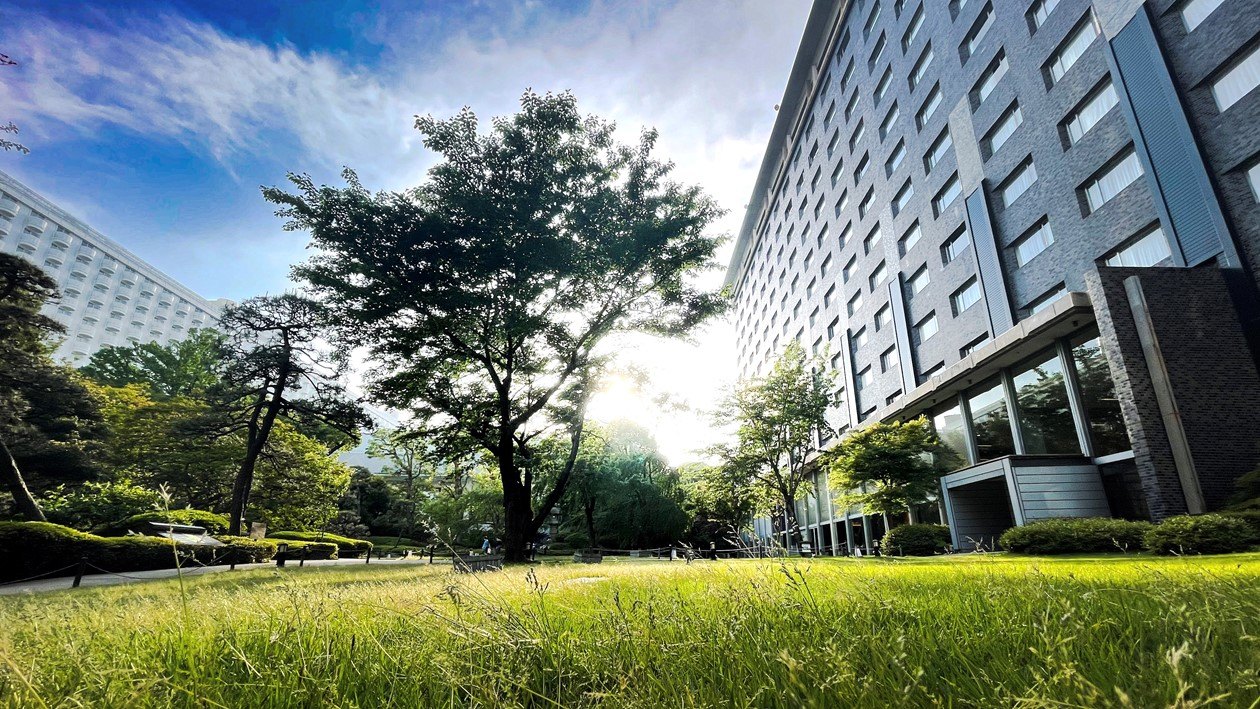
The result reflects the fact that many of central Tokyo’s large garden hotels sit on former daimyo estates or mansion sites surrounded by residential zoning. Their origins differ from tower hotels on commercial land with high permitted floor-area ratios: the size of the site and its greenery are themselves the locational value. From an investment perspective, securing a site of the same scale in central Tokyo today is difficult in itself, so land like this can be positioned as a “hard-to-replicate asset.”
| Property | Ward | Zoning (representative point) | Designated FAR / coverage ratio | Garden mentions | Listed-price multiple | Ward est. settled ADR (N) |
|---|---|---|---|---|---|---|
| Hotel Chinzanso Tokyo | Bunkyo | Category 2 Residential Zone | 300% / 60% | 700 | 6.55x | ¥13,972 (17–18) |
| Grand Prince Hotel Takanawa | Minato | Category 2 Residential Zone | 300% / 60% | 504 | 1.73x | ¥17,807 (121–133) |
| Grand Prince Hotel Shin Takanawa | Minato | Category 2 Residential Zone | 300% / 60% | 396 | 1.99x | ¥17,807 (121–133) |
| Hotel New Otani Tokyo | Chiyoda | Category 2 Residential Zone | 300% / 60% | 358 | 3.28x | ¥16,353 (78–81) |
| Hotel Niwa Tokyo | Chiyoda | Commercial Zone | 500% / 80% | 121 | 1.98x | ¥16,353 (78–81) |
| The Prince Sakura Tower Tokyo | Minato | Category 2 Residential Zone | 300% / 60% | 121 | 3.88x | ¥17,807 (121–133) |
| Sheraton Miyako Hotel Tokyo | Minato | Category 2 Residential Zone | 300% / 60% | 66 | 2.57x | ¥17,807 (121–133) |
| RIHGA Royal Hotel Tokyo | Shinjuku | Category 1 Residential Zone | 400% / 60% | 52 | 1.85x | ¥16,238 (84–102) |
Zoning from the MLIT Real Estate Information Library; listed-price multiples and estimated settled ADR compiled by HotelBank Editorial Team from MetroEngines Research data (monthly averages, November 2025–October 2026; N is the range of monthly property counts)
Source: compiled by HotelBank Editorial Team from MetroEngines Research data (12-month average of listed prices, all-plan average, two adults per room, tax included, November 2025–October 2026)
All 8 properties have listed prices above their ward level. Grand Prince Hotel Takanawa, Grand Prince Hotel Shin Takanawa and The Prince Sakura Tower Tokyo share a Japanese garden of about 20,000㎡ surrounded by the three hotels (Prince Hotels official website), and together they account for 1,021 garden mentions. That three hotels at different price points share one garden and each holds listed prices of 1.73x to 3.88x the ward level is an interesting design for allocating a garden asset across several customer segments. Hotel New Otani Tokyo features on its official website a Japanese garden of about 10,000 tsubo (roughly 33,000㎡) bordered by the outer moat of Edo Castle, and sits at 3.28x the Chiyoda Ward level.
Hotel Chinzanso Tokyo — About Three-Quarters of the Site Kept as Gardens and Outdoor Space
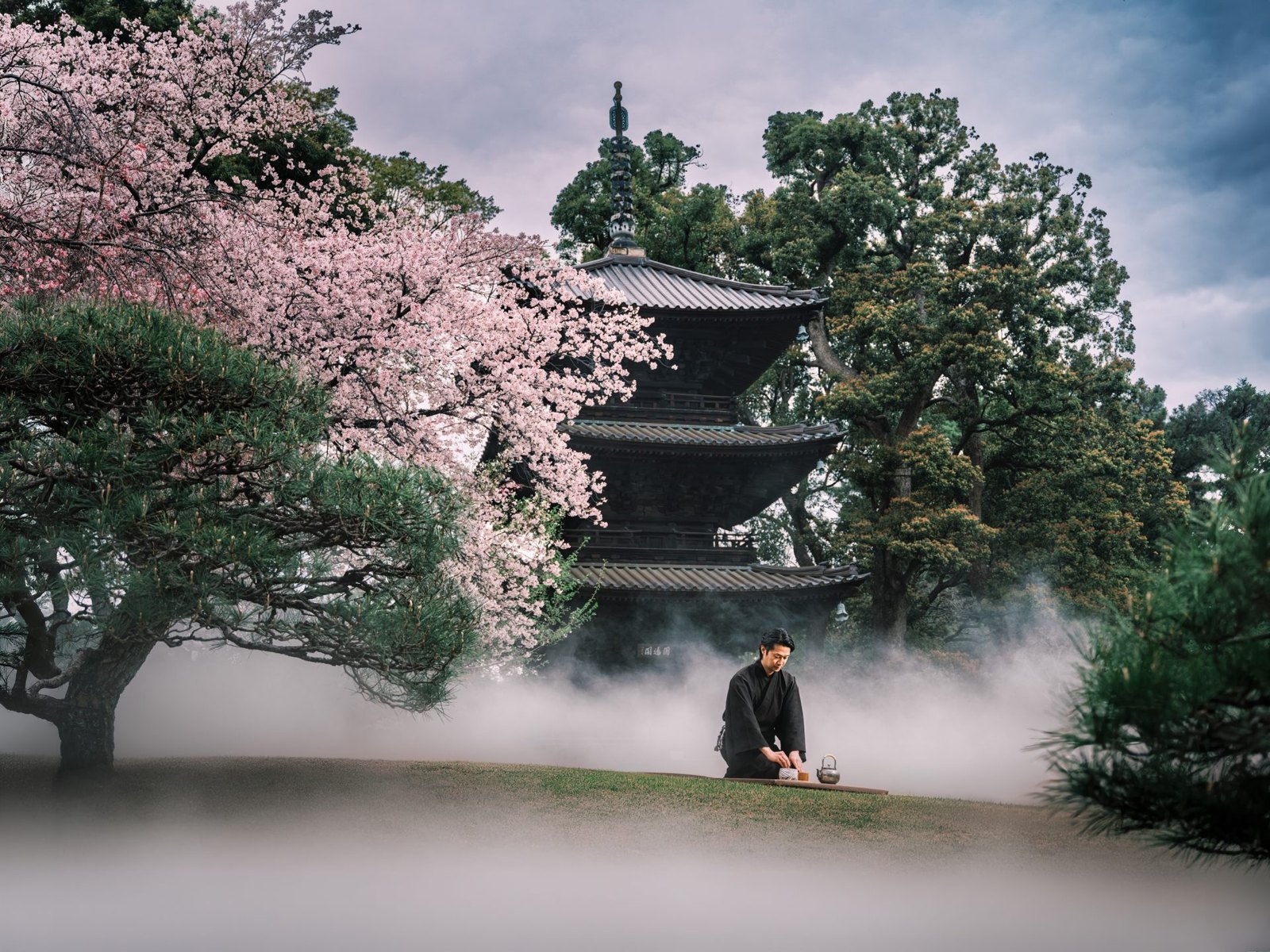
Hotel Chinzanso Tokyo is the property whose site and building scale could be confirmed in primary sources. Fujita Kanko’s annual securities report (fiscal year ended December 2025) discloses the hotel’s land area as 49 thousand ㎡, and the hotel’s official fact sheet gives a building area of 12,558㎡ and a total floor area of 84,867㎡. On these figures, the building footprint is about 26% of the site and the remaining roughly 74% is outdoor space centered on a stroll-style landscape garden. Total floor area is about 1.7 times the site area.
| Item | Value | Source |
|---|---|---|
| Land area | 49 thousand ㎡ | Fujita Kanko annual securities report (FY ended Dec. 2025) |
| Building area | 12,558㎡ | Hotel Chinzanso Tokyo fact sheet |
| Total floor area | 84,867㎡ | Same as above |
| Total rooms | 265 rooms | Same as above |
| Building area ÷ land area | About 26% | Editorial calculation |
| Total floor area ÷ land area | About 1.7x | Editorial calculation |
| Zoning (representative point) | Category 2 Residential Zone, designated FAR 300% / coverage 60% | MLIT Real Estate Information Library |
| Nearest official land price point (about 200m) | Bunkyo-4: ¥1.19 million/㎡ (+12.3% YoY) | MLIT Official Land Price Publication (2026) |
| Garden mentions | 700 (28.6% of reviews) | HotelBank Editorial Team research |
| Listed-price multiple | 6.55x the Bunkyo Ward level | MetroEngines Research |
Land area is disclosed in thousands of ㎡, so ratios are approximate
The hotel’s history shows a consistent use of the site. According to the fact sheet, Yamagata Aritomo acquired the land in 1878 and built the garden and his main residence; in 1918 Baron Fujita Heitaro, second head of the Fujita-gumi, took it over, carrying on Yamagata’s wish to “preserve the garden, renowned as a masterpiece, just as it is.” After most of the residence and trees were lost in the war, the site passed in 1948 to the predecessor of Fujita Kanko, which transplanted more than ten thousand trees and opened in 1952. Maintaining the garden was the starting point of the business itself, and beyond accommodation the garden has remained the stage for weddings and banquets, with 38 banquet rooms and 5 wedding venues.
From an investment perspective, the key point is that the garden supports not only room rates but also non-room revenue. Garden-view rooms, restaurants overlooking the garden, and garden weddings and photo shoots all sell the same garden as different products. Land not used for buildings can be framed as a “shared stage” that distributes value simultaneously to several revenue streams — rooms, F&B and weddings (for the seasonality of weddings and banquets, see our article Weddings ¥229.3bn, ¥3.63M per Event).
Garden Hotels in Kyoto and Yokohama — Residential Zones and High Rate Multiples
We ran the same queries for Kyoto City and Yokohama. In Kyoto, the garden hotels of Higashiyama and Okazaki stand in residential zones and hold listed prices well above their ward level. Four Seasons Hotel Kyoto is in a Category 1 Medium-to-High-Rise Exclusive Residential Zone (designated floor-area ratio 200%) at 7.34x the Higashiyama Ward level, while The Westin Miyako Kyoto and Hotel Okura Kyoto Okazaki Bettei are in Category 2 Residential Zones (300%) at 3.36x and 3.68x respectively. Because landscape regulations also apply in Kyoto City, properties composed of gardens and low-rise buildings are hard to replace with new supply, and that scarcity is readily reflected in rates.
| Property | Location | Zoning (representative point) | Designated FAR / coverage ratio | Garden mentions | Listed-price multiple |
|---|---|---|---|---|---|
| Four Seasons Hotel Kyoto | Higashiyama, Kyoto | Category 1 Medium-to-High-Rise Exclusive Residential Zone | 200% / 60% | 100 | 7.34x |
| The Westin Miyako Kyoto | Higashiyama, Kyoto | Category 2 Residential Zone | 300% / 60% | 93 | 3.36x |
| Hotel Okura Kyoto Okazaki Bettei | Sakyo, Kyoto | Category 2 Residential Zone | 300% / 60% | 50 | 3.68x |
| Hotel New Grand | Naka, Yokohama | Commercial Zone | 600% / 80% | 104 | 2.50x |
Zoning from the MLIT Real Estate Information Library; listed-price multiples compiled by HotelBank Editorial Team from MetroEngines Research data
Hotel New Grand in Yokohama stands in a Commercial Zone (designated floor-area ratio 600%) and its garden is discussed in the context of its location facing Yamashita Park. Its mention rate is 2.5%, yet it holds listed prices at 2.50x its ward level. It is an example showing that, apart from the large gardens in residential zones, outdoor space and views can be turned into a product even on a limited commercial site.
Translating the Garden Premium into Annual Revenue — A 100-Room Model
Finally, we translate the rate uplift from a garden into annual room revenue. As noted above, the rate gap includes factors other than the garden, so here the uplift rate is treated as an assumption and given a range. The assumptions are 100 rooms, 80% annual occupancy (29,200 room-nights sold per year) and a base ADR of ¥17,000 (an assumed value referencing Minato Ward’s monthly average estimated settled ADR of ¥17,800).
| Garden uplift rate (assumed) | ADR after uplift | Uplift per room-night | Annual room revenue uplift |
|---|---|---|---|
| +5% | ¥17,850 | ¥850 | About ¥24.8M |
| +10% | ¥18,700 | ¥1,700 | About ¥49.6M |
| +20% | ¥20,400 | ¥3,400 | About ¥99.3M |
| +30% | ¥22,100 | ¥5,100 | About ¥148.9M |
Editorial estimate based on assumptions of 100 rooms, 80% occupancy and a base ADR of ¥17,000 (differs from actual revenue)
Changing the occupancy assumption moves the uplift as well. A two-way sensitivity on uplift rate and annual occupancy ranges from about ¥21.7 million at 70% occupancy and a 5% uplift to about ¥167.5 million at 90% occupancy and a 30% uplift.
| Annual occupancy \ uplift rate | +5% | +10% | +20% | +30% |
|---|---|---|---|---|
| 70% annual occupancy | About 21.7 | About 43.4 | About 86.9 | About 130.3 |
| 80% annual occupancy (Table 6 assumption) | About 24.8 | About 49.6 | About 99.3 | About 148.9 |
| 90% annual occupancy | About 27.9 | About 55.8 | About 111.7 | About 167.5 |
Editorial estimate based on assumptions of 100 rooms and a base ADR of ¥17,000 (differs from actual revenue)
A 10% uplift equals about ¥49.6 million of annual room revenue, and 20% about ¥99.3 million. Maintaining a garden involves landscaping labor and planting renewal costs, but if those costs can be covered within an uplift of ¥1,700–¥3,400 per occupied room-night, the garden becomes an asset that pays for its own upkeep through rate. Including wedding and F&B revenue, the value created by land not used for buildings can be estimated as larger than the room-rate uplift alone. When considering how to treat a garden in renovation or redevelopment discussions, it is useful to evaluate it as a revenue engine that works across rooms, F&B and weddings.
Conclusion
To summarize: the listed prices of the top 100 properties whose gardens are discussed in guest reviews exceeded their local city/ward level by a median 1.85x, with larger gaps in cities — 2.28x in Tokyo’s 23 wards and 2.53x in Kyoto City. The top third by mention rate showed a 2.31x multiple, suggesting the rate gap widens as the garden becomes the star of the reviews. Seven of the 8 central-Tokyo garden hotels stand in residential zones, and Hotel Chinzanso Tokyo keeps about three-quarters of its site as gardens and other outdoor space while holding listed prices more than six times its ward level.
For owners and asset managers of urban hotels, the implication is to treat the garden as a shared stage that ties together rooms, F&B and weddings, and to manage its upkeep cost and rate uplift on the same yardstick. Pricing design for garden-view rooms and expanding non-room products that use the garden are opportunities to grow further the rates that garden maintenance protects. Read together with our consumer-facing Japan’s Top 30 Garden Hotels for Autumn Foliage, the garden comes into view both as a “reason to be chosen” and a “reason for the rate.” The supply structure of central Tokyo’s high-rate tier is also covered in JW Marriott Tokyo: 4 Hotels Over ¥100K Within 1km.
MetroEngines Research tracks approximately 168,000 properties, of which about 27,000 properties (about 1.26 million rooms) with confirmed activity on OTAs are covered by its analysis.
Related Articles
- Japan’s Top 30 Garden Hotels for Autumn Foliage — Review Analysis
- JW Marriott Tokyo: 4 Hotels Over ¥100K Within 1km, Minato ADR +14.4%
- Weddings ¥229.3bn, ¥3.63M/Event: 61% of Non-Room Revenue in 6 Months
- Hotel Lunch Revenue in Japan: 102 Properties, 93x Category Gap
- Made-to-Order Breakfast: Top 100 Hotels by Reviews, 6,507 Mentions
References and Sources
■ Data Sources
Listed prices and estimated settled ADR are MetroEngines Research monthly data by property and by municipality (November 2025–October 2026). Garden mentions are from HotelBank Editorial Team’s NLP analysis of guest reviews (latest 24 months as of November 2026, N=100 properties, 9,909 mentions). Zoning and official land prices are from the MLIT Real Estate Information Library; the site and building of Hotel Chinzanso Tokyo are from Fujita Kanko’s annual securities report (FY ended December 2025) and the hotel’s fact sheet.
■ Assumptions
The listed-price multiple compares each property’s monthly listed price (all-plan average, two adults per room, tax included) with its city/ward level in the same month, covering the 97 properties with all 12 months (87 for the estimated settled ADR multiple). The 100-room model is an editorial estimate assuming 100 rooms, annual occupancy of 70–90% (base case 80%), a base ADR of ¥17,000 and a garden uplift of 5–30%; it excludes garden upkeep costs, taxes and wedding/F&B revenue.
■ Limitations
Review mention counts and rates reflect how often guests mention the garden, not the garden’s size or quality. Rate multiples also include non-garden factors such as room size and dining, banquet and wedding facilities, and do not indicate causation. Zoning was queried at a single representative point per property, and a site may span more than one zoning district. Estimated settled ADR is an estimate and excludes categories outside the adjustment-factor coverage (Kyoto City N=4).
■ Market Data
- MetroEngines Research & Consulting — Listed prices and estimated settled ADR (by property and municipality, November 2025–October 2026)
- HotelBank Editorial Team research — NLP analysis of guest reviews (positive garden mentions, N=100 properties, 9,909 mentions, latest 24 months as of November 2026)
■ Government Statistics and Public Data
■ Corporate Disclosures and Official Information