


According to the event outline published by the Japan Basketball Association (JBA), the “SoftBank Winter Cup 2026” — Japan’s national high school basketball championship held each winter — will run for seven days from Wednesday, December 23 to Tuesday, December 29, 2026, at two venues: Tokyo Metropolitan Gymnasium (東京体育館) and Keio Arena TOKYO (京王アリーナTOKYO). A total of 120 teams will compete, 60 boys’ and 60 girls’. MetroEngines Research data show a wide gap in the room stock around the two venues: 126 properties with 21,773 rooms within a 2,000m radius of Tokyo Metropolitan Gymnasium, versus 11 properties with 683 rooms within a 3,000m radius of Keio Arena TOKYO — a difference of roughly 32x by room count. This article examines, in turn, the shape of the lodging demand created by a knockout format, the room stock around both venues, rate levels in December last year, and booking pace for the night of December 23.
• ADR (Average Daily Rate) = estimated settled rate (tax-excluded equivalent), calculated by applying segment-specific adjustment factors to the lowest-plan price each property publishes on OTAs (per room, double occupancy, tax-included). Benchmarked against property-level results disclosed by listed hotel REITs (91 properties, most recent 3 months), the median error is approximately 7%. These are estimates and differ from each property’s actual settled prices and accounting figures.
• Area-level ADR (prefecture / city / ward) is the median of the estimated settled rates of the properties covered (the level of a typical property in the area).
• References to listed prices are per-room rates for double occupancy (tax-included).
• OCC (occupancy rate) = share of rooms sold relative to the total rooms in the area (estimate based on OTA sales inventory).
• Source: MetroEngines Research (continuous tracking of OTA public rates for approximately 168,000 properties in Japan, of which approximately 27,000 are confirmed active)
The room stock in this article covers lodging facilities with 10 or more rooms (excluding leisure/love hotels) within a 2,000m radius of Tokyo Metropolitan Gymnasium. “Active” refers to properties with selling prices confirmed on major booking sites in the most recent 3 months (September–November 2026) (as of November 21, 2026; compiled by MetroEngines Research).
The room stock in this article covers lodging facilities with 10 or more rooms (excluding leisure/love hotels) within a 3,000m radius of Keio Arena TOKYO. “Active” refers to properties with selling prices confirmed on major booking sites in the most recent 3 months (September–November 2026) (as of November 21, 2026; compiled by MetroEngines Research).
Booking curve = the trend in OTA remaining rooms leading up to the check-in date. Lead Time (LT) = days until check-in. Occupancy in this article (OTA listed-inventory basis, estimated) is an estimate based on the depletion of inventory sold on OTAs and differs from a property’s actual overall occupancy.
- — 21,773 rooms within 2km of Tokyo Metropolitan Gymnasium / 683 rooms within 3km of Keio Arena TOKYO: room stock around the two venues differs by about 32x, so team lodging for the Chofu venue spreads out toward Shinjuku and the Tama area.
- — 960–1,440 rooms needed at the start of the tournament (estimate): assuming 8–12 rooms per team, demand tapers off as teams are eliminated, down to 32–48 rooms by the final stage.
- — Occupancy for the night of December 23 at LT33: Shinjuku 67.2%, Shibuya 61.0% (business hotels, estimated on OTA listed-inventory basis): above the same weekday one and two weeks earlier, but because it overlaps with year-end demand, the tournament’s standalone effect cannot be isolated.
Tournament Overview — 120 Teams Gather, and Demand Shrinks as They Advance
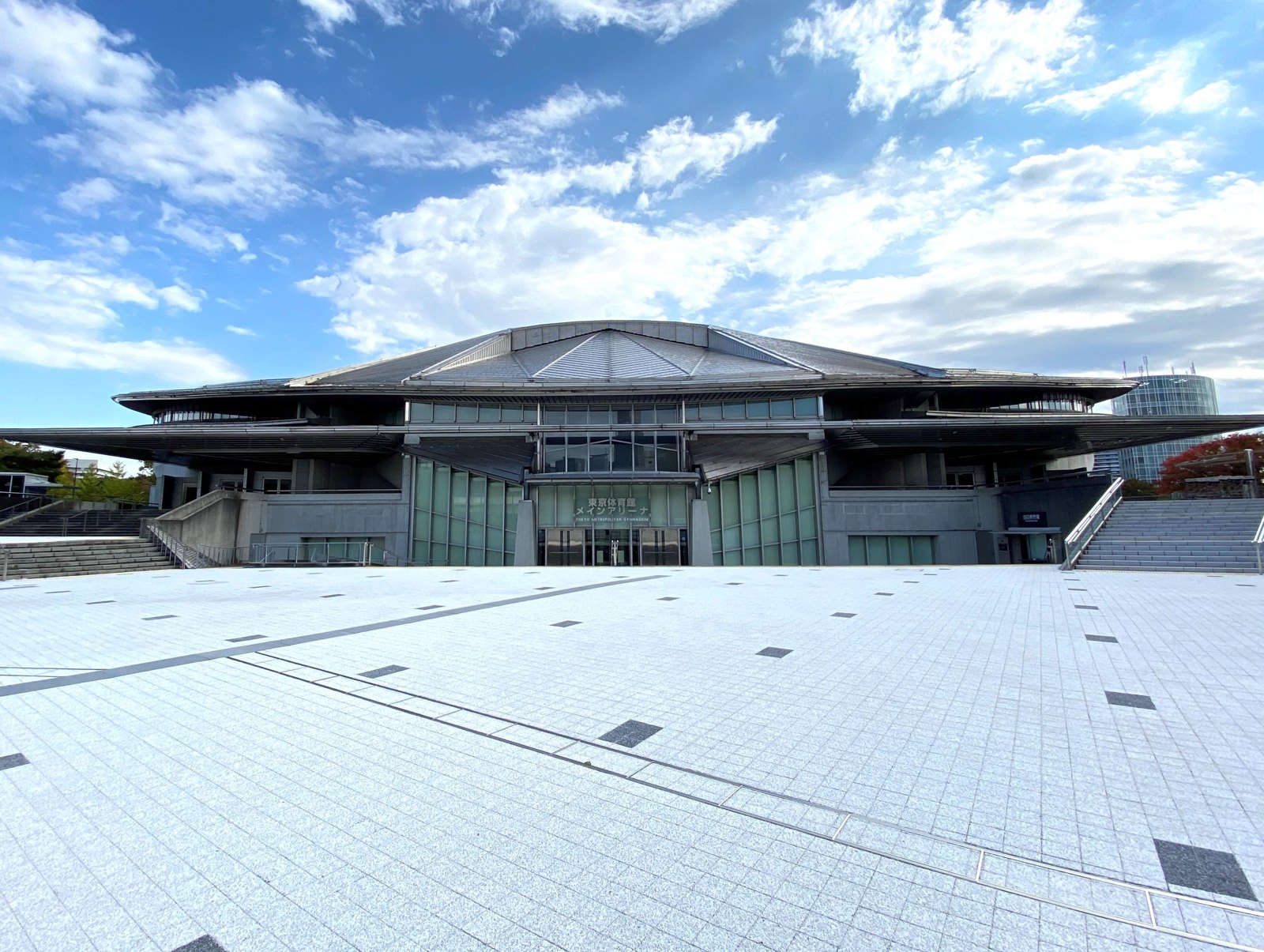
Let us first confirm the structure of the tournament. According to the JBA’s official tournament website, the official name is the “79th All Japan High School Basketball Championship (Reiwa 8 / FY2026).” The tournament runs from Wednesday, December 23 to Tuesday, December 29, with the opening ceremony held the day before, on Tuesday, December 22. Competition is a knockout tournament with 60 teams each in the boys’ and girls’ divisions, and there is no third-place playoff. Because the event outline does not specify which round is played on which day or at which venue, this article does not estimate the stage of competition by date and deals only with the number of teams at each stage.
From a lodging perspective, what matters is that this tournament generates “front-loaded, then steadily declining” demand. Entries are limited to 15 players per team, plus one each of team leader, coach, assistant coach, manager, and other staff, giving a registered maximum of 20 people per team. Assuming a 64-slot bracket, the number of remaining teams (boys and girls combined) roughly halves at each stage: 120 → 64 → 32 → 16 → 8 → 4. Since the opening ceremony is on the 22nd, most teams are likely to arrive in Tokyo by the 22nd at the latest, meaning lodging demand peaks early in the tournament.
So how many rooms does this translate into? From here on, the figures are estimates based on assumptions. Splitting the 20 registered members into 2–3 players per room and 1–2 staff per room puts the rooms needed per team in a range of roughly 8–12. The table below lists room counts by stage on this basis. At the stage where all 120 teams need lodging, the requirement is 960–1,440 rooms; by the stage with only the four finalists left, it shrinks to 32–48 rooms. Note that participating schools from Tokyo and the surrounding area may not stay overnight, while lodging for parents and supporters is not included in these figures. Please read them only as a guide for registered team members.
| Stage (remaining teams, boys + girls) | Teams | Max registered members | Estimated rooms needed (8–12 rooms/team) |
|---|---|---|---|
| Start of tournament | 120 | 2,400 | 960–1,440 rooms |
| After Round 1 | 64 | 1,280 | 512–768 rooms |
| After Round 2 | 32 | 640 | 256–384 rooms |
| After Round 3 | 16 | 320 | 128–192 rooms |
| After quarterfinals | 8 | 160 | 64–96 rooms |
| After semifinals (finalists) | 4 | 80 | 32–48 rooms |
Source: HotelBank Editorial Team estimates based on the event outline on the JBA official tournament website (number of teams, entry limits). The 64-slot bracket and 8–12 rooms per team are editorial assumptions.
Source: HotelBank Editorial Team estimates based on the JBA official tournament event outline (assuming 8–12 rooms per team)
Room Stock — 21,773 Rooms Within 2km of Tokyo Metropolitan Gymnasium, 683 Within 3km of the Chofu Venue
Next, let us look at the room stock available to absorb this demand at each venue. Within a 2,000m radius of Tokyo Metropolitan Gymnasium (Sendagaya, Shibuya), there are 126 listed properties with 21,773 rooms, of which 86 properties with 16,471 rooms were active, with selling prices confirmed in the most recent 3 months. The radius includes the large hotels around Shinjuku Station, and properties with 201 or more rooms alone account for 29 properties and 14,222 rooms. By segment, business hotels are by far the largest at 76 properties and 11,988 rooms, followed by city hotels (13 properties, 3,276 rooms) and capsule hotels (13 properties, 2,532 rooms).
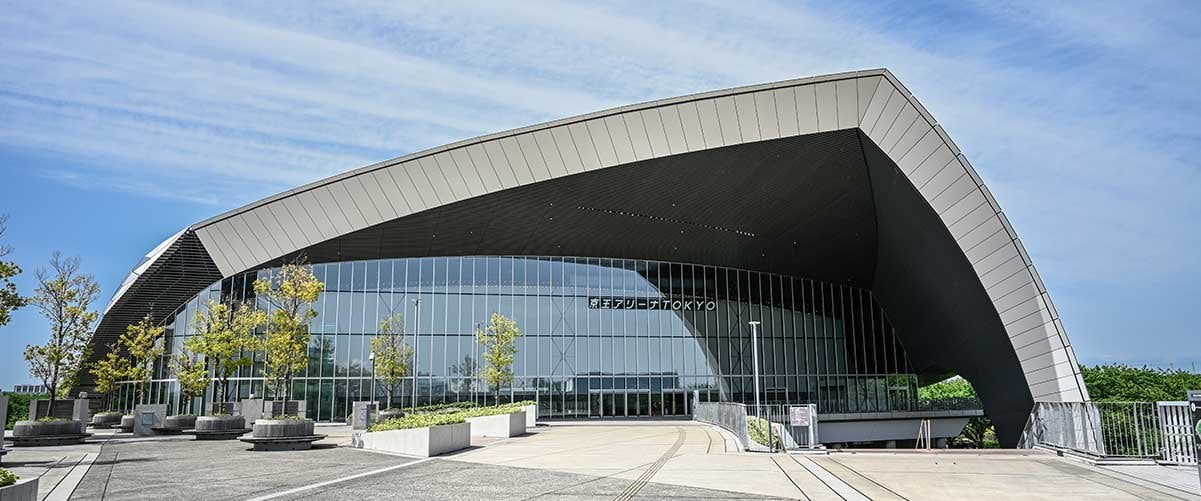
By contrast, Keio Arena TOKYO (Nishimachi, Chofu; nearest station Tobitakyu on the Keio Line) has just 11 listed properties with 683 rooms even with the radius widened to 3,000m, all 11 of them active. The breakdown is 10 business hotels (639 rooms) and one city hotel (44 rooms). Properties with 50 rooms or fewer account for 7 properties and 221 rooms, and even the largest property in the dataset has only 161 rooms. Note that the radii differ, but even with a wider radius on the Chofu side, its room count is still only about 1/32 that of the Tokyo Metropolitan Gymnasium side.
| Item | Tokyo Metropolitan Gymnasium (2,000m radius) | Keio Arena TOKYO (3,000m radius) |
|---|---|---|
| Listed stock | 126 properties / 21,773 rooms | 11 properties / 683 rooms |
| Of which active | 86 properties / 16,471 rooms | 11 properties / 683 rooms |
| Business hotels (listed) | 76 properties / 11,988 rooms | 10 properties / 639 rooms |
| City hotels (listed) | 13 properties / 3,276 rooms | 1 property / 44 rooms |
| 50 rooms or fewer (listed) | 46 properties / 1,145 rooms | 7 properties / 221 rooms |
| 201 rooms or more (listed) | 29 properties / 14,222 rooms | 0 properties |
Source: MetroEngines Research; compiled by HotelBank Editorial Team (as of November 2026)
Overlaying this gap on the earlier estimate makes the contrast between the venues clear. The 960–1,440 rooms needed at the start of the tournament equal 5.8–8.7% of the 16,471 active rooms within 2km of Tokyo Metropolitan Gymnasium — a volume that can be read as an add-on to general year-end demand. If, on the other hand, we assume that half the teams (60) play at the Chofu venue, the rooms needed come to 480–720, equivalent to 70–105% of the 683 rooms within the 3km radius. Since the event outline does not specify venue assignments, this is only a provisional assumption, but in terms of scale it would be difficult for the area around the Chofu venue alone to absorb team lodging. It is natural to expect lodging to spread toward Shinjuku, connected by the Keio Line, and toward the Tama area — Fuchu, Hachioji, and Tachikawa. The map below shows the catchment areas for both venues and the distribution of properties within them.
Source: MetroEngines Research; compiled by HotelBank Editorial Team (as of November 2026). Circles show a 2,000m radius from Tokyo Metropolitan Gymnasium and a 3,000m radius from Keio Arena TOKYO; dot size indicates room count; pale dots are listed-only properties.
Last December’s Rates — Shibuya ¥27,500, Shinjuku ¥17,500, Tama Area Around ¥10,000
As lodging options widen, rate levels vary considerably by area. Looking at estimated settled ADR for December 2025 — the same period last year — Shibuya Ward, home to Tokyo Metropolitan Gymnasium, was ¥27,500 (N=29), up 12.8% YoY, while neighboring Shinjuku Ward was ¥17,500 (N=84), up 13.7% YoY. Chofu City was ¥11,100, but with only N=6 properties it should be treated as a reference value. In the Tama area, Tachikawa was ¥11,100 (N=17), Fuchu ¥8,900 (N=15), and Hachioji ¥7,700 (N=13) — all at 30–40% of the Shibuya level.
| Area | December 2025 ADR | Properties covered | YoY |
|---|---|---|---|
| Shibuya Ward | ¥27,546 | N=29 | +12.8% |
| Shinjuku Ward | ¥17,502 | N=84 | +13.7% |
| Chofu City (reference) | ¥11,076 | N=6 | −8.2% |
| Tachikawa City | ¥11,074 | N=17 | +11.1% |
| Fuchu City | ¥8,916 | N=15 | +1.8% |
| Hachioji City | ¥7,662 | N=13 | +1.6% |
Source: MetroEngines Research; compiled by HotelBank Editorial Team (estimated settled ADR, tax-excluded equivalent; median of properties covered in each area)
Seasonality is also worth noting. December is one of the highest-rate months of the year: in January 2026, after the new year, Shibuya was ¥23,400 (N=31) and Shinjuku ¥15,500 (N=94). December 2025 was 17.5% and 12.7% higher than January, respectively, and the tournament dates fall squarely on the high-rate side. That said, January also grew year on year — Shibuya +24.2% and Shinjuku +23.8% — suggesting that rates in these two central wards have stepped up across the whole winter season. Chofu has few properties and large month-to-month swings, so no monthly comparison is made. Day-by-day rate movements for Tokyo as a whole from December into January are covered in New Year 2026-27 Hotel Rates: Tokyo −22% Dec→Jan, Peaks in 5 Cities.
Source: MetroEngines Research; compiled by HotelBank Editorial Team. November and December 2026 are estimates based on listed price levels at the time of the survey.
What about this December? Estimates based on listed price levels at the time of the survey put December 2026 at ¥31,600 (N=32) for Shibuya, up 14.7% YoY, and ¥20,600 (N=97) for Shinjuku, up 17.9% YoY. These are not final figures and will move with future price adjustments, but they suggest December is shaping up at a level more than 10% above last year.
Booking Curve for the Night of December 23 — Shinjuku 67.2%, Shibuya 61.0% at LT33
For the night of Wednesday, December 23 — the first day of competition — observations have progressed to LT33 as of the survey date. Here we compare business hotels in Shinjuku and Shibuya with the same weekday (Wednesday) nights of December 9 and 16, at the same lead time. In Shinjuku (49 properties / 6,641 rooms, based on listings on major booking sites), occupancy (OTA listed-inventory basis, estimated) at LT33 for the night of December 23 was 67.2%, above the 60.5% for December 16 and 65.2% for December 9. The gain from LT45 to LT33 was nearly identical: +6.3pt for the 23rd, +7.0pt for the 16th, and +7.1pt for the 9th — meaning the difference lies not in the pace of pickup but in a higher starting level.
Source: MetroEngines, Inc.; compiled by HotelBank Editorial Team. Shinjuku Ward business hotels, 49 properties / 6,641 rooms (based on listings on major booking sites). Occupancy is estimated on an OTA listed-inventory basis.
The trend is the same in Shibuya (14 properties / 2,600 rooms, based on listings on major booking sites): occupancy at LT33 was 61.0% for the night of the 23rd, 50.0% for the 16th, and 54.3% for the 9th. The gap shows up more strongly in listed prices: at LT33, the average for the night of the 23rd was ¥38,400, about 35% above the ¥28,600 for the 16th. In Shinjuku, the 23rd was ¥23,600 versus ¥21,300 for the 16th, a gap of only about 11%.
Source: MetroEngines, Inc.; compiled by HotelBank Editorial Team. Shibuya Ward business hotels, 14 properties / 2,600 rooms (based on listings on major booking sites). Occupancy is estimated on an OTA listed-inventory basis.
However, it is too early to attribute this gap to the tournament alone. The tournament dates overlap with the Christmas-to-year-end period, and when occupancy at LT45 is lined up by night, the highest in both Shinjuku and Shibuya was the night of Friday, December 25. Daily rate movements and segment differences for December 24–27 are analyzed in detail in Christmas 2026 Hotel Rates: Tokyo +29.5% vs Normal Fridays, Dec 24–27. In addition, team lodging is likely to be arranged largely as group bookings through travel agencies, and that activity may be only partly reflected in remaining inventory on major booking sites. With more than 30 days still to go before the stay date, what is shown here is merely an interim reading. It is reasonable to position tournament demand as an add-on layered on top of already high year-end demand.
| Stay date | Shinjuku, at LT45 | Shibuya, at LT45 |
|---|---|---|
| Tue, Dec 22 (opening ceremony) | 57.3% | 53.5% |
| Wed, Dec 23 (first day of competition) | 60.9% | 54.3% |
| Thu, Dec 24 | 64.6% | 58.3% |
| Fri, Dec 25 | 69.1% | 66.2% |
| Sat, Dec 26 | 67.4% | 63.6% |
| Sun, Dec 27 | 60.4% | 64.5% |
| Mon, Dec 28 | 58.4% | 63.7% |
Source: MetroEngines, Inc.; compiled by HotelBank Editorial Team. Business hotel occupancy (OTA listed-inventory basis, estimated). Shinjuku: 49 properties / 6,641 rooms (46 properties / 6,599 rooms for the night of Dec 26 only); Shibuya: 14 properties / 2,600 rooms (15 properties / 2,831 rooms for the nights of Dec 27 and 28); all based on listings on major booking sites.
What Hotels Can Do — Turning Tapering Group Demand into Opportunity
To sum up so far, Winter Cup lodging demand has three characteristics: it is “large early on and thins out as teams are eliminated,” “the depth of available room stock differs greatly by venue,” and “it overlaps with the high-rate year-end period.” Hotels that prepare for this shape of demand can capture several revenue opportunities.
First, room allocation for multi-night group stays. To host a team of around 20 people in 8–12 rooms, the deciding factor is often whether twins and triples can be secured together on the same floor. Preparing proposals that combine multi-bed rooms for players with singles for staff gives team leaders options that are easy to compare. Around the Chofu venue, where most properties have 50 rooms or fewer, near-exclusive arrangements hosting one or two entire teams are also worth considering.
Second, make cancellation terms for elimination clear. Under a knockout format, teams book rooms for a longer stay on the assumption they will keep winning, then shorten the stay once they are eliminated. Setting out notification deadlines for shortening and the handling of cancellation fees clearly for groups lets teams book longer stays with confidence, and makes it easier for hotels to plan the resale of returned inventory to general year-end demand. Because the latter half of the tournament falls on high-rate nights including December 25 and 26, reselling returned inventory can offer upside on rates. For how lodging allocation and cancellation rules are set for national-scale sports events, Aomori 2026 Sports Games Lodging: ¥18,000 Cap vs ¥5,900 Break-Even is also a useful reference.
Third, operations aligned with game times. Early breakfast service, take-away light meals, and guidance on laundry facilities and space usable for team meetings tend to be reasons high school teams choose a hotel on the road. For hotels in the Tama area, it is effective to highlight access by Keio Line to Tobitakyu Station, the nearest station to the venue, and to put front and center the ease of multi-night stays at rates lower than central Tokyo. Looking ahead to future tournaments, recording this year’s booking timing and length-of-stay results should serve as the foundation for the next proposal.
⚠ Note on ADR for future dates: ADR for future months such as December 2026 is an estimate based on selling prices published on OTAs at the time of the survey, and will fluctuate as the check-in date approaches. Please note that prices currently set high may fall through last-minute discounting. ADR for November and December 2026 and occupancy for December are estimates based on listed price levels at the time of the survey and are subject to change.
Summary
Winter Cup 2026 brings 120 teams to Tokyo for seven days from December 23, generating tapering demand in which lodging decreases as teams are eliminated. Counting registered members alone, the estimated rooms needed at the start of the tournament are 960–1,440. While there is a deep stock of 21,773 rooms within 2km of Tokyo Metropolitan Gymnasium, there are only 683 rooms within 3km of Keio Arena TOKYO, indicating that lodging for the Chofu venue spreads toward Shinjuku and the Tama area. Last December’s rates ranged widely, from ¥27,500 in Shibuya to ¥7,700 in Hachioji, offering options along the rail lines to suit team budgets. Occupancy for the night of December 23 at LT33 is above the same weekday one and two weeks earlier, but because it overlaps with year-end demand, the tournament’s standalone effect cannot be isolated. For hotels that tailor room allocation, cancellation terms, and breakfast service to groups, this year-end week is likely to be one of significant opportunity.
Frequently Asked Questions
Q. When and where is Winter Cup 2026 held?
A. According to the official event outline, the tournament runs for seven days from Wednesday, December 23 to Tuesday, December 29, 2026, at Tokyo Metropolitan Gymnasium (Shibuya, Tokyo) and Keio Arena TOKYO (Chofu, Tokyo). The opening ceremony is held on Tuesday, December 22.
Q. How many hotel rooms are there around the venues?
A. According to MetroEngines Research data, 126 properties with 21,773 rooms are listed within a 2,000m radius of Tokyo Metropolitan Gymnasium, and 11 properties with 683 rooms within a 3,000m radius of Keio Arena TOKYO (as of November 21, 2026; properties with 10 or more rooms).
Q. What are hotel rates like in the surrounding areas in December, during the tournament?
A. Estimated settled ADR for December 2025 was ¥27,500 (N=29) in Shibuya and ¥17,500 (N=84) in Shinjuku. Chofu was ¥11,100, but with only N=6 it is a reference value. All figures are estimates and differ from actual settled prices.
Related Articles
References & Sources
| Japan Basketball Association, “SoftBank Winter Cup 2026 Event Outline” (dates, venues, number of teams, entry limits) |
| Tokyo Metropolitan Gymnasium official website |
| Keio Arena TOKYO official website, “Access” (location, nearest station) |
| Japan Tourism Agency, “Overnight Travel Statistics Survey” (official lodging market statistics) |
| MetroEngines Research — room stock around the venues (as of November 21, 2026), estimated settled ADR by city/ward (November 2024–December 2026), booking curves for business hotels in Shinjuku and Shibuya (nights of December 9, 16, and 22–28) |
■ Data Sources
Room stock, estimated settled ADR, and booking curves are compiled by MetroEngines Research (continuous tracking of OTA public rates and inventory). Dates, venues, number of teams, and entry limits are from the event outline on the JBA official tournament website; venue locations are from each venue’s official website.
■ Estimation Assumptions
Rooms needed assume 8–12 rooms per team, derived by dividing the registered maximum of 20 people per team into 2–3 players per room and 1–2 staff per room, with the number of remaining teams halving at each stage of a 64-slot bracket. The 60 teams at the Chofu venue is a provisional assumption because venue assignments are not specified. Lodging for parents and supporters is not included.
■ Limitations & Caveats
ADR and occupancy are estimates based on OTA public information and differ from properties’ actual results. December 2026 values and occupancy for the night of December 23 are interim readings as of the survey date and will change. Group bookings via travel agencies may be only partly reflected in OTA remaining inventory. Chofu is a reference value due to N=6.
Further Reading
- New Year 2026-27 Hotel Rates: Tokyo −22% Dec→Jan, Peaks in 5 Cities
- Christmas 2026 Hotel Rates: Tokyo +29.5% vs Normal Fridays, Dec 24–27
- Aomori 2026 Sports Games Lodging: ¥18,000 Cap vs ¥5,900 Break-Even
- Comiket 109: 3,360 Rooms Within 2km of Big Sight, Dec 29 at 1.6x
- Nagoya Jan 2027: B.LEAGUE All-Star × Common Test, 2,825 Rooms in 2km
- New Year 2026-27 Japan Hotel Rates Peak Dec 31: City 4 Days vs Onsen 8