


On October 27, 2026, the Service Productivity & Innovation for Growth council (SPRING) of the Japan Productivity Center published the fourth FY2026 survey of the JCSI (Japanese Customer Satisfaction Index). In the city hotel category, Imperial Hotel (帝国ホテル) scored 81.6 for customer satisfaction and took first place for the 18th consecutive year. In the business hotel category, the top spot differed across the three headline indicators of customer satisfaction, recommendation intent and delight: Dormy Inn (ドーミーイン) led customer satisfaction at 80.7, its seventh straight year and eighth win overall, while Daiwa Roynet Hotel (ダイワロイネットホテル) led recommendation intent at 75.2. This article sets out the published scores as reported, then overlays how guests talk about the top-ranked brands in their reviews, offering operators material for deciding which guest touchpoints to invest in.
• ADR (average daily rate) = estimated settled rate (tax-exclusive equivalent), calculated by applying a segment-specific adjustment factor to the lowest plan level each property publishes on OTAs (per room, two guests, tax included). Reconciliation against property-level results disclosed by listed hotel REITs (91 properties, most recent three months) shows a median error of approximately 7%. These are estimates and differ from each property’s actual settled rates and accounting figures.
• ADR at the area level (prefecture or municipality) is the median estimated settled rate of covered properties, representing a typical property in that area.
• References to listed prices are per room for two guests, tax included.
• OCC (occupancy) = rooms sold as a share of total rooms in the area (an estimate based on OTA sales inventory).
• Source: MetroEngines Research (continuous tracking of public OTA prices for approximately 168,000 properties in Japan, of which approximately 27,000 are confirmed active)
• JCSI scores and rankings are quoted directly from SPRING’s published materials (the October 27, 2026 press release and its supplementary detailed materials).
• The review “mention rate” is the share of reviews touching on a given theme, derived by the HotelBank Editorial Team through language analysis of guest reviews. It indicates how often a topic comes up and is separate from both ratings and the JCSI indexes. Figures aggregate reviews from the most recent 24 months as of the November 13, 2026 survey date.
- — Imperial Hotel scored 81.6 for customer satisfaction, ranking first among city hotels for the 18th straight year. It also led recommendation intent (79.2) and the delight index (66.1), sweeping all three indicators
- — Business hotels have a different leader by indicator. Dormy Inn leads customer satisfaction at 80.7, Daiwa Roynet Hotel leads recommendation intent at 75.2, and Dormy Inn leads the delight index at 62.2
- — Toyoko Inn ranks first in the Standard class with a customer satisfaction score of 79.3. That is also second across the entire category, showing that satisfaction rankings do not simply follow price tiers
- — The touchpoints guests talk about differ by brand. Service leads at Imperial Hotel, guest rooms at Okura and Nikko, room size (over 20%) at Daiwa Roynet and Richmond, and hot springs and large baths at Super Hotel
- — The right touchpoint to invest in depends on the target indicator. Satisfaction points to consistency in the basics, recommendation to features that are easy to describe, and delight to experiences that exceed what the price tier leads guests to expect
What Is the JCSI? Nine Indicators Scored Out of 100, Covering Brands That Meet the Selection Criteria
The JCSI (Japanese Customer Satisfaction Index) is a customer satisfaction survey that SPRING publishes by industry in five installments a year. The fourth FY2026 survey covered 75 corporate brands across seven sectors: city hotels, business hotels, domestic long-distance transportation, education services, life insurance, non-life insurance and limited express trains (a special survey). Fieldwork ran from August 19 to September 1, 2026, with 23,143 respondents (20,961 of them for the 66 companies and brands included in the rankings). The survey uses a two-stage online panel, and each respondent evaluates only one brand across roughly 110 questions.
The survey produces nine indicators: customer expectations, perceived quality, perceived value, customer satisfaction, recommendation intent, loyalty, the delight index, the disappointment index and the CSR index. Each indicator is built from three to five questions on a 10-point scale and indexed so that all-top answers equal 100 and all-bottom answers equal 0. SPRING puts three of them, customer satisfaction, recommendation intent and the delight index, at the front of its press release as the indicators “especially useful for management goals.”
| Indicator | Description |
|---|---|
| Customer expectations | Level of expectations held before use |
| Perceived quality | Assessment of quality experienced during use |
| Perceived value | Sense that the service was worth the amount paid |
| Customer satisfaction | Calculated from three questions: overall satisfaction, satisfaction with the choice, and satisfaction with daily life |
| Recommendation intent (likelihood to recommend) | Whether the customer would speak favorably to others about core services, the service environment, staff response and information provision |
| Loyalty | Intention to keep using the brand in future |
| Delight index | How much the customer felt “surprised,” “happy,” “having fun” or “excited” during use |
| Disappointment index | How much the customer had experiences leading to disappointment during use |
| CSR index | Assessment of the company’s social responsibility |
Source: SPRING, FY2026 JCSI 4th Survey Results (indicator names from the published materials; descriptions of customer satisfaction, recommendation intent and the delight index reflect the published questions, others are editorial summaries)
One point to keep in mind is that the JCSI is not an exhaustive ranking of the industry. It covers only companies and brands selected by SPRING, and respondents must meet certain conditions. For the two hotel categories, respondents must have stayed at the brand at least twice in the past two years and, within the past year, have used it and seen or heard the price charged. Only brands with at least 300 responses are ranked. This time, five of the eight city hotel brands surveyed and eight of the nine business hotel brands surveyed (three Superior class, five Standard class) were ranked. The scores therefore show how customers with a certain level of experience rated that brand. They are not a basis for comparing it with hotels outside the survey.
City Hotels: Imperial Hotel Ranks First on All Three Indicators, 18 Years Running
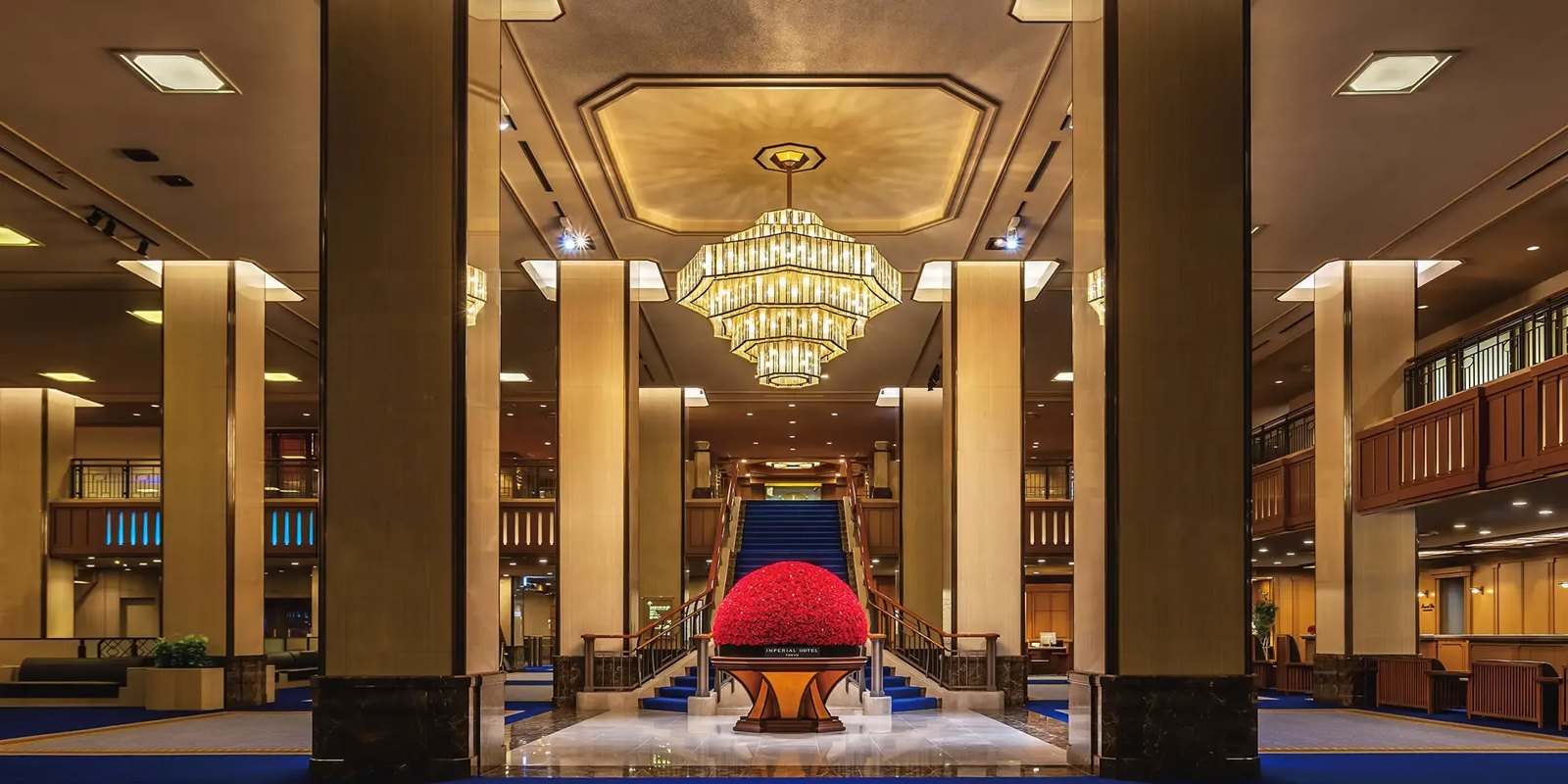
In the city hotel category, Imperial Hotel ranked first on all three indicators, with 81.6 for customer satisfaction, 79.2 for recommendation intent and 66.1 for the delight index. Its customer satisfaction win is its 18th in 18 consecutive years. Hotel Okura (ホテルオークラ) came second (satisfaction 80.2, recommendation 77.6, delight 62.7) and Hotel Nikko (ホテル日航) third (79.3, 76.5 and 62.3), with the same order on all three indicators.
Source: SPRING, FY2026 JCSI 4th Survey Results
According to the supplementary detailed materials, Imperial Hotel also ranked first for customer expectations (82.2), perceived quality (80.9), perceived value (78.7) and loyalty (76.0), and its CSR index of 68.3 was the highest in the category. What stands out is that despite very high expectations (82.2), post-stay customer satisfaction (81.6) landed at almost the same level. Continuing to satisfy guests who arrive with high expectations is not easy, and an 18-year streak speaks to how consistently the hotel delivers.
All three brands scored 79 or higher for customer satisfaction, with only 2.3 points between first and third. The delight index, by contrast, came in at 66.1, 62.7 and 62.3, more than 15 points below satisfaction. Satisfaction can be earned by meeting expectations, but delight rarely arises without an experience that exceeds them. The leading city hotel brands appear to be competing on how much surprise they can build on top of a solid foundation of satisfaction.
Business Hotels: A Different Leader for Satisfaction, Recommendation and Delight
In contrast to city hotels, the leading business hotel brands changed from one indicator to the next. Dormy Inn ranked first for customer satisfaction at 80.7, its seventh straight year and eighth win overall, followed by Toyoko Inn (東横イン) at 79.3 and Daiwa Roynet Hotel at 79.2. The detailed materials also list fourth-placed Super Hotel (スーパーホテル) at 79.0, putting the top four brands within a 1.7-point range.
On recommendation intent, however, Daiwa Roynet Hotel ranked first at 75.2, followed by Richmond Hotel (リッチモンドホテル) at 74.7 and Dormy Inn at 74.3. The delight index was led by Dormy Inn at 62.2, followed by Richmond Hotel at 60.0 and Super Hotel at 58.1. Across the nine top-three positions on the three indicators, five different brands appear, showing that satisfying guests, earning their recommendation and delighting them can each be won with different strengths.
Source: SPRING, FY2026 JCSI 4th Survey Results
The subcategory results are also revealing. SPRING divides business hotels into Superior and Standard classes based on factors such as the size of the main rooms offered. In the Standard class, Toyoko Inn ranked first for customer satisfaction at 79.3, followed by Super Hotel at 79.0 and Hotel Route-Inn (ホテルルートイン) at 77.3. Toyoko Inn’s 79.3 is also the second-highest score across the whole category, on a par with Superior class brands. On perceived value (the sense that the price paid was justified), Super Hotel, a Standard class brand, ranked first in the entire category at 77.7. The published figures themselves show that a brand need not be in the higher class for room size or price to rank near the top on satisfaction and perceived value.
| Category | Indicator | 1st | 2nd | 3rd |
|---|---|---|---|---|
| City hotels | Customer satisfaction | Imperial Hotel 81.6 | Hotel Okura 80.2 | Hotel Nikko 79.3 |
| City hotels | Recommendation intent (likelihood to recommend) | Imperial Hotel 79.2 | Hotel Okura 77.6 | Hotel Nikko 76.5 |
| City hotels | Delight index | Imperial Hotel 66.1 | Hotel Okura 62.7 | Hotel Nikko 62.3 |
| Business hotels | Customer satisfaction | Dormy Inn 80.7 | Toyoko Inn 79.3 | Daiwa Roynet Hotel 79.2 |
| Business hotels | Recommendation intent (likelihood to recommend) | Daiwa Roynet Hotel 75.2 | Richmond Hotel 74.7 | Dormy Inn 74.3 |
| Business hotels | Delight index | Dormy Inn 62.2 | Richmond Hotel 60.0 | Super Hotel 58.1 |
Source: SPRING, FY2026 JCSI 4th Survey Results
How Guests Talk About the Top Brands: Review Volume by Touchpoint
The JCSI is an index, and its published materials do not reveal what specifically customers valued. So we turn to the guest reviews compiled by the HotelBank Editorial Team to see which themes come up for properties of the brands named in the JCSI. The figures below are shown separately for each brand. Because the mix of properties and the number of reviews differ by brand, they are not suited to comparing magnitudes between brands. Please read them as a profile of what each brand’s guests talk about. Differences in mention rates by hotel type and price tier are covered in 200K Hotel Reviews: Breakfast Mentions 3.5x by Segment, Staff 2.2x.
Three city hotel brands (mention rate as a share of all reviews for the covered properties)
Imperial Hotel (Imperial Hotel Tokyo and Imperial Hotel Osaka)
N=4,475 guest reviews
| Room cleanliness | 12.18% | |
| Courteous service | 9.72% | |
| Attentiveness and thoughtfulness | 9.23% | |
| Kind, smiling service | 9.14% | |
| Breakfast buffet selection | 8.78% | |
| Hospitality (omotenashi) | 7.80% | |
| View from the room | 6.23% | |
| Anniversary or celebration stays | 4.89% |
Hotel Okura (7 properties in Japan bearing the Okura name)
N=14,958 guest reviews
| Room cleanliness | 15.84% | |
| Room size | 15.36% | |
| View from the room | 14.12% | |
| Access from the station | 10.32% | |
| Breakfast buffet selection | 9.29% | |
| Courteous service | 8.90% | |
| Kind, smiling service | 8.32% | |
| Attentiveness and thoughtfulness | 6.91% |
Hotel Nikko (15 properties in Japan bearing the Hotel Nikko name)
N=28,231 guest reviews
| Room cleanliness | 18.12% | |
| Room size | 14.37% | |
| Kind, smiling service | 10.42% | |
| Breakfast buffet selection | 9.56% | |
| Courteous service | 7.89% | |
| Satisfaction relative to price | 6.65% | |
| Bedding comfort | 5.23% | |
| Attentiveness and thoughtfulness | 5.08% |
Source: HotelBank Editorial Team research (language analysis of guest reviews, most recent 24 months, compiled November 13, 2026)
At Imperial Hotel’s two properties, service accounted for four of the top eight themes. Courteous service (9.72%), attentiveness and thoughtfulness (9.23%), kind, smiling service (9.14%) and hospitality (7.80%) each came up as a distinct topic in close to 10% of reviews, and 99% of reviews mentioning attentiveness and 98% of those mentioning hospitality were positive. Actual comments feature phrases such as “thoughtful hospitality at every turn…” and “the very embodiment of hospitality…”. Anniversary or celebration stays were mentioned in 4.89% of reviews, suggesting the hotel is chosen for special occasions. Imperial Hotel’s first place on the JCSI delight index and the specific language guests use about its service point in the same direction.
At Hotel Okura’s seven properties, the guest room itself is the center of conversation, with room cleanliness (15.84%), size (15.36%) and view (14.12%), joined by courteous service (8.90%) and kind, smiling service (8.32%). At Hotel Nikko’s 15 properties, room cleanliness (18.12%) and size (14.37%) are the most discussed, kind, smiling service exceeds 10% at 10.42%, and breakfast buffet selection (9.56%) and satisfaction relative to price (6.65%) also rank highly. Even among city hotels, the center of gravity differs: some brands are defined by service, some by the guest room, and others by a broader mix that extends to breakfast and value.
Four business hotel brands (average of per-property mention rates)
Toyoko Inn
356 properties covered (count used for review aggregation; does not match the published number of hotels)
| Access from the station | 26.65% | |
| Room cleanliness | 20.28% | |
| Front desk service | 8.66% | |
| Satisfaction relative to price | 8.19% | |
| Kind, smiling service | 7.10% | |
| Courteous service | 6.45% | |
| Satisfaction with breakfast for the price | 5.54% | |
| Business trip use | 5.32% |
Daiwa Roynet Hotel
81 properties covered (same basis)
| Room cleanliness | 29.62% | |
| Access from the station | 29.59% | |
| Room size | 20.66% | |
| Nearby convenience stores and amenities | 10.72% | |
| Front desk service | 9.59% | |
| Kind, smiling service | 8.36% | |
| Courteous service | 7.57% | |
| Bedding comfort | 6.39% |
Richmond Hotel
49 properties covered (same basis)
| Room cleanliness | 27.29% | |
| Access from the station | 25.52% | |
| Room size | 20.14% | |
| Front desk service | 10.40% | |
| Kind, smiling service | 9.40% | |
| Courteous service | 8.66% | |
| Satisfaction relative to price | 8.55% | |
| Breakfast buffet selection | 6.45% |
Super Hotel
180 properties covered (same basis)
| Room cleanliness | 19.75% | |
| Access from the station | 17.48% | |
| Hot springs | 13.95% | |
| Large public bath | 12.81% | |
| Welcome drink | 12.10% | |
| Satisfaction relative to price | 11.79% | |
| Front desk service | 11.47% | |
| Kind, smiling service | 9.99% |
Source: HotelBank Editorial Team research (language analysis of guest reviews, most recent 24 months, compiled November 13, 2026)
Toyoko Inn rests on two pillars, access from the station (26.65%) and room cleanliness (20.28%), followed by front desk service (8.66%), satisfaction relative to price (8.19%), satisfaction with breakfast for the price (5.54%) and business trip use (5.32%). The promise of a clean stay next to the station at a fair price shows up directly in what guests discuss, consistent with its first place for customer satisfaction in the JCSI Standard class.
At Daiwa Roynet Hotel and Richmond Hotel, room size joins cleanliness and station access, exceeding 20% at 20.66% and 20.14% respectively. Given that SPRING defines the Superior class by factors such as room area, this suggests guests clearly recognize room size as a product feature and talk about it. The recommendation intent question asks whether customers would speak favorably to others about aspects such as “product appeal” and “staff and counter service,” so a feature as easy to put into words as room size is likely to give guests something to cite when recommending a hotel.
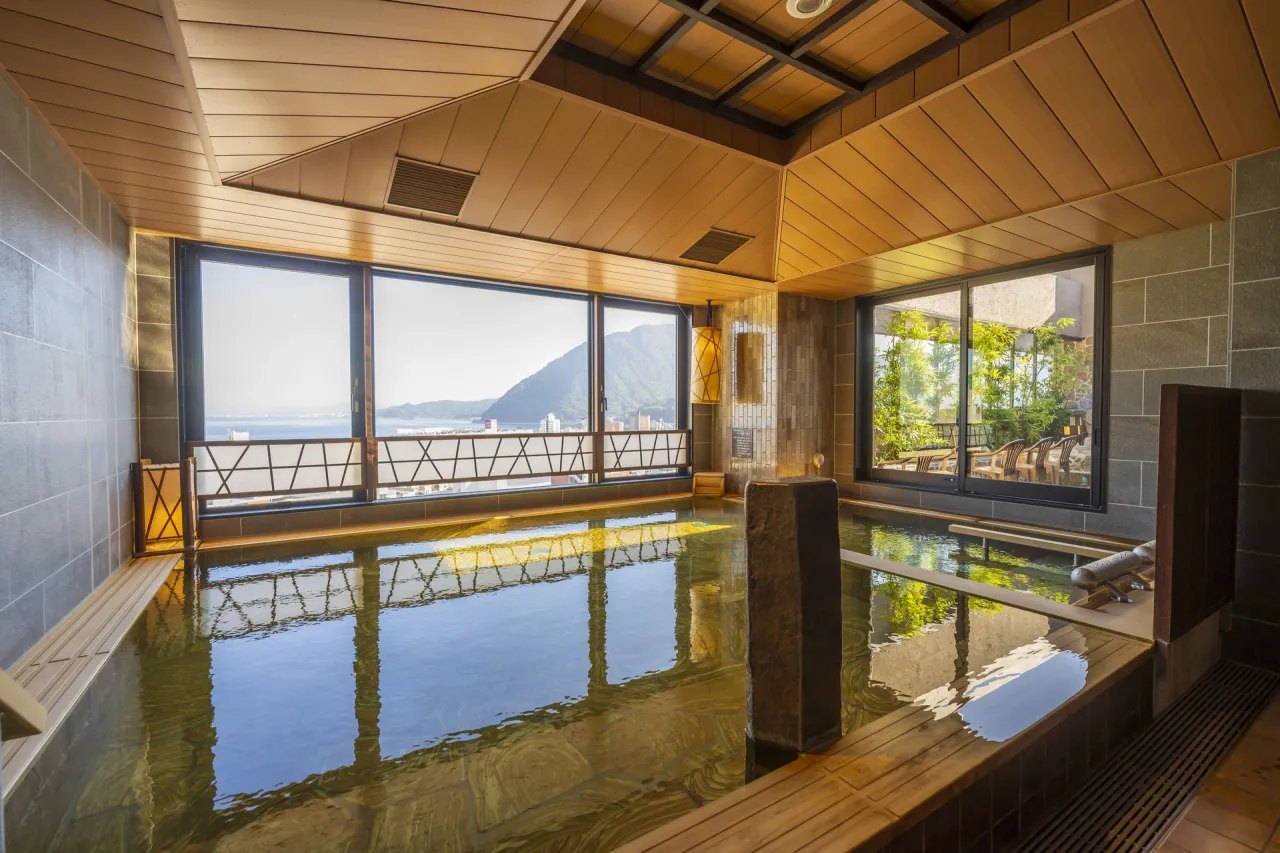
Super Hotel’s top themes are hot springs (13.95%), large public baths (12.81%) and welcome drinks (12.10%), topics rarely associated with limited-service hotels. Satisfaction relative to price is also high at 11.79%. Taken together with its first place in the category for perceived value and first place in the Standard class on the delight index, this suggests that small touches beyond the guest room may contribute to both perceived value and surprise. For the relationship between large baths and room rates, see also Business Hotel Baths: Onsen + Sauna Add 9.3% to ADR — Capex Ceiling.
Implications for Operators: Satisfaction Is Not Set by Price Alone, So Which Touchpoints Deserve Investment?
Operators can take three points from the published results. First, customer satisfaction does not line up with price tiers. Standard class brands achieve satisfaction on a par with the Superior class, and a Standard class brand ranks first in the category for perceived value. In the JCSI causal model, customer satisfaction is formed from expectations, quality and value (the sense that the price was justified). Raising rates does not in itself raise satisfaction. What matters is whether the promise made, the actual experience and the price paid are in balance. How often “worth the price” comes up in a property’s own reviews is a handy gauge of that balance.
Second, the touchpoints worth investing in change with the target indicator. To lift customer satisfaction, investment that improves consistency in the basics most discussed across every brand, such as cleanliness, location and front desk service, is effective. To grow recommendation intent, give the property one clear feature guests can easily describe to others, such as room size or breakfast. To target the delight index, a useful approach is to add one experience not expected at that price point, as with Imperial Hotel’s service or Super Hotel’s hot springs and welcome drinks.
Third is the value of human touchpoints. In reviews of the leading city hotel brands, courtesy, attentiveness and kindness were each discussed as separate topics. Even as labor-saving investment advances, there is room to achieve both efficiency and delight by moving routine tasks such as check-in and directions to machines and redirecting the time saved to moments where attentiveness can be felt. Staffing is better framed not as what to cut or keep, but as which touchpoints to concentrate people on.
Note that the JCSI surveys customers with a defined level of usage experience, while reviews are voluntary posts, so the two differ in both population and what they measure. The review analysis here does not support or validate the JCSI rankings. It is offered as a supplementary lens for considering the background to the published index.
Summary
In the fourth FY2026 JCSI survey, Imperial Hotel ranked first among city hotels on all three indicators, with customer satisfaction of 81.6, recommendation intent of 79.2 and a delight index of 66.1, extending its customer satisfaction streak to 18 years. Among business hotels, the leader varied by indicator: Dormy Inn for customer satisfaction (80.7), Daiwa Roynet Hotel for recommendation intent (75.2) and Dormy Inn for the delight index (62.2), with five brands appearing in the top-three positions. Reviews show that the touchpoints each brand leaves in guests’ memories differ, whether service, guest rooms, location and fair pricing, or bathing facilities and a welcome drink. Deciding first whether to grow satisfaction, recommendation or delight, then concentrating investment on the touchpoints that drive it, is a realistic course of action ahead of the next survey year.
Frequently Asked Questions
What is the JCSI?
It is the Japanese Customer Satisfaction Index, conducted by SPRING. Nine indicators (customer expectations, perceived quality, perceived value, customer satisfaction, recommendation intent, loyalty, the delight index, the disappointment index and the CSR index) are indexed to a 100-point scale from 10-point survey questions. The fourth FY2026 survey ran from August 19 to September 1, 2026, with 23,143 respondents. It covers only brands selected by SPRING and is not an exhaustive industry ranking.
Which brand ranked first among city hotels in FY2026?
Imperial Hotel. It ranked first on all three indicators, with customer satisfaction of 81.6 (18th consecutive year), recommendation intent of 79.2 and a delight index of 66.1. Hotel Okura came second (customer satisfaction 80.2) and Hotel Nikko third (79.3), in the same order on all three indicators.
Which brand ranked first among business hotels?
It depends on the indicator. Dormy Inn ranked first for customer satisfaction (80.7, seventh straight year and eighth win overall), Daiwa Roynet Hotel for recommendation intent (75.2) and Dormy Inn for the delight index (62.2). In the Standard class, defined by factors such as room area, Toyoko Inn ranked first for customer satisfaction (79.3).
How do the review mention rates in this article differ from JCSI scores?
A mention rate is the share of guest reviews that touch on a given theme, indicating how often it comes up. It is neither a rating nor a JCSI index. Reviews from the most recent 24 months were compiled as of November 13, 2026, and are shown separately for each brand, so they should not be used to compare brands. Nor do they validate the JCSI rankings.
Which touchpoints should hotels invest in to raise customer satisfaction?
It depends on the target indicator. To lift customer satisfaction, focus on consistency in basics such as cleanliness, location and front desk service. To grow recommendation intent, look to features that are easy to describe, such as room size or breakfast. To target the delight index, look to experiences that exceed what the price tier leads guests to expect, such as attentive service, bathing facilities or a welcome drink.
Related Articles
| Hotel Self Check-In Kiosks: ¥1.38M–1.78M Each, ¥14K–27K per Room |
| Hotel Loungewear: Capsule 2.39% Tops Ryokan 1.85% in 8.2M Reviews |
| In-Room Dining 584 Ryokan vs Private Dining 359: Only 8% Offer Both |
References and Sources
■ Data Sources
JCSI scores and rankings are quoted without rounding from the press release and supplementary detailed materials of SPRING’s “FY2026 JCSI (Japanese Customer Satisfaction Index) 4th Survey Results” (published October 27, 2026). Review mention rates are figures compiled by the HotelBank Editorial Team through language analysis of guest reviews (most recent 24 months, compiled November 13, 2026).
■ Calculation Assumptions
This article makes no projections of future values. Review mention rates are shown as a share of all reviews for the covered properties for the three city hotel brands, and as the average of per-property mention rates for the four business hotel brands. Covered properties are those in Japan bearing the brand name, and the property counts used for review aggregation do not match each company’s published number of hotels.
■ Limitations and Caveats
The JCSI surveys respondents who meet defined usage conditions and covers only brands selected by SPRING. Reviews are voluntary posts and differ from the JCSI in both population and what is measured, so the review analysis in this article does not support or validate the JCSI rankings. Mention rates reflect how often a topic comes up, not how highly it is rated, and because the mix of properties and number of reviews differ by brand, they are not used to compare brands.
| Japan Productivity Center, SPRING: “FY2026 JCSI (Japanese Customer Satisfaction Index) 4th Survey Results” (October 27, 2026) |
| Same, press release (PDF): rankings and scores for the three indicators, survey outline, questions |
| Same, supplementary detailed materials (PDF): rankings for six indicators and for the delight, disappointment and CSR indexes |
| Japan Productivity Center: Customer Satisfaction Survey (JCSI) |
| Travel Voice: coverage of the “Customer Satisfaction Ranking 2026” (October 2026) |
| HotelBank Editorial Team research: language analysis of guest reviews (most recent 24 months, compiled November 13, 2026) |
Source of JCSI figures: SPRING, FY2026 JCSI 4th Survey Results (city hotels and business hotels)
Further Reading
- 200K Hotel Reviews: Breakfast Mentions 3.5x by Segment, Staff 2.2x
- Business Hotel Baths: Onsen + Sauna Add 9.3% to ADR — Capex Ceiling
- Room Cleanliness: Foreign Reviews Mention It 1.5x More — 12,733 Hotels
- In-House Coffee in Guest Reviews — 122 Japan Hotels, 17,385 Mentions
- What Is a City Hotel? Business Hotel Differences and ¥27,208 Rates