


How often do guests talk about kaiseki cuisine in their reviews? The HotelBank Editorial Team ran a semantic analysis of guest reviews from the last 24 months to find out. The top 100 properties with the most favorable mentions of kaiseki cuisine accumulated 6,263 mentions in total (out of 117,143 reviews analyzed). By location they cluster in hot spring areas within easy reach of the Tokyo metropolitan area: 10 in Kanagawa, 8 in Gunma and 7 in Yamanashi. Split by room count, properties with 29 rooms or fewer show the highest mention rate at 8.5%, more than three times the 2.7% of properties with 200 rooms or more. This article first looks at who these 100 properties are and which food elements are discussed alongside kaiseki, then layers in the same-property “breakfast-included → half-board (breakfast and dinner)” premium, the year-end/New Year price peak, and the food-cost and staffing environment, as material for designing year-end/New Year half-board plans.
• ADR (Average Daily Rate) = an estimated settled rate (tax-excluded equivalent), calculated by applying a segment-specific adjustment factor to the lowest-priced plan each property publishes on OTAs (per room, 2 guests per room, tax included). Checked against property-level results disclosed by listed hotel REITs (91 properties, most recent 3 months), the median error is about 7%. These are estimates and differ from each property’s actual settled rates and accounting figures.
• Area-level (prefecture / municipality) ADR is the median of the estimated settled rates of the properties covered (the level of a typical property in the area).
• Where listed prices are mentioned, they refer to the per-room rate for 2 guests per room (tax included).
• OCC (occupancy rate) = rooms sold as a share of total rooms in the area (an estimate based on OTA sales inventory).
• Source: MetroEngines Research (continuously tracking OTA public prices for approximately 168,000 properties in Japan, of which approximately 27,000 are confirmed active)
- — Top 100 properties, 6,263 mentions: reviews referring favorably to kaiseki cuisine (last 24 months, 117,143 reviews analyzed). 76 are ryokan; by location, Kanagawa 10, Gunma 8, Yamanashi 7.
- — Mention rate of 8.5% at 29 rooms or fewer: more than three times the 2.7% at 200 rooms or more. This is a pattern within a top 100 selected by mention count and cannot be generalized to all properties in Japan.
- — Half-board premium of about ¥9,000 (median) in the top 7 kaiseki prefectures: about ¥7,900 in the other 40 prefectures (October 2026, same-property paired comparison of hotels, listed prices). As a percentage, 28.4% vs. 30.8% — almost the same.
- — Last New Year’s Eve was about 2.9x a December weekday: the index of the lowest listed price for 62 top kaiseki properties began rising on December 27, reached 286.0 on December 31 and returned to 107.7 on January 4.
- — Fresh seafood +11.5% YoY (September 2026): there is room to explain price premiums by communicating the content of the menu, as the core ingredient of kaiseki becomes more expensive.
Who Is in the Top 100 — 76 Ryokan, Mostly in Hot Spring Areas
Let us start with the top 20. In first place is Fuefukigawa Onsen Bettei Zabou (笛吹川温泉 別邸 坐忘, 18 rooms) in Yamanashi, where 129 of 528 reviews mentioned the kaiseki cuisine. Its mention rate of 24.4% stands out even among the 100, meaning roughly one in four reviews talks about the kaiseki dinner. Second-place Gero Onsen Suimeikan (下呂温泉 水明館, 264 rooms) is on par in count with 127 mentions, but because it has as many as 3,942 reviews in total its mention rate is 3.2% — it belongs to a different type: a large property that ranks high on volume.
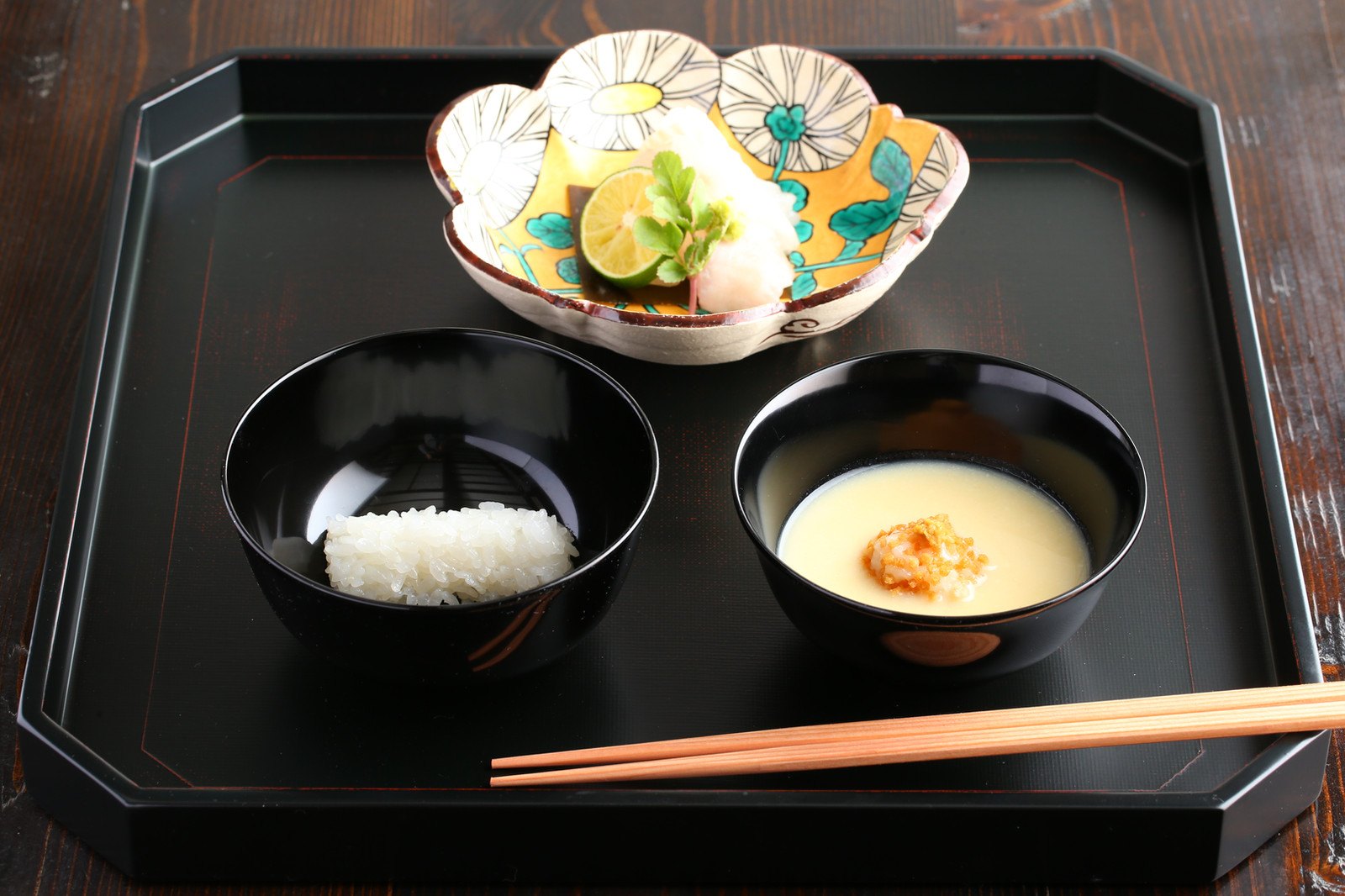
Looking at what the reviews actually say, comments such as “the kaiseki dinner was the best ever…” (Kirishima Kanko Hotel), “the quantity and quality of the kaiseki cuisine…” (Konanso) and “everything was delicious and there were so many dishes…” (Gero Onsen Suimeikan) line up. That number of dishes, portion size and quality are mentioned together suggests guests who treat kaiseki as a deciding factor when choosing where to stay.
| Rank | Property | Prefecture | Rooms | Kaiseki mentions | Mention rate |
|---|---|---|---|---|---|
| 1 | Fuefukigawa Onsen Bettei Zabou (笛吹川温泉 別邸 坐忘) | Yamanashi | 18 | 129 | 24.4% |
| 2 | Gero Onsen Suimeikan (下呂温泉 水明館) | Gifu | 264 | 127 | 3.2% |
| 3 | Kamenoi Hotel Itako (亀の井ホテル 潮来) | Ibaraki | 58 | 120 | 7.8% |
| 4 | Kirishima Kanko Hotel (霧島観光ホテル) | Kagoshima | 77 | 117 | 9.9% |
| 5 | Kamenoi Hotel Nagatoro Yorii (亀の井ホテル 長瀞寄居) | Saitama | 51 | 117 | 7.3% |
| 6 | Kamenoi Hotel Oarai (亀の井ホテル 大洗) | Ibaraki | 52 | 115 | 5.7% |
| 7 | Okudogo Ichiyu no Mori (奥道後壱湯の守(いちゆのもり)) | Ehime | 159 | 108 | 7.4% |
| 8 | Konanso (湖南荘) | Yamanashi | 51 | 103 | 7.5% |
| 9 | Hotel Maillcour Shogetsu (ホテルマイユクール祥月) | Kanagawa | 38 | 98 | 6.2% |
| 10 | Yumotokan (湯元館) | Shiga | 69 | 93 | 6.3% |
| 11 | Hotel Sakurai (ホテル櫻井) | Gunma | 179 | 91 | 3.2% |
| 12 | Shima Tamura (四万たむら) | Gunma | 47 | 86 | 10.0% |
| 13 | Tsuki e no Fune (月への舟) | Hyogo | 22 | 81 | 5.9% |
| 14 | Shiraraso Grand Hotel (白良荘グランドホテル) | Wakayama | 100 | 81 | 4.9% |
| 15 | Daiichi Takimotokan (第一滝本館) | Hokkaido | 395 | 76 | 1.7% |
| 16 | Jozankei Onsen Hanamomiji (定山渓温泉 花もみじ) | Hokkaido | 80 | 76 | 8.3% |
| 17 | Wellness no Mori Nasu (ウェルネスの森 那須) | Tochigi | 47 | 76 | 10.3% |
| 18 | Shimoda View Hotel (下田ビューホテル) | Shizuoka | 80 | 74 | 7.2% |
| 19 | Ryotei Hanayura (旅亭花ゆら) | Hokkaido | 37 | 72 | 12.4% |
| 20 | Yunogo Bishunkaku (ゆのごう美春閣) | Okayama | 84 | 72 | 3.7% |
Source: HotelBank Editorial Team research (semantic analysis of guest reviews, last 24 months, N=100 properties, 6,263 mentions). Room counts from MetroEngines Research
By property type, 76 are ryokan, 16 resort hotels and 8 other types (city hotels, etc.). They are spread across 30 prefectures, led by Kanagawa with 10 (centered on Hakone), Gunma with 8 (Kusatsu, Ikaho, Shima, Minakami, etc.) and Yamanashi with 7 (around Lake Kawaguchi and the Fuefuki River). Gifu, Hyogo, Hokkaido and Shizuoka have 6 each, a picture in which properties in hot spring areas easily reached by car or rail from the Tokyo and Kansai regions collect the praise for kaiseki.
Source: HotelBank Editorial Team research (semantic review analysis; prefectures of the top 100 properties by kaiseki mentions, top 12 prefectures shown)
By Property Size — 8.5% at 29 Rooms or Fewer; the Smaller the Property, the More Kaiseki Is Discussed
Next, we divided the 100 properties into five room-count bands and compared the mention rate (total mentions in each band ÷ total reviews in that band). It rises step by step as properties get smaller: 8.5% for the 15 properties with 29 rooms or fewer, 6.6% for 30–59 rooms, 5.6% for 60–99 rooms, 3.9% for 100–199 rooms and 2.7% for 200 rooms or more. At smaller properties, dinner tends to be placed at the center of the stay, and the kaiseki is more likely to stay in guests’ memories.
| Property size | Properties | Mentions | Total reviews | Mention rate |
|---|---|---|---|---|
| 29 rooms or fewer | 15 | 932 | 10,968 | 8.5% |
| 30–59 rooms | 31 | 2,014 | 30,413 | 6.6% |
| 60–99 rooms | 30 | 1,830 | 32,669 | 5.6% |
| 100–199 rooms | 18 | 1,073 | 27,741 | 3.9% |
| 200 rooms or more | 6 | 414 | 15,352 | 2.7% |
Source: HotelBank Editorial Team research (semantic review analysis, N=100 properties). Room counts from MetroEngines Research
Source: HotelBank Editorial Team research (semantic review analysis, N=100 properties)
That said, this gradient is also shaped by how the ranking was built. Because the top 100 is ordered by the number of mentions, small properties with few reviews cannot make the list unless their mention rate is high, while large properties can enter on volume even with a low rate. “The smaller the property, the higher the mention rate” is therefore best read as a pattern among properties that win praise for kaiseki, not as a result that generalizes to every property in Japan. Even so, the fact that the 15 properties with 29 rooms or fewer collected 932 mentions — 62 per property — shows that dinner can become the star of the reviews even with a small number of rooms.
What Is Discussed Alongside Kaiseki — Seafood at 57 Properties, In-Room Dining at 20
So what elements are talked about together with kaiseki? For each of the 100 properties we examined its top 50 most-mentioned tags and counted the properties where food-related tags appeared. Seafood dishes were the most common at 57 properties (3,661 favorable mentions), followed by desserts at 47, welcome drinks at 27 and all-you-can-drink at 26. In-room dining appeared at 20 properties (1,213 mentions), private dining rooms at 16 (722) and local cuisine at 4 (241).
Source: HotelBank Editorial Team research (semantic review analysis; number of the top 100 kaiseki properties where the tag appears among the property’s top 50 mentioned tags)
Narrowing to cases where the element was mentioned in the same review as kaiseki, in-room dining comes to 85 mentions at 19 properties, private dining rooms 82 at 23, and local cuisine 71 at 25 — all small compared with the kaiseki mention counts. Guests tend to write “the kaiseki was great” and “we could eat in our room” in separate contexts, which suggests that the dining location is evaluated separately from the food itself, as a condition that supports satisfaction with the kaiseki. For what size and price bands of properties in-room dining and private dining rooms are discussed at, see our detailed breakdown in our review count of 584 in-room dining inns and 359 private dining room inns (2026). Seafood, meanwhile, ranks in the top 50 tags at 57 properties; that seafood is the ingredient most often discussed as the substance of kaiseki is worth keeping in mind when considering the food price trends discussed below.
Breakfast-Included → Half-Board Premium — Median of About ¥9,000 in the Top 7 Kaiseki Prefectures
To see how the value of kaiseki shows up in prices, we compared only cases where the same property sells both a “breakfast-included” plan and a “breakfast and dinner (half-board)” plan (paired comparison). By prefecture for October 2026, the median premium across all 47 prefectures was about ¥8,200, and the median premium rate was 29.8%. In the seven prefectures most represented among the top kaiseki properties (Kanagawa, Gunma, Yamanashi, Gifu, Hyogo, Hokkaido and Shizuoka), the median premium was about ¥9,000, above the roughly ¥7,900 of the other 40 prefectures. The median premium rate, however, was 28.4% for the seven and 30.8% for the rest — almost the same level — so the difference in top kaiseki prefectures shows up in the amount, not the rate.
| Prefecture | Properties in kaiseki top 100 | Breakfast included | Half-board | Premium | Premium rate | Paired properties |
|---|---|---|---|---|---|---|
| Hyogo | 6 | ¥34,622 | ¥48,067 | +¥13,445 | +38.8% | 71 |
| Kanagawa | 10 | ¥45,953 | ¥57,421 | +¥11,468 | +25.0% | 63 |
| Yamanashi | 7 | ¥36,454 | ¥45,516 | +¥9,062 | +24.9% | 44 |
| Shizuoka | 6 | ¥29,395 | ¥38,383 | +¥8,988 | +30.6% | 128 |
| Gifu | 6 | ¥31,041 | ¥39,855 | +¥8,814 | +28.4% | 27 |
| Hokkaido | 6 | ¥29,320 | ¥37,550 | +¥8,230 | +28.1% | 168 |
| Gunma | 8 | ¥24,666 | ¥31,811 | +¥7,145 | +29.0% | 34 |
Source: Compiled by HotelBank Editorial Team from MetroEngines Research (October 2026; listed prices, per room for 2 guests, tax included; same-property paired comparison; hotels only)
Source: Compiled by HotelBank Editorial Team from MetroEngines Research (October 2026; all 47 prefectures, 2,115 paired properties in total; blue = the 7 prefectures most represented among top kaiseki properties)
Note that this paired comparison covers only “hotels.” Ryokan are excluded because many of them sell half-board as standard and do not offer breakfast-only plans, so pairs rarely form. Since 76 of the top 100 kaiseki properties are ryokan, the premiums in the table are most accurately read as “the price hotels attach to dinner in the areas around the heartland of kaiseki.” Over the most recent three months (August–October), Hyogo held steady at ¥13,100–¥13,400 and Kanagawa at ¥11,500–¥13,100, so these are not single-month swings. Premiums above ¥10,000 in Hyogo and Kanagawa likely reflect a deep layer of resort hotels in places such as Arima, Kinosaki and Hakone that put the quality of their dinners front and center.
The Year-End/New Year Price Peak — New Year’s Eve Lowest Listed Price at 2.9x a December Weekday
As a guide to how much premium a year-end/New Year half-board plan can carry, we checked last season’s prices (December 2025–January 2026). From the top 100 kaiseki properties, we fixed the 62 for which the lowest listed price was available on almost every stay date from November 15, 2025 to January 15, 2026, and plotted the median of an index setting each property’s December weekdays (Sunday–Thursday, December 1–18) at 100. The peak starts rising on December 27 (177.9), reaches 286.0 on December 31, then 257.9 on January 1 and 223.5 on January 2, before returning to 107.7 by January 4. The median lowest listed price on New Year’s Eve was ¥63,800, roughly 2.9 times the approximately ¥22,000 on December weekdays.
Source: Compiled by HotelBank Editorial Team from MetroEngines Research (62 of the top 100 kaiseki properties; lowest listed price by stay date, per room for 2 guests, tax included; each property’s median for Sunday–Thursday, December 1–18, 2025 = 100)
On a monthly estimated settled ADR basis, this peak is smoothed out. For the 86 of the same 100 properties with values in all 12 months from November 2025 to October 2026, the median was about ¥27,600 in November 2025, about ¥26,900 in December and about ¥26,800 in January 2026; indexed to each property’s 12-month average (=100), that is 109.8 in November, 108.4 in December and 107.1 in January. Compared with the troughs in June (83.0) and July (87.0), winter is the highest season of the year, but the price peak itself is concentrated in the few days around New Year’s Eve. In other words, the focus of year-end/New Year pricing is not the month as a whole but how to design the “few-day peak” from December 27 to January 3 (for the width of the peak by area and property type, see our analysis of year-end/New Year 2026-27 hotel rates, which peak on 12/31).
The Food and Labor Environment — Fresh Seafood +11.5% YoY
The cost environment for kaiseki is also worth checking. According to the Ministry of Internal Affairs and Communications’ Consumer Price Index (national, 2020 base), fresh seafood rose 11.5% year on year in September 2026, continuing double-digit increases after +12.2% in July and +12.9% in August. Food excluding fresh food rose 2.7%, settling down from the +8% range of summer 2025, while price increases for seafood — the core ingredient of kaiseki — stand out even more. Eating out rose 1.9%, leaving a gap with the rise in ingredient prices. For an approach to converting species-level wholesale price increases into half-board premiums, see also our analysis showing that even with autumn seafood wholesale prices up 40%, the half-board premium needed is only +¥1,100.
Source: Compiled by HotelBank Editorial Team from the Statistics Bureau, Ministry of Internal Affairs and Communications, Consumer Price Index (national, 2020 base, YoY)
On the staffing side, Teikoku Databank’s April 2026 survey found that 38.5% of ryokan and hotels felt short of non-regular staff. This is the first time since February 2022 that ryokan and hotels — long at the top of the industry rankings — have fallen into the 30% range; the company cites productivity gains from the spread of DX and spot work, along with a leveling-off in visitor numbers. However, the kitchen is harder to staff with short-shift workers than serving or housekeeping, so how to structure the number of kaiseki courses and the way they are served remains a matter of planning the menu and staffing together.
Upside for Year-End/New Year Half-Board Plans
To sum up: kaiseki is more likely to become the star of reviews at smaller properties, and it is remembered for its number of dishes and portions, centered on seafood. Hotels’ half-board premiums are about ¥9,000 in the top kaiseki prefectures and over ¥10,000 in Hyogo and Kanagawa, and year-end/New Year listed prices climb to about 2.9 times weekday levels on New Year’s Eve. From this material, we highlight three opportunities for operators.
First, the opportunity to explain rising seafood prices through the “caliber of the menu.” When fresh seafood is up by double digits year on year, an effective design is to present a special year-end/New Year kaiseki that spells out the ingredients and number of dishes, and to communicate the reason for the premium to guests. That top kaiseki properties are praised for number of dishes, portions and quality all together suggests that communicating the content of the menu leads to acceptance of the price.
Second, the opportunity to slice the “few days” of the peak more finely. The listed-price peak rises on December 27, dips once on December 30, tops out on New Year’s Eve and returns to normal by January 4. By varying the half-board premium day by day rather than month by month, there is room to capture demand on the days before and after the peak as well.
Third, the opportunity to carve out in-room and private-room dining as added value to kaiseki. In the reviews, the dining location was evaluated in a separate context from the kaiseki. For families and three-generation groups spending the year-end holidays together, offering plans with a choice of private room or in-room dining at a price tier separate from the kaiseki itself could add another rate tier even with the same menu.
For properties: plan-naming tips for this theme
Common selling points in the plan names of ryokan that include kaiseki (N=411) ——
Kaiseki course 97%Half-board 25%Wagyu / branded beef 19%Seafood 18%In-room dining 15%Open-air hot spring bath 14%
Examples of actual names (anonymized; translated):
- Suite with private open-air hot spring bath / Dinner: basic kaiseki / Breakfast: Japanese set meal (in-room dining)
- Detached annex room with private open-air hot spring bath [non-smoking] Dinner: creative kaiseki / Breakfast: Japanese
* These are trends based on an aggregation of published plan names and do not show that naming causes sales. For a deeper look at market × naming, see our naming benchmark and event articles.
Summary
The top 100 properties whose kaiseki cuisine is discussed in reviews are concentrated in hot spring areas close to the Tokyo region such as Kanagawa, Gunma and Yamanashi, centered on 76 ryokan, and the mention rate reached 8.5% at small properties with 29 rooms or fewer. Seafood is the ingredient most often discussed alongside kaiseki, and fresh seafood prices keep rising at +11.5% year on year. Hotels’ half-board premium is a median of about ¥9,000 in the top kaiseki prefectures, and last New Year’s Eve the lowest listed price was about 2.9 times a December weekday. For year-end/New Year half-board plans, communicating the reason for the premium through the content of the menu, slicing the few-day peak by day, and carving out the dining location as a separate price tier should widen the room to translate the value of the meal into room rates.
Note on price data: Year-end/New Year prices are the lowest listed prices observed for stay dates in the previous season (December 2025–January 2026) and do not indicate prices for the 2026 year-end/New Year season. The half-board premium is a same-property comparison of listed prices in October 2026 and differs from settled prices.
Frequently Asked Questions
Q. Where are the properties whose kaiseki cuisine is praised in reviews concentrated?
A. The top 100 by mentions are spread across 30 prefectures, led by Kanagawa with 10 (centered on Hakone), Gunma with 8 and Yamanashi with 7, followed by Gifu, Hyogo, Hokkaido and Shizuoka with 6 each. First place went to Fuefukigawa Onsen Bettei Zabou (18 rooms) in Yamanashi, with 129 mentions and a mention rate of 24.4%.
Q. Is kaiseki discussed more in reviews at properties with fewer rooms?
A. Among the top 100, properties with 29 rooms or fewer had the highest mention rate at 8.5%, versus 2.7% for those with 200 rooms or more. However, because this is a comparison within 100 properties selected by mention count, it also reflects a selection effect: small properties cannot make the top 100 unless their mention rate is high.
Q. How much more does half-board cost than breakfast-included?
A. Comparing listed prices (2 guests per room, per room, tax included) of breakfast-included and half-board plans sold by the same hotel in October 2026, the national median premium was about ¥8,200 (a 29.8% premium), and about ¥9,000 in the top 7 kaiseki prefectures. Ryokan are not included in this comparison because few of them offer breakfast-only plans.
Q. When are year-end/New Year lodging prices highest?
A. For 62 top kaiseki properties in the previous season (December 2025–January 2026), the lowest listed price began rising on December 27, peaked on December 31 at about 2.9 times a December weekday (median ¥63,800), and was almost back to normal by January 4. This does not indicate prices for the 2026 year-end/New Year season.
Q. Is the “number of mentions” the total number of reviews?
A. No. It is the number of guest reviews that the HotelBank Editorial Team’s natural language processing judged to refer favorably to kaiseki cuisine, not every review that touched on kaiseki. The mention rate is the share of total reviews and is a separate measure from the star rating.
Related Articles
- Meal premiums at Kumamoto hotels (November 2026) — breakfast +22.2% at city hotels, half-board +40.1% even at business hotels
- Ise Jingu’s first shrine visit: the lodging peak is New Year’s Eve night — Toba’s December and January ADR are the highest of the year
- Ureshino Onsen: 31 properties in the hot spring town, over 80% ryokan — rates for 2 guests per night and how to choose
- December Saturdays in Kanazawa: estimated OCC 45 days out is 24pt below late November — the “November → December step” in booking curves
Recommended Reading
- Kanagawa meal premiums — designing breakfast and half-board price steps through same-hotel paired comparison (September 2026)
- Hyogo hotels: breakfast +21.0% over room-only, half-board +45.4% over breakfast — pricing winter meal plans through same-hotel paired comparison
- Top 100 properties praised for wagyu in reviews: Mie 19, Yamagata 12, Hyogo 11 — 9 in Yonezawa alone, and winter rates in beef-producing areas [2026]
- 100 hotels where made-to-order breakfast is discussed in reviews: 6,507 mentions by prefecture and property type [2026]
- Counting 584 in-room dining inns and 359 private dining room inns by reviews (2026): 8% offer both; in-room dining dominates at 20 rooms or fewer
- Even with autumn seafood wholesale prices up 40%, half-board needs only +¥1,100 — required premium conversion table for 10 prefectures
- Year-end/New Year 2026-27 hotel rates peak on 12/31 — a 4-day selling window for urban hotels vs. 8 days for onsen
- Dinner premium has a national median of +28.3% / ¥4,451 — prefecture-level paired comparison of business hotel half-board plans
References and Sources
■ Data sources
Semantic analysis of guest reviews (HotelBank Editorial Team; last 24 months; properties with at least 20 reviews and at least 10 kaiseki mentions); MetroEngines Research room counts, listed prices by meal type, lowest listed price by stay date and estimated settled ADR; Statistics Bureau, Ministry of Internal Affairs and Communications, Consumer Price Index; Teikoku Databank, Survey on Corporate Trends Regarding Labor Shortages.
■ Calculation assumptions
Mention rate = mentions ÷ total reviews (for room-count bands, the ratio of band totals). Premium = difference in listed price between breakfast-included and half-board plans sold by the same hotel in the same month (2 guests per room, per room, tax included, October 2026, 2,115 paired properties). Year-end/New Year index = median across 62 properties, with each property’s median lowest listed price for Sunday–Thursday, December 1–18, 2025 set at 100. Monthly figures: estimated settled ADR indexed to the 12-month average = 100 (86 properties).
■ Limitations
Mention counts are what the analysis captured, not a full count. Because the top 100 is ordered by count, the size-band pattern cannot be generalized to the whole population. The paired comparison covers hotels only and excludes ryokan. Year-end/New Year prices are previous-season observations and do not indicate 2026 prices. Listed prices and estimated settled ADR differ from actual settled prices.
■ Market data and sources
- HotelBank Editorial Team research — semantic analysis of guest reviews (kaiseki mentions, last 24 months, top 100 properties, 6,263 mentions / 117,143 reviews)
- MetroEngines Research — room counts, same-property listed prices by meal type (October 2026, 2,115 paired properties), lowest listed price by stay date, estimated settled ADR
- Statistics Bureau, Ministry of Internal Affairs and Communications, Consumer Price Index (e-Stat table ID 0003427113, national, 2020 base, September 2026)
- Teikoku Databank, Survey on Corporate Trends Regarding Labor Shortages (April 2026) (released May 19, 2026)
- Japan Institute for Labour Policy and Training, Main Labour Statistics — Active Job Openings-to-Applicants Ratio (Ministry of Health, Labour and Welfare, Employment Referrals for General Workers)