


An omelet cooked before your eyes, tempura handed over straight from the fryer. Which hotels get talked about for this “made-to-order” breakfast experience in guest reviews, and how much? The HotelBank Editorial Team analyzed guest reviews from the last 24 months (November 2024 to November 2026) and found that the top 100 hotels by positive mentions of made-to-order breakfast had 6,507 mentions in total, with a median mention rate of 3.3%. At the leader, Ark Hotel Okayama (アークホテル岡山), 256 of 1,463 reviews (17.5%) mention its made-to-order breakfast. This article lays out who the top 100 are and how they are distributed by prefecture and hotel type, sets this against breakfast-included plan premiums, and considers how food and beverage (F&B) departments can turn a made-to-order pitch into revenue opportunities.
• ADR (average daily rate) = estimated transacted rate (tax-exclusive equivalent), calculated by applying segment-specific adjustment factors to the lowest-plan level each property publishes on OTAs (per-room rate for 2 guests per room, tax-inclusive). Checked against property-level results disclosed by listed hotel REITs (91 properties, most recent 3 months), the median error is about 7%. These are estimates and differ from each property’s actual transacted prices and accounting figures.
• Area-level ADR (prefecture or municipality) is the median estimated transacted rate of the covered properties (the level of a typical property in the area).
• Where listed prices are mentioned, they refer to the per-room rate for 2 guests per room (tax-inclusive).
• OCC (occupancy) = rooms sold as a share of total rooms in the area (estimated from OTA sales inventory).
• Source: MetroEngines Research (continuous tracking of OTA published prices for about 168,000 properties in Japan, of which about 27,000 are confirmed operating)
- — 6,507 mentions, median 3.3% Reviews that positively mention made-to-order breakfast total 6,507 across the top 100 hotels, with a median mention rate of 3.3% (24 months, November 2024 to November 2026).
- — Ark Hotel Okayama 17.5% The leader is Ark Hotel Okayama, where 256 of 1,463 reviews mention made-to-order breakfast. Properties with mention rates around 10% appear across every hotel type.
- — Spread across 34 prefectures Shizuoka and Kanagawa lead with 8 hotels each. By share of in-prefecture reviews, Gunma is highest at 0.66%, roughly twice the national 0.30%.
- — Resorts 4.1%, ryokan 4.0% Median mention rates are higher for stay-focused types, above city hotels’ 2.6%. Business hotels also reach 3.5%, showing mid-sized properties holding their own.
- — City +14.5%, business +9.9% Breakfast-included plan premium (October 2026, median of prefecture values). Plans that put a live-cooked signature dish front and center have room to widen this step.
Defining “Made-to-Order Breakfast” — 0.30% of 8.56 Million Reviews Nationwide
First, the framework. In this article, “made-to-order breakfast” refers to reviews that mention cooking done in front of guests — omelet stations, live egg-cooking, live kitchens, or à la carte items finished after ordering. We separated this from opinions about pre-set buffet dishes themselves, and used semantic analysis of review text to judge whether the “cooked on the spot” experience was being described.
The ranking covers properties with at least 20 reviews over the last 24 months and at least 10 positive mentions of made-to-order breakfast. Properties meeting these conditions were ranked by number of mentions, and the top 100 form the analysis population. The mention rate is “reviews positively mentioning made-to-order breakfast ÷ the property’s total reviews”; the top 100 hotels have 210,171 reviews in total.
It is also worth looking at the national picture. Of 8,561,822 reviews across all 47 prefectures, 26,102 (positive and negative) mention made-to-order breakfast, a mention rate of 0.30%. 3,981 properties nationwide have at least one mention, yet the top 100’s 6,507 positive mentions amount to roughly a quarter of all mentions nationwide — the properties that get talked about are quite concentrated. Note that the mention rate indicates how often a topic comes up, not a rating score.
Top 20 Hotels — Ark Hotel Okayama Leads with 256 Mentions, a 17.5% Rate
The table below lists the top 20 by number of mentions. Ark Hotel Okayama (256) leads, followed by Grand Nikko Tokyo Bay Maihama (234), Ito Hotel Juraku (178) and Shirahama Koganoi Resort & Spa (151). City hotels, large resorts, hot-spring ryokan and regional business hotels are all in the mix, showing that made-to-order breakfast is not a weapon reserved for any single hotel type.
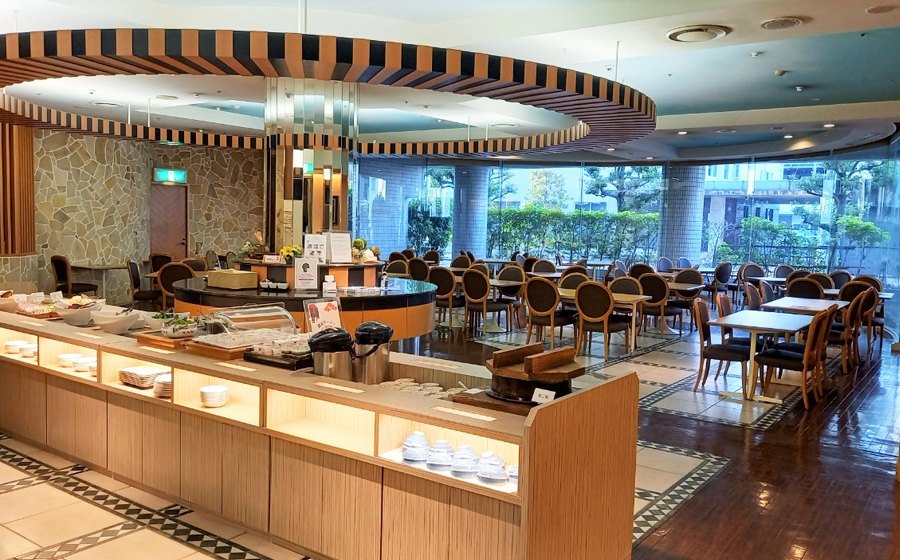
| Rank | Property | Prefecture | Type | Total reviews | Made-to-order breakfast mentions | Mention rate |
|---|---|---|---|---|---|---|
| 1 | Ark Hotel Okayama (アークホテル岡山) | Okayama | City | 1,463 | 256 | 17.5% |
| 2 | Grand Nikko Tokyo Bay Maihama (グランドニッコー東京ベイ 舞浜) | Chiba | Resort | 8,140 | 234 | 2.9% |
| 3 | Ito Hotel Juraku (伊東ホテルジュラク) | Shizuoka | Resort | 1,507 | 178 | 11.8% |
| 4 | Shirahama Koganoi Resort & Spa (白浜古賀の井リゾート&スパ) | Wakayama | Resort | 2,411 | 151 | 6.3% |
| 5 | Iizaka Hotel Juraku (飯坂ホテルジュラク) | Fukushima | Ryokan | 1,566 | 134 | 8.6% |
| 6 | Awara Onsen Seifuso (あわら温泉 清風荘) | Fukui | Ryokan | 1,726 | 120 | 7.0% |
| 7 | Gensen Yu no Yado Sennotani (源泉湯の宿 千の谷) | Gunma | Ryokan | 1,714 | 120 | 7.0% |
| 8 | EN RESORT Re'Cove Hakone | Kanagawa | Resort | 2,317 | 106 | 4.6% |
| 9 | Minakami Hotel Juraku (みなかみホテルジュラク) | Gunma | Ryokan | 1,459 | 104 | 7.1% |
| 10 | Hotel Okura Tokyo Bay (ホテルオークラ東京ベイ) | Chiba | Resort | 3,196 | 100 | 3.1% |
| 11 | Asaya Hotel (あさやホテル) | Tochigi | Ryokan | 3,023 | 96 | 3.2% |
| 12 | Aizu Higashiyama Onsen Onyado Toho (会津・東山温泉 御宿 東鳳) | Fukushima | Ryokan | 3,020 | 95 | 3.1% |
| 13 | Sakaide Plaza Hotel (坂出プラザホテル) | Kagawa | Business | 1,042 | 94 | 9.0% |
| 14 | Hotel Concorde Hamamatsu (ホテルコンコルド浜松) | Shizuoka | City | 1,176 | 93 | 7.9% |
| 15 | Kusatsu Onsen Hotel Ichii (草津温泉 ホテル一井) | Gunma | Ryokan | 1,886 | 90 | 4.8% |
| 16 | Niigata Daiichi Hotel (新潟第一ホテル) | Niigata | Business | 1,594 | 86 | 5.4% |
| 17 | Marumine (丸峰) | Fukushima | Ryokan | 2,204 | 86 | 3.9% |
| 18 | The Global View Nagasaki (ザ・グローバルビュー長崎) | Nagasaki | City | 2,850 | 83 | 2.9% |
| 19 | Grandvrio Hotel Nara Wakura (グランヴィリオホテル奈良 -和蔵-) | Nara | Business | 1,311 | 83 | 6.3% |
| 20 | Hotel Springs Makuhari (ホテルスプリングス幕張) | Chiba | City | 2,696 | 83 | 3.1% |
Source: HotelBank Editorial Team research (NLP analysis of guest reviews, 24 months from November 2024 to November 2026, compiled November 10, 2026). Coverage: properties with 20+ reviews and 10+ positive mentions; top 20 by number of mentions
Source: HotelBank Editorial Team research (NLP analysis of guest reviews, 24 months from November 2024 to November 2026, compiled November 10, 2026). Top 15 by number of mentions
Mention counts, however, depend on a property’s size and total review volume. Re-ranking the top 100 by mention rate brings a different line-up to the surface. After Ark Hotel Okayama’s 17.5% come samana hotel Yakushima, mentioned in 61 of 449 reviews (13.6%), then Ito Hotel Juraku (11.8%), Hotel Italia-ken (10.8%) and Nakajimaya Grand Hotel (9.8%). Where live breakfast cooking comes up in roughly one review in ten, breakfast itself can be read as part of the reason guests book.
| Property | Prefecture | Type | Total reviews | Made-to-order breakfast mentions | Mention rate |
|---|---|---|---|---|---|
| Ark Hotel Okayama (アークホテル岡山) | Okayama | City | 1,463 | 256 | 17.5% |
| samana hotel Yakushima | Kagoshima | Resort | 449 | 61 | 13.6% |
| Ito Hotel Juraku (伊東ホテルジュラク) | Shizuoka | Resort | 1,507 | 178 | 11.8% |
| Hotel Italia-ken (ホテルイタリア軒) | Niigata | City | 566 | 61 | 10.8% |
| Nakajimaya Grand Hotel (中島屋グランドホテル) | Shizuoka | City | 642 | 63 | 9.8% |
| Sakaide Plaza Hotel (坂出プラザホテル) | Kagawa | Business | 1,042 | 94 | 9.0% |
| Garden Hotel Shizuoka (ガーデンホテル静岡) | Shizuoka | City | 810 | 70 | 8.6% |
| Iizaka Hotel Juraku (飯坂ホテルジュラク) | Fukushima | Ryokan | 1,566 | 134 | 8.6% |
| Hotel Concorde Hamamatsu (ホテルコンコルド浜松) | Shizuoka | City | 1,176 | 93 | 7.9% |
| Miharashi no Yado Furonden (みはらしの宿ふろんでん) | Oita | Ryokan | 1,043 | 79 | 7.6% |
Source: HotelBank Editorial Team research (NLP analysis of guest reviews, 24 months from November 2024 to November 2026, compiled November 10, 2026). The 10 hotels with the highest mention rates among the top 100
So what exactly do guests remember as “made to order”? Picking out only the breakfast passages from top hotels’ reviews, omelets and French toast are the two staples, with each property adding its own touch — tempura, pizza, dashimaki rolled omelet, onigiri rice balls. Examples that pair local ingredients with live cooking, such as Gifu Grand Hotel’s young sweetfish (ayu) tempura, tend to be written into reviews by the dish’s name.
| Property | Prefecture | Live-cooked dishes mentioned in reviews | Guest comments (excerpt) |
|---|---|---|---|
| Ark Hotel Okayama (アークホテル岡山) | Okayama | French toast, omelets | “The cook made it for me…” |
| Hotel Okura Tokyo Bay (ホテルオークラ東京ベイ) | Chiba | French toast, omelets | “They made it right in front of me…” |
| Sakaide Plaza Hotel (坂出プラザホテル) | Kagawa | Freshly baked pizza, French toast | “The effort to serve each guest individually…” |
| Hotel Concorde Hamamatsu (ホテルコンコルド浜松) | Shizuoka | Omelets | “An omelet cooked right in front of you…” |
| Gifu Grand Hotel (岐阜グランドホテル) | Gifu | Young sweetfish (ayu) and shiitake tempura | “Piping hot, fried right in front of you…” |
| Hotel Springs Makuhari (ホテルスプリングス幕張) | Chiba | Omelets, dashimaki rolled omelet | “Made right in front of me…” |
| Hotel Kawaroku L’stage Takamatsu (ホテル川六 エルステージ高松) | Kagawa | Omelets with your choice of fillings | “You choose the fillings you like…” |
| Niigata Daiichi Hotel (新潟第一ホテル) | Niigata | Live-kitchen cooking shown on monitors | “You can see the live kitchen…” |
| Nakajimaya Grand Hotel (中島屋グランドホテル) | Shizuoka | Omelets | “An omelet cooked on the spot…” |
| Hotel Italia-ken (ホテルイタリア軒) | Niigata | Omelets, onigiri rice balls | “Having the chef make it…” |
Source: HotelBank Editorial Team research (partial quotes of positive breakfast passages from each property’s guest reviews over the last 24 months)
By Prefecture — Top 100 Spread over 34 Prefectures, Shizuoka and Kanagawa 8 Each
The top 100 hotels are spread across 34 prefectures. Shizuoka and Kanagawa have the most at 8 each, followed by Hokkaido and Hyogo with 7 each, Miyagi with 6, and Chiba, Gunma and Osaka with 5 each. Both prefectures with hot-spring areas such as Izu, Hakone, Kusatsu and Akiu and those with city-hotel clusters such as Yokohama, Kobe and Sapporo rank near the top.
Measured by mention rate within each prefecture’s total reviews, however, the order changes. Gunma is highest at 0.66% (911 of 138,111 reviews), followed by Fukushima 0.64%, Wakayama 0.61%, Shizuoka 0.58% and Okayama 0.56%. That is roughly double the national 0.30%; live breakfast cooking appears more likely to be talked about in areas where large hot-spring ryokan and resorts run live-kitchen buffets at both dinner and breakfast.
Source: HotelBank Editorial Team research (NLP analysis of guest reviews, 24 months from November 2024 to November 2026, compiled November 10, 2026). Made-to-order breakfast mentions (positive and negative) as a share of total reviews by prefecture; top 15 prefectures
Conversely, in the large metropolitan areas with the biggest review volumes, mention rates fell below the national level: Tokyo 0.13% (1,555 of 1,181,466 reviews), Kyoto 0.16% and Osaka 0.20%. In cities, where reviews cover many topics such as location and rooms, live breakfast cooking has yet to become a headline topic — which suggests room remains for properties that introduce it to stand out.
By Hotel Type — City 36, Ryokan 27, Resort 21, Business 12
By type, city hotels are the largest group at 36, followed by ryokan (27), resort hotels (21), business hotels (12) and deluxe hotels (4). The categories follow the ryokan / resort / business / city framework also used in the Japan Tourism Agency’s Overnight Travel Statistics Survey. City hotels lead in count, but their median mention rate is 2.6% versus 4.1% for resorts and 4.0% for ryokan — stay-focused properties where lodging and dining are integrated are more likely to have live breakfast cooking recorded in reviews.
| Type | Hotels | Total made-to-order breakfast mentions | Median mention rate | Median rooms |
|---|---|---|---|---|
| City | 36 | 2,080 | 2.6% | 240 |
| Ryokan | 27 | 1,863 | 4.0% | 117 |
| Resort | 21 | 1,592 | 4.1% | 166 |
| Business | 12 | 743 | 3.5% | 221 |
| Deluxe | 4 | 229 | 2.9% | 288 |
| Top 100 total | 100 | 6,507 | 3.3% | 180 |
Source: HotelBank Editorial Team research (NLP analysis of guest reviews, 24 months from November 2024 to November 2026, compiled November 10, 2026). Top 100 hotels summarized by type
Source: HotelBank Editorial Team research (NLP analysis of guest reviews, 24 months from November 2024 to November 2026, compiled November 10, 2026). Top 100 hotels; x-axis = total reviews, y-axis = made-to-order breakfast mention rate
The 12 business hotels deserve attention. Their median mention rate of 3.5% exceeds that of city hotels, and properties of 50–250 rooms — such as Sakaide Plaza Hotel (9.0%), Grandvrio Hotel Nara Wakura (6.3%) and Niigata Daiichi Hotel (5.4%) — leave a strong impression with live breakfast cooking. The median room count is 180 for the top 100 overall and 117 for ryokan alone, showing that made-to-order service is not limited to large properties. In the scatter chart, too, mid-sized properties with fewer than 2,000 reviews cluster in the high-mention-rate zone.
Mention Trends and Scarcity — Breakfast Buffet Talk Up 0.45pt; Few Properties Own the Topic Locally
Next, movement over time. Comparing nationwide reviews from the latest 3 months (mid-August to early November 2026, 859,655 reviews) with the preceding 12 months (4,036,041 reviews), the mention rate for breakfast buffets rose 0.45pt from 5.85% to 6.30%, and mentions of dish variety and number of items grew from 1.10% to 2.56%. As more guests write about their dining experience, made-to-order breakfast was neither among the 43 topics whose mention rate fell nor among the top 50 risers (threshold +0.28pt). It is an experience that keeps being talked about steadily, holding at 0.30% nationwide.
At the property level, the movement is clearer. For the 23 comparable hotels among the top 25 by mentions, comparing positive mentions in the latest 6 months with the previous 6 months, 14 increased and the total rose from 719 to 796. As a share of total reviews, it rose from 5.7% to 6.3%. This is a simple comparison that includes seasonal differences and should be discounted accordingly, but it suggests that buzz is accumulating at properties that keep up live cooking.
Scarcity within each area is also significant. Okayama Prefecture has 480 mentions in total (44 properties, positive and negative), yet Ark Hotel Okayama alone has 256 positive mentions — more than half of the prefecture’s conversation. In Fukui, Awara Onsen Seifuso accounts for 120 of the prefecture’s 203; in Kagawa, three properties — Sakaide Plaza Hotel, Hotel Kawaroku L’stage Takamatsu and Bay Resort Hotel Shodoshima (ベイリゾートホテル小豆島) — account for 211 of 409. Properties that have become “the place for live breakfast cooking” in their prefecture are likely to keep a strong presence in reviews for a long time.
Breakfast-Included Plan Premiums — Prefecture Medians of +14.5% for City and +9.9% for Business Hotels
So what pricing room does a made-to-order pitch open up? According to MetroEngines Research’s paired analysis comparing listed prices of room-only and breakfast-included plans within the same hotel (October 2026, 2 guests per room, tax-inclusive), the median prefecture-level breakfast premium was +14.5% for city hotels (about ¥3,400; 44 prefectures, 748 properties), +9.9% for business hotels (about ¥1,600; 47 prefectures, 3,019 properties) and +8.1% for resort hotels (about ¥3,000; 23 prefectures, 419 properties). Across all segments it was +9.5% (about ¥1,800; 47 prefectures, 4,705 properties).
Source: Compiled by HotelBank Editorial Team from MetroEngines Research (October 2026; paired room-only vs. breakfast-included comparison within the same hotel; median of prefecture values with 5+ paired properties)
The next table compares business and city hotel premiums in six prefectures: the five with the most top-100 hotels, plus Okayama, home of the most-mentioned Ark Hotel Okayama. City hotels in Hokkaido and Hyogo sustain steps of over ¥5,000 per room, and in Shizuoka city hotels add about ¥4,100 (+13.6%) — a different pricing tier from the prefecture’s business hotels at about ¥1,000 (+6.4%) (for Shizuoka’s step by hotel type, see our Shizuoka meal premium analysis).
| Prefecture | Business premium (%) | Business premium (¥) | Paired properties | City premium (%) | City premium (¥) | Paired properties |
|---|---|---|---|---|---|---|
| Shizuoka | +6.4% | ¥958 | N=129 | +13.6% | ¥4,117 | N=20 |
| Kanagawa | +9.3% | ¥1,661 | N=101 | +14.4% | ¥4,182 | N=30 |
| Hokkaido | +10.9% | ¥1,927 | N=199 | +20.4% | ¥5,400 | N=49 |
| Hyogo | +13.7% | ¥2,063 | N=70 | +21.0% | ¥5,615 | N=37 |
| Miyagi | +12.4% | ¥1,940 | N=78 | +14.6% | ¥2,824 | N=17 |
| Okayama | +10.9% | ¥1,671 | N=40 | +11.5% | ¥3,301 | N=14 |
Source: Compiled by HotelBank Editorial Team from MetroEngines Research (October 2026; listed prices, 2 guests per room, tax-inclusive; paired comparison within the same hotel)
The key point is that premiums vary even within the same prefecture and hotel type. These data do not show a causal link between review mentions and prices, but for a property where live breakfast cooking comes up in one review in ten, checking its breakfast-plan step against the area median is a starting point for spotting revenue opportunities. For example, the median business-hotel premium is about ¥1,600 per room for 2 guests, or about ¥800 per person; designing a breakfast-included plan that showcases the live-cooked dish offers upside toward the higher end of the range.
Implications for F&B — Grow One Live-Cooked Dish into a Signature Guests Talk About
Putting this together, properties that earn reviews for made-to-order breakfast share three traits. First, their live-cooked items are focused. What top properties’ guests talked about centered on one or two items — omelets, French toast, tempura — so there is no need to switch everything to live cooking. Starting with a single live-cooked dish in one corner of the breakfast venue is realistic in staffing terms as well.
Second, they tie the dish to local ingredients. Menu items that pair a place name with a dish name — such as young ayu tempura or dashimaki made with local eggs — tend to stay in reviews as proper nouns. For properties that make regional cuisine the centerpiece of breakfast, see also our Top 20 Hotels for Local Breakfasts. For owners considering renovation, deciding “what to cook in front of guests” before weighing a live-kitchen capex is a useful way to gauge the return on that investment.
Third, they find ways to show the cooking itself. At Niigata Daiichi Hotel, reviews mention monitors displaying the kitchen at work — so even properties whose layout makes an open kitchen difficult can still deliver the “being made” moment. Properties should also track their own made-to-order breakfast mention rate over time, using the top 100’s median of 3.3% as a benchmark. Once mentions build up, reflecting the live-cooked dish in breakfast plan names and price steps is an effective next step.
Summary
Positive mentions of made-to-order breakfast total 6,507 across the top 100 hotels, with a median mention rate of 3.3%. Although it is a rare topic at 0.30% of all reviews nationwide, properties where it comes up in around one review in ten exist regardless of type or size, led by Ark Hotel Okayama at 17.5%. By prefecture, Shizuoka and Kanagawa have 8 each; by type, the list is spread across city (36), ryokan (27), resort (21) and business (12) — showing that a single live-cooked dish can become a property’s signature anywhere from large hot-spring ryokan to regional business hotels.
Breakfast-included plan premiums, as prefecture medians in October 2026, are +14.5% for city hotels and +9.9% for business hotels. Properties with an experience that guests talk about have room to revisit this step in line with their strengths. Note that the review figures in this article are as of the survey date (November 10, 2026); rankings and mention rates will change as reviews accumulate.
Frequently Asked Questions
Q. How were “made-to-order breakfast” mentions counted?
A. Reviews mentioning cooking done in front of guests — live omelet cooking, live kitchens, à la carte items finished after ordering — were identified through semantic analysis of review text. Properties with 20+ reviews and 10+ positive mentions over the last 24 months (November 2024 to November 2026) were ranked by number of mentions, and the top 100 form the population.
Q. Which hotel is mentioned most for made-to-order breakfast?
A. Ark Hotel Okayama. 256 of its 1,463 reviews (17.5%) mentioned made-to-order breakfast. By number of mentions, it is followed by Grand Nikko Tokyo Bay Maihama (234), Ito Hotel Juraku (178) and Shirahama Koganoi Resort & Spa (151).
Q. Which hotel types are most likely to be praised for made-to-order breakfast?
A. City hotels are the most numerous at 36, but median mention rates rank resorts 4.1%, ryokan 4.0%, business hotels 3.5% and city hotels 2.6%. Stay-focused properties where lodging and dining are integrated are more likely to have live breakfast cooking recorded in reviews.
Q. How large is the breakfast-included plan premium?
A. In a paired analysis comparing listed room-only and breakfast-included prices within the same hotel (October 2026, 2 guests per room, tax-inclusive), prefecture medians were +14.5% (about ¥3,400) for city hotels, +9.9% (about ¥1,600) for business hotels, +8.1% (about ¥3,000) for resort hotels, and +9.5% (about ¥1,800) across all segments.
Q. Where should a hotel start to earn reviews for made-to-order breakfast?
A. Top properties’ reviews centered on one or two items such as omelets, French toast and tempura, so placing a single live-cooked dish in one corner of the breakfast venue is a realistic start. Pairing it with local ingredients and showing the cooking also helps. Track your own mention rate over time and aim for the top 100’s median of 3.3% as a benchmark.
Related Articles
References and Sources
■ Data sources
Aggregation based on semantic analysis of guest reviews (24 months from November 2024 to November 2026; 8,561,822 reviews nationwide; compiled November 10, 2026). Breakfast-included plan premiums are from MetroEngines Research’s paired comparison of room-only and breakfast-included plans within the same hotel (October 2026; listed prices, 2 guests per room, tax-inclusive).
■ Calculation assumptions
The ranking is the top 100 properties with 20+ reviews and 10+ positive mentions, ordered by number of mentions. Mention rate = reviews positively mentioning made-to-order breakfast ÷ the property’s total reviews. Prefecture-level mention rates are the share of mentions including both positive and negative. Values by type and premiums are medians (premiums are the median of prefecture values with 5+ paired properties).
■ Limitations and caveats
The mention rate indicates how often a topic comes up, not a rating score. No causal relationship between review mentions and breakfast-plan prices is shown. Mention growth is a simple comparison of the latest 6 months with the prior 6 months and includes seasonal differences. Rankings and mention rates will change as reviews accumulate.
| HotelBank Editorial Team research — aggregation based on semantic analysis of guest reviews (24 months from November 2024 to November 2026; 8,561,822 reviews nationwide; 26,102 made-to-order breakfast mentions; 6,507 positive mentions for the top 100) |
| MetroEngines Research — paired comparison of room-only and breakfast-included plans within the same hotel (October 2026; listed prices, 2 guests per room, tax-inclusive; 4,705 properties across all segments) |
| Japan Tourism Agency, Overnight Travel Statistics Survey (宿泊旅行統計調査) — classification of accommodation types (ryokan, resort hotel, business hotel, city hotel) |
| Statistics Bureau of Japan, Consumer Price Index (消費者物価指数) — official statistics for tracking food prices relevant to breakfast cost planning |