


On November 13, 2026, Royal Hotel, Ltd. (株式会社ロイヤルホテル) announced a new hotel in Nara City (99 rooms, five stories above ground, opening planned for around the end of May 2029), bringing the RIHGA Royal Hotels pipeline for 2028 onward to six properties and 811 rooms in total. Over roughly 12 months, from Hiroshima’s 168 rooms in June 2028 to Nara’s 99 rooms in May 2029, two urban hotels, two onsen resorts and two not-yet-named properties will open in sequence. The same announcement moved the opening of Noir by RIHGA Kobe Arima (ノワ・バイ・リーガ 神戸有馬, 93 rooms) to August 2028. This article lines up the six sites as one operator’s pipeline and overlays the estimated settled ADR of each host municipality, the increment each project adds to existing rooms nearby, and the required ADR implied by a range of total project costs per room, to show which price tier each project is aiming for.
• ADR (average daily rate) = an estimated settled rate (tax-excluded equivalent), calculated by applying a segment-specific adjustment factor to the lowest plan price each property publishes on OTAs (per-room rate for two guests, tax included). Benchmarked against property-level results disclosed by listed hotel REITs (91 properties, latest three months), the median error is about 7%. These are estimates and differ from each property’s actual settled prices and accounting figures.
• Area-level (prefecture / municipality) ADR is the median of the estimated settled rates of the properties covered (the level of a typical property in the area).
• Where listed prices are mentioned, they are per-room rates for two guests (tax included).
• OCC (occupancy) = rooms sold as a share of total rooms in the area (an estimate based on OTA sales inventory).
• Source: MetroEngines Research (continuously tracking OTA public prices for approx. 168,000 properties in Japan, of which approx. 27,000 are confirmed active)
MetroEngines Research tracks approximately 168,000 properties in Japan and analyzes about 27,000 of them (approx. 1.26 million rooms) whose activity can be confirmed on OTAs. Room stock in this article is defined as follows: accommodation facilities with 10 or more rooms (excluding leisure hotels) within the specified radius of each site’s center; “active” means a selling price was observed on major booking sites in the latest three months (September–November 2026) (as of November 19, 2026, compiled by MetroEngines Research). Estimated settled ADR is the municipality-level median, and the N= shown alongside is the number of observed properties used in the estimate.
- — Planned openings from 2028 onward total 6 hotels / 811 rooms. Nara City’s 99 rooms (around end of May 2029) were added on November 13, 2026, and Kobe Arima’s 93 rooms moved to August 2028. The six open within about 12 months, June 2028 – May 2029.
- — The increment to nearby active rooms is 2.0% in Hiroshima, 9.0% in Chitose and 4–6% at the two onsen sites, whereas in Nakijin 134 rooms are added to 340 rooms within 5km, i.e. 39.4% (as of November 19, 2026).
- — The estimated settled ADR (12-month average) of the host municipalities is ¥10k–¥13k range for the three urban municipalities and ¥27k–¥35k for the three resort municipalities, a gap of about 2.6x.
- — The required ADR from a simple estimate excluding land is ¥22k–¥65k, 1.3–2.4x the host municipality median. Lowering occupancy by 10pt raises the required ADR by 14–17%.
The Full Picture of 6 Hotels and 811 Rooms — Three Lines Opening in Sequence Over 12 Months
First, the published facts. According to Royal Hotel’s announcement, RIHGA Royal Hotels comprised 18 hotels in Japan and overseas as of November 2026 and plans to open six new hotels, including Nara City, from 2028 onward. The company reorganized its hotel brand categories under its “Medium-Term Management Plan 2026,” and the six properties fall into three lines: the lodging-focused “RIHGA Grand,” the onsen-resort “Noir by RIHGA,” and two properties whose names have not yet been announced. Opening dates and room counts are all “planned,” as stated in the release, and the company itself notes that the plans reflect the current development stage and may change.
| Planned opening | Property | Line | Location | Rooms | Announced features |
|---|---|---|---|---|---|
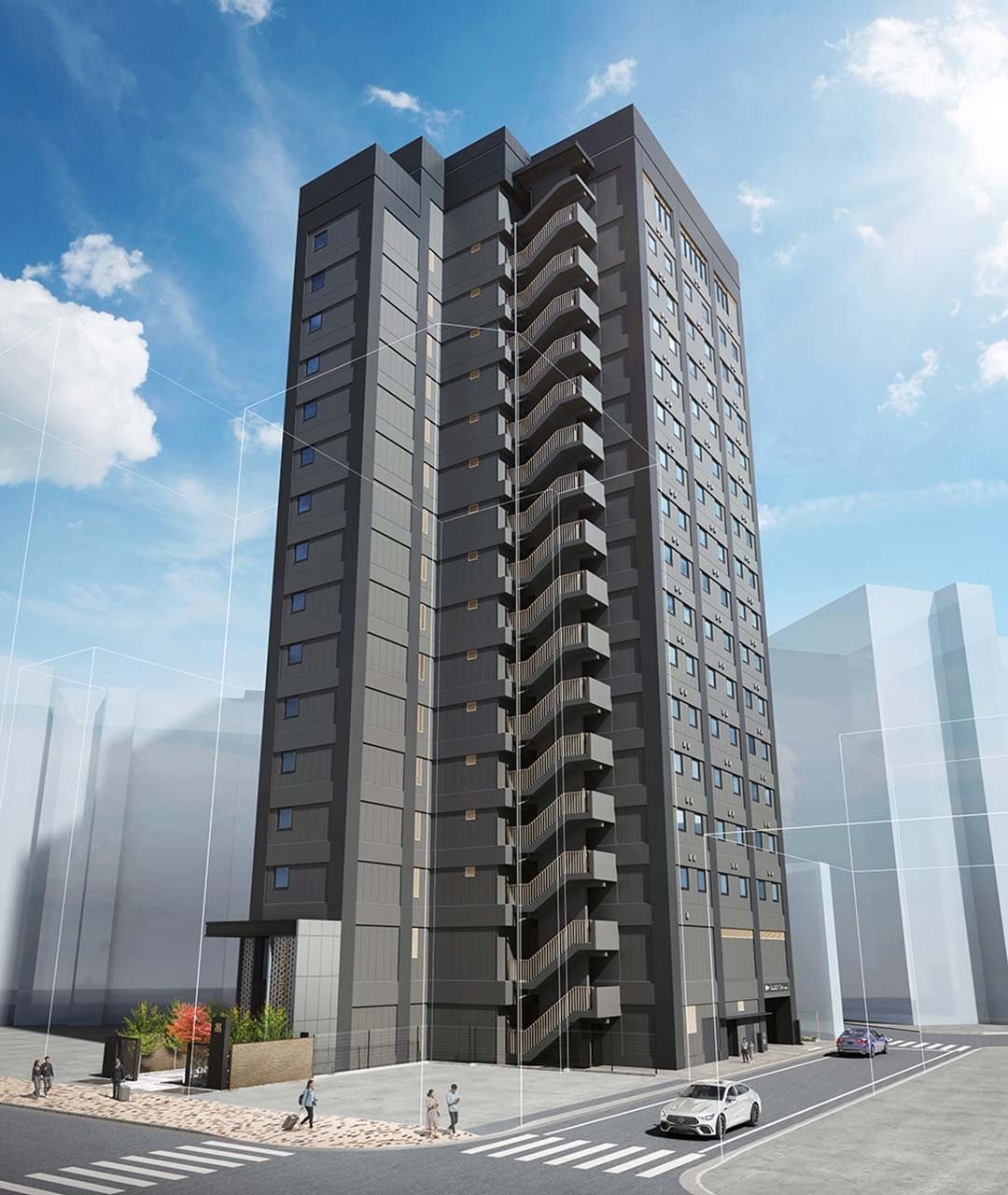
| Jun 2028 | RIHGA Grand Hiroshima (リーガグラン広島) | RIHGA Grand | Naka Ward, Hiroshima (along Peace Boulevard) | 168 | Large public bath, interiors themed on local products and Japanese style |
| Aug 2028 Rescheduled | Noir by RIHGA Kobe Arima (ノワ・バイ・リーガ 神戸有馬) | Noir by RIHGA | Kita Ward, Kobe (Arima Onsen) | 93 | Japanese-style resort built on hot springs and local cuisine |
| Oct 2028 | Okinawa Nakijin New Hotel (tentative name) | Name TBA | Nakijin Village, Okinawa | 134 | Beachfront, room facilities for mid- to long-term stays |
| Dec 2028 | Noir by RIHGA Hakone Gora (ノワ・バイ・リーガ 箱根強羅) | Noir by RIHGA | Hakone Town (Kami-Gora area) | 90 | Open-air bath and terrace in every room |
| Mar 2029 | RIHGA Grand Chitose (リーガグラン千歳) | RIHGA Grand | Chitose City (in front of JR Chitose Station) | 227 | Two stops from New Chitose Airport, serving business and leisure |
| Around end of May 2029 | Nara City New Hotel (tentative name) | Name TBA | Nara City (address not disclosed) | 99 | Five stories, linked with group hotels in Osaka and Kyoto for circuit travel demand |
| Total | 811 | ||||
By line, RIHGA Grand accounts for 395 rooms across Hiroshima and Chitose, Noir by RIHGA for 183 rooms across Arima and Hakone Gora, and the unnamed Nakijin and Nara properties for 233 rooms. The average per property is about 198 rooms for RIHGA Grand and about 92 rooms for Noir by RIHGA. The scale design is clearly split: a lodging-focused type running around 200 rooms in front of stations and along arterial roads, and an onsen-resort type that builds per-guest spend with rooms in the 90s.
The Arima rescheduling also deserves mention. When it was announced in November 2025 as the first property of the new brand, opening was planned for “around the end of February 2028,” and in the December 2025 Nakijin release, Arima in “February 2028” still headed the list of openings from 2028 onward. In the latest release it moved to August 2028, and Hiroshima now opens first. As a result, all six openings fall within roughly one year, June 2028 to May 2029, with three onsen/resort properties totaling 317 rooms concentrated in August–December 2028.
Where the 6 Sites Are — From Chitose in the North to Nakijin in the South: Urban Hubs, Onsen Towns and Beaches
On a map, the six sites stretch from Chitose in the north to Nakijin in the south. Hiroshima and Chitose are urban locations near transport hubs, Arima and Hakone Gora are onsen towns within day-trip range of major metropolitan areas, and Nakijin is a beach resort in northern Okinawa Island. The Nara City hotel is not shown on the map because its address has not been disclosed.
For the two sites whose plot information has been published, surrounding conditions can also be checked in the MLIT Real Estate Information Library. The announced address of RIHGA Grand Hiroshima (4-7 Higashi-Hiratsuka-cho, Naka Ward, Hiroshima) is in a commercial zone with a designated floor-area ratio of 800% and building coverage ratio of 80%. The plan for 17 stories and 168 rooms can be read as a scale that makes use of this high-FAR designation. The site conditions of the Nakijin plot (Tokijin, Nakijin Village) are covered in detail in Nakijin Hotel Opening in October 2028, 134 Rooms / 7 Floors — +40% on 339 Rooms Within 5km, Site Read Through Tsunami Risk, Land Prices and Zoning.
| Site | Nearest land price point | Type | Price (¥/㎡) | YoY | Zoning / FAR | Distance from rep. point |
|---|---|---|---|---|---|---|
| Hiroshima | 2-33 Higashi-Hiratsuka-cho, Naka Ward | Official Land Price 2026 | 685,000 | +9.1% | Commercial zone / 800% | approx. 210m |
| Chitose | 5-1-8 Chiyoda-cho | Official Land Price 2026 | 245,000 | +44.1% | Neighborhood commercial zone / 300% | approx. 350m |
| Hakone Gora | 1320-820 Aza Mukaiyama, Gora | Land Price Survey 2026 | 67,500 | +5.8% | Category 1 residential zone / 200% | approx. 790m |
| Arima | 138-3 Aza Togedo, Arima-cho | Official Land Price 2026 | 50,000 | +2.5% | Category 2 residential zone / 200% | approx. 730m |
| Nakijin | 177 Nakasonebaru, Aza Nakasone | Land Price Survey 2026 | 25,800 | +3.2% | Commercial land (no zoning designation) | approx. 1.1km |
Land price levels differ by more than 25x across the five sites, yet all posted year-on-year increases in 2026. The commercial land near Chitose Station stands out at +44.1%, meaning the hotel opens at a time of strengthening demand for station-front land. At the two onsen sites, by contrast, land costs ¥50k–¥60k-plus per ㎡, so land carries less weight in total project cost than at urban sites, and construction cost and operational design drive the economics.
Increment to Nearby Rooms — 2–9% in Cities, About 40% in Nakijin
Next, how much each project adds on top of existing rooms. Radii were set to suit each location: 1km for urban Hiroshima and Chitose, 2km for the onsen towns of Arima and Hakone Gora, and 5km for Nakijin. Centers are the announced addresses for Hiroshima and Nakijin, the center of the onsen town for Arima, Kami-Gora Station for Hakone Gora, and JR Chitose Station for Chitose. Using “active” rooms with a selling price observed in the latest three months as the denominator, the increment ratios are as follows.
| Site (center, radius) | Listed | Active | Planned rooms | Increment | 2017→2026 (by opening year) |
|---|---|---|---|---|---|
| Hiroshima (site, 1km) | 85 properties / 10,205 rooms | 58 / 8,233 rooms | 168 | 2.0% | 6,352→8,805 rooms |
| Chitose (JR Chitose Sta., 1km) | 27 / 2,891 rooms | 21 / 2,532 rooms | 227 | 9.0% | 1,571→2,532 rooms |
| Hakone Gora (Kami-Gora Sta., 2km) | 99 / 3,372 rooms | 64 / 2,140 rooms | 90 | 4.2% | 2,463→2,468 rooms |
| Arima (onsen town center, 2km) | 43 / 2,198 rooms | 32 / 1,610 rooms | 93 | 5.8% | 1,916→1,847 rooms |
| Nakijin (site, 5km) | 22 / 524 rooms | 13 / 340 rooms | 134 | 39.4% | 232→410 rooms |
On increment ratio alone, the two urban sites look modest. Hiroshima has 8,233 active rooms within 1km, so 168 additional rooms amount to only 2.0%. Chitose, at 227 rooms the largest of the six, has a relatively small 2,532 active rooms within 1km of the station, putting its increment at 9.0%, thick for an urban site. Rooms around Chitose Station grew about 60% on an opening-year basis, from 1,571 in 2017 to 2,532 in 2026, with more than 400 new rooms added in 2026 alone. A large lodging-focused hotel is entering a market where rooms have been piling up on the back of its proximity to the airport.
The two onsen sites present the opposite picture: rooms have barely grown over the past nine years. Within 2km of Arima, rooms edged down from 1,916 in 2017 to 1,847 in 2026. Within 2km of Hakone Gora, rooms fell from 2,463 in 2017 to 2,237 in 2025, and only in 2026, including properties scheduled to open within the year, did they return to 2017 levels at 2,468. Even new builds in the 90-room range mean increments of 4–6%, a sizable block of rooms entering onsen towns where new supply has long been limited. Within 2km of Kami-Gora Station, a 126-room property scheduled to open on December 15, 2026 is also listed (HOTEL THE MITSUI HAKONE Opens Dec 15 With 126 Rooms).
In Nakijin, even the 5km radius holds only 340 active rooms, so 134 rooms add about 40%. Given that the largest property in the area has 84 rooms, adding a property of more than 100 rooms to a northern market centered on small resorts and villas is significant. For the local destination, the plan can be read as expanding its capacity to receive visitors by a full step.
Estimated Settled ADR of Host Municipalities — Split Between ¥10k-Range Cities and ¥30k-Range Resorts
As a measure of demand-side levels, here is the estimated settled ADR (median) of the municipalities hosting the six hotels: the October 2026 value, its year-on-year change, and the average for the latest 12 months (November 2025 – October 2026).
| Municipality | Oct 2026 | Oct 2025 | YoY | 12-month avg. | Observed properties (N) |
|---|---|---|---|---|---|
| Naka Ward, Hiroshima | ¥12,174 | ¥11,572 | +5.2% | ¥10,150 | 56–64 |
| Chitose City | ¥12,050 | ¥11,777 | +2.3% | ¥13,138 | 24–28 |
| Nara City | ¥15,818 | ¥15,890 | −0.5% | ¥12,720 | 58–61 |
| Hakone Town | ¥27,660 | ¥25,492 | +8.5% | ¥26,662 | 170–187 |
| Kita Ward, Kobe (entire ward incl. Arima Onsen) | ¥30,244 | ¥30,107 | +0.5% | ¥31,202 | 41–43 |
| Nakijin Village | ¥37,864 | ¥36,368 | +4.1% | ¥35,343 | 19–21 |
The municipalities split into two groups whose averages differ by about 2.6x: the three urban municipalities (Naka Ward of Hiroshima, Chitose City, Nara City) with 12-month averages in the ¥10k–¥13k range, and the three resort municipalities (Hakone Town, Kita Ward of Kobe, Nakijin Village) at ¥27k–¥35k. Year-on-year changes were positive except for a slight dip in Nara City, and Hakone Town in particular was up 8.5%, indicating rising onsen-resort rates. Note that the Kita Ward, Kobe figure is the median for the whole ward, including areas outside Arima Onsen.
Where each opening month falls in its market’s seasonality also matters for launch planning. With the 12-month average set at 100, June, Hiroshima’s planned opening month, is 79, close to the annual trough; Chitose’s March is 89 and Arima’s August is 90. Conversely, Nakijin’s October is 107, Hakone Town’s December 107, and Nara City’s May 102, all above average. Sites opening in a demand trough can overlap their post-opening learning period with slow months, while those opening at a peak can more easily build a track record at high rates from the first month. Each opening timing carries a different advantage.
Development Scenario Estimates — Required ADR Is 1.3–2.4x the Municipality Median
From here, we take the owner’s (building owner / project sponsor) perspective and make a simple estimate of the rate at which each project would work. Royal Hotel handles operations, and in many cases a separate company builds the building. According to the releases, the building owner of RIHGA Grand Hiroshima is JA Mitsui Leasing Tatemono (JA三井リース建物), and the sponsors of the Nakijin project are Keihan Real Estate (京阪電鉄不動産) and Sekisui Heim Tokai (セキスイハイム東海). We therefore set total project cost from gross floor area per room and construction cost per unit, and back-calculated the ADR needed to secure a target GOP yield.
| Site | GFA per room (assumed) | Total project cost per room | GOP margin | Occupancy | Required ADR (base) | Occupancy −10pt | vs. median |
|---|---|---|---|---|---|---|---|
| Hiroshima (RIHGA Grand) | 50㎡ | ¥38.38M–¥42.10M | 40% | 80% | ¥21,600 | ¥24,700 | 2.1x |
| Chitose (RIHGA Grand) | 50㎡ | ¥38.38M–¥42.10M | 40% | 80% | ¥21,600 | ¥24,700 | 1.6x |
| Nara City (tentative) | 60㎡ | ¥45.65M–¥50.12M | 40% | 80% | ¥25,700 | ¥29,400 | 2.0x |
| Nakijin (tentative) | 70㎡ | ¥53.93M–¥59.15M | 30% | 70% | ¥46,300 | ¥54,000 | 1.3x |
| Arima (Noir by RIHGA) | 100㎡ | ¥75.75M–¥83.21M | 30% | 70% | ¥65,100 | ¥76,000 | 2.1x |
| Hakone Gora (Noir by RIHGA) | 100㎡ | ¥75.75M–¥83.21M | 30% | 70% | ¥65,100 | ¥76,000 | 2.4x |
To make the assumptions explicit: gross floor area per room is an assumption set by property type, as the floor areas of the individual properties were not disclosed in this release (50㎡ for lodging-focused, 60㎡ for the unnamed urban property, 70㎡ for the beach resort, and 100㎡ for onsen resorts with open-air baths in every room). Construction cost takes the 2025 steel-frame figure of ¥2.405M per tsubo from MLIT’s Building Construction Starts Statistics as the lower bound, with ¥2.652M per tsubo, assuming 5% annual increases for 2 years until opening, as the base case. Furniture, fixtures and pre-opening costs of ¥2M per room for urban and ¥3M for resort properties are added; land is excluded. The GOP margin is 40% for lodging-focused and 30% for resort types, where F&B carries more weight, referencing the 38.9% achieved by MyStays-operated hotels as disclosed by Invincible Investment Corporation (fiscal period ended December 2024), and the target GOP yield (GOP ÷ total project cost) is set at 6%. Required ADR assumes recovery from room revenue alone and excludes F&B, banquet and other revenue.
Summarizing the range of assumptions in three scenarios: optimistic keeps construction cost at the 2025 actual of ¥2.405M per tsubo, middle is the base case in the table above, and pessimistic lowers occupancy by 10pt from the base case. Floor area, GOP margin and target GOP yield are the same as in the table above in all cases.
| Site | Optimistic (¥2.405M/tsubo) | Middle (base case) | Pessimistic (base, occupancy −10pt) | Occupancy (middle → pessimistic) |
|---|---|---|---|---|
| Hiroshima / Chitose (RIHGA Grand) | ¥19,700 | ¥21,600 | ¥24,700 | 80% → 70% |
| Nara City (tentative) | ¥23,500 | ¥25,700 | ¥29,400 | 80% → 70% |
| Nakijin (tentative) | ¥42,200 | ¥46,300 | ¥54,000 | 70% → 60% |
| Arima / Hakone Gora (Noir by RIHGA) | ¥59,300 | ¥65,100 | ¥76,000 | 70% → 60% |
Moving construction cost and occupancy together widens the required ADR range further. The two tables below show results for the lodging-focused type (Hiroshima / Chitose) and the onsen-resort type (Arima / Hakone Gora), which differ in scale, with construction cost raised by 0–4 years of 5% annual increases and occupancy varied in 5pt steps (shaded cell = base case).
| Occupancy (assumed) \ Construction cost (per tsubo) | ¥2.405M | ¥2.525M | ¥2.652M | ¥2.784M | ¥2.923M |
|---|---|---|---|---|---|
| 90% | ¥17,500 | ¥18,400 | ¥19,200 | ¥20,100 | ¥21,100 |
| 85% | ¥18,600 | ¥19,400 | ¥20,400 | ¥21,300 | ¥22,300 |
| 80% | ¥19,700 | ¥20,600 | ¥21,600 | ¥22,700 | ¥23,700 |
| 75% | ¥21,000 | ¥22,000 | ¥23,100 | ¥24,200 | ¥25,300 |
| 70% | ¥22,500 | ¥23,600 | ¥24,700 | ¥25,900 | ¥27,100 |
| Occupancy (assumed) \ Construction cost (per tsubo) | ¥2.405M | ¥2.525M | ¥2.652M | ¥2.784M | ¥2.923M |
|---|---|---|---|---|---|
| 80% | ¥51,900 | ¥54,400 | ¥57,000 | ¥59,700 | ¥62,600 |
| 75% | ¥55,300 | ¥58,000 | ¥60,800 | ¥63,700 | ¥66,800 |
| 70% | ¥59,300 | ¥62,100 | ¥65,100 | ¥68,300 | ¥71,600 |
| 65% | ¥63,900 | ¥66,900 | ¥70,100 | ¥73,500 | ¥77,100 |
| 60% | ¥69,200 | ¥72,500 | ¥76,000 | ¥79,700 | ¥83,500 |
For the lodging-focused type, required ADR ranges from ¥17,500 at the most favorable corner (¥2.405M per tsubo, assumed occupancy 90%) to ¥27,100 at the toughest corner (¥2.923M per tsubo, 70%). For the onsen-resort type the range is ¥51,900 to ¥83,500. In both types, one year’s rise in construction cost (5%) is roughly equivalent to a 3–4pt drop in occupancy, so construction delays and ramp-up occupancy weigh on project economics to a similar degree.
The results show required ADR at 1.3–2.4x the host municipality median. The median here represents a “typical property,” including business hotels and small inns, and new branded hotels aim for the tier above it. Ranking properties within each radius by estimated settled ADR over the latest 12 months reveals how thick the price tier each project targets actually is.
Urban Hiroshima / Chitose
Against a required ADR of about ¥22k, only 3 of 41 properties (468 rooms) within 1km in Hiroshima and 1 of 14 (438 rooms) within 1km in Chitose average ¥20k or more annually. Rooms in the upper tier are still thin, leaving room for a lodging-focused hotel with a large public bath to target the ¥20k range.
Resort Nakijin
The required ADR of about ¥46k is nearly level with the top 25% within 5km (about ¥47k). Properties averaging ¥40k or more annually number 3 of 9 (71 rooms), all under 40 rooms. The 134-room plan would add rooms to this tier at a substantial scale.
Onsen resort Arima / Hakone Gora
Properties averaging ¥60k or more annually, close to the required ADR of about ¥65k, number 3 (60 rooms) within 2km of Arima and 8 (199 rooms) within 2km of Hakone Gora. The high-rate tier is dominated by small inns, so a plan entering this price band at a 90-room scale is supply that thickens the upper tier.
In short, what the six properties share is a design that targets the upper tier of each location at a larger scale than existing properties. The target band is the ¥20k range for the two urban sites and the ¥60k range for the onsen resorts, and in both cases rooms in that band are limited. Whether brand price premiums and product strength, such as large public baths, open-air baths in every room and beachfront locations, can thicken the upper tier will define the growth opportunity for both operator and owners.
Implications for Developers, Owners and Lenders
For hotel developers, this pipeline is a working example of “varying scale by location type.” At urban transport hubs it is a 170–230-room lodging-focused type; in onsen towns a high-rate type in the 90-room range; at the beach resort around 130 rooms geared to mid- to long-term stays, with scale set to the depth of each market. The process of lining up the host municipality’s ADR and nearby room stock before settling scale and price tier is easy to apply to other projects.
For owners considering management contracts, the pipeline shows a widening option of bringing domestic brands into regional cities and resorts by separating ownership from operation. In onsen towns in particular, rooms have barely grown over the past nine years and the upper tier is dominated by small inns. There is substantial room to revitalize existing ryokan and hotel sites by combining them with an operator’s brand and distribution power.
For regional banks and funds, the key question is the distance between required ADR and the market’s upper tier. Some plans, like Nakijin, have a required ADR overlapping the top 25% in their radius, while others, like Hakone Gora, assume rates more than twice the median. With construction costs rising, the starting point for lending decisions will be how to model the post-opening ramp-up period, given the range of total project cost and occupancy sensitivity (a 10pt drop in occupancy raises required ADR by 14–17%). The address of the Nara City project has not been disclosed, so comparison with nearby stock must await its publication (for the room composition around JR Nara Station, see Nara Station: 3,137 Hotel Rooms Across 31 Properties Within 1km).
Summary
With the addition of Nara City’s 99 rooms, RIHGA Royal Hotels’ planned openings from 2028 onward now total six properties and 811 rooms. Starting with Hiroshima’s 168 rooms (June 2028), followed by Arima’s 93 rooms (moved to August 2028), Nakijin’s 134 rooms (October 2028), Hakone Gora’s 90 rooms (December 2028), Chitose’s 227 rooms (March 2029) and Nara City’s 99 rooms (around end of May 2029), the plan opens them in sequence over about 12 months. The increment to nearby active rooms is 2–9% in cities, 4–6% in onsen towns and about 40% in Nakijin, so the market impact varies by site. The estimated settled ADR of the host municipalities is in the ¥10k–¥13k range for urban sites and ¥27k–¥35k for resorts, and the estimated required ADR is 1.3–2.4x each median, i.e. the upper tier of each market. The defining feature of this pipeline is a domestic brand entering, at scale, markets where upper-tier rooms are limited.
Note on the estimates: The required ADR in this article is a simple estimate based on assumed floor area, construction cost, GOP margin and occupancy, and differs from each property’s actual business plan. Required ADR varies significantly depending on land acquisition terms, the form of lease or management contract, and design and financing conditions. Actual investment decisions require a detailed feasibility study. Opening dates and room counts are as planned at the time of announcement and may change.
Frequently Asked Questions
Q. How many hotels does RIHGA Royal Hotels plan to open?
As of the November 13, 2026 announcement, six properties with 811 rooms in total are planned to open from 2028 onward: RIHGA Grand Hiroshima (168 rooms, June 2028), Noir by RIHGA Kobe Arima (93 rooms, August 2028), Okinawa Nakijin New Hotel (tentative name; 134 rooms, October 2028), Noir by RIHGA Hakone Gora (90 rooms, December 2028), RIHGA Grand Chitose (227 rooms, March 2029) and Nara City New Hotel (tentative name; 99 rooms, around end of May 2029). All are planned.
Q. When does Noir by RIHGA Kobe Arima open?
The November 13, 2026 announcement changed the opening to August 2028. When first announced in November 2025, it was planned for around the end of February 2028.
Q. Where will the new hotel in Nara City be?
The release gives the location only as “Nara City, Nara Prefecture”; the detailed address has not been disclosed. It is planned as a five-story, 99-room hotel opening around the end of May 2029.
Related Articles
Further Reading
- Bouncee by RIHGA Fukuoka Hakata, 117 Rooms: First-Month ADR of ¥25k Is 1.8x Hakata Ward — Read Through Price Bands of 24,000 Rooms Within 1km
- Chatan Hotel Investment and Tsunami Risk — 97% of Rooms Within 2km of Mihama in the Inundation Zone, RIHGA Royal’s 209 Rooms and Chatan ADR of ¥16.4k
- Hakone Gora Luxury Inn Appraised at ¥390M per Room — REIT TK Investment, Preferred Equity and 184 Rooms in 2028
- Hiroshima Hotel Supply Polarizes — Hatchobori vs. Hiroshima Station, 2027–2029 Pipeline Analysis
- Hotel Markets in 4 Semiconductor Hubs 2026 | Chitose ADR ¥13.7k, Weekday Occupancy Above 90%, 901 Rooms Added Near TSMC in 2 Years
- 2028 Hotel Openings: 106 Projects Scheduled for Completion — 48% of 2027, Smaller Projects Not Yet Filed
References and Sources
■ Data Sources
Opening dates, room counts and locations are from Royal Hotel, Ltd. announcements (November 13, 2026 and others). Room stock near the sites and estimated settled ADR are aggregated by MetroEngines Research; room stock is as of November 19, 2026, and municipality-level estimated settled ADR covers October 2025 – October 2026. Land prices and zoning are from the MLIT Real Estate Information Library (2026 Official Land Price Publication and Prefectural Land Price Survey).
■ Estimate Assumptions
GFA per room is an assumption set by property type (50㎡ lodging-focused, 60㎡ unnamed urban, 70㎡ beach resort, 100㎡ onsen resort). The base-case construction cost is ¥2.652M per tsubo, adding 5% annual increases for 2 years to the 2025 steel-frame figure of ¥2.405M per tsubo in the Building Construction Starts Statistics, plus ¥2M–¥3M per room for furniture, fixtures and pre-opening costs. GOP margin is 40% for lodging-focused and 30% for resort types, occupancy 80% / 70%, and target GOP yield (GOP ÷ total project cost) 6%.
■ Limitations
Required ADR is not each property’s actual business plan but a simple estimate based on assumptions, and excludes land cost and non-room revenue such as F&B and banquets. Estimated settled ADR is an estimate derived by applying segment-specific adjustment factors to OTA public prices and differs from actual settled prices. The Kita Ward, Kobe figure is the median for the whole ward, including areas outside Arima Onsen. Because the Nara City hotel’s address has not been disclosed, no comparison with nearby room stock or the upper tier was made. Opening dates and room counts are as planned at the time of announcement.
■ Primary Sources (Plans)
- Royal Hotel, Ltd., “RIHGA Royal Hotels to Open New Hotel in Nara” (PR TIMES, November 13, 2026)
- MICE TIMES ONLINE (November 17, 2026)
- Royal Hotel, Ltd., “RIHGA Grand Hiroshima” announcement (May 14, 2026, reprinted by Best Calendar)
- Royal Hotel, Ltd., “RIHGA Royal Hotels Okinawa Nakijin New Hotel” announcement (December 18, 2025, reprinted by Ryukyu Shimpo)
- Travel Voice, “Noir by RIHGA Kobe Arima” (November 17, 2025)
■ Market Data
- MetroEngines Research & Consulting — Radius room stock for 5 sites (as of November 2026), municipality-level estimated settled ADR (November 2025 – October 2026), estimated settled ADR of properties within each radius
■ Government Statistics and Public Data
- MLIT Real Estate Information Library — Official Land Price Publication and Prefectural Land Price Survey (2026), zoning
- MLIT “Building Construction Starts Statistics” (2025, estimated construction cost by structure)
■ REIT and Industry Reports
- Invincible Investment Corporation (8963) hotel operating results — GOP margin 38.9% (fiscal period ended December 2024)