


According to a business progress presentation that Keio Corporation (京王電鉄) disclosed on November 17, 2026, its limited-service hotel brand Keio Presso Inn (京王プレッソイン) has stopped taking new reservations since September 26, the day a ransomware attack was detected in the early morning hours, and expects lodging revenue to fall by about ¥1.8 billion cumulatively over the three months of October to December. Even though guests with existing reservations are being accommodated as scheduled, the company’s occupancy outlook versus its annual plan worsens month by month: about 30% lower in October, about 70% lower in November and about 80% lower in December. This article sets the company’s published figures alongside the booking curve for Tokyo business hotels compiled by MetroEngines Research to explain how occupancy and lodging revenue move when a hotel stops accepting bookings, and then lays out the business continuity (BCP) points that lodging operators should review in normal times.
• ADR (average daily rate) = an estimated settled rate (tax-excluded equivalent) calculated by applying a segment-specific adjustment factor to the lowest-plan rate each property publishes on OTAs (per room, two guests per room, tax included). Checked against property-level results disclosed by listed hotel REITs (91 properties, most recent three months), the median error is about 7%. These are estimates and differ from each property’s actual settled rates and accounting figures.
• ADR at the area level (prefecture or municipality) is the median of the estimated settled rates of the properties covered (the level of a typical property in the area).
• Where listed prices are mentioned, they are per-room rates for two guests per room (tax included).
• OCC (occupancy) = rooms sold as a share of total rooms in the area (an estimate based on OTA sales inventory).
• Source: MetroEngines Research (continuously tracks OTA published rates for about 168,000 properties in Japan, of which about 27,000 have confirmed operating data)
Note: This article is based on what Keio Corporation and Keio Presso Inn had published as of November 17, 2026. Statements about the company are limited to its published materials; matters it has not disclosed, such as the cause or the intrusion route, are not covered. Keio Presso Inn’s occupancy rates are the company’s own published figures and are defined differently from MetroEngines Research occupancy (estimated from OTA-listed inventory).
What was announced: ¥1.8 billion is an expected decline in lodging revenue
First, it is worth being clear about what the figure represents. In its “FY2026 Second Quarter Business Progress Presentation”, Keio Corporation stated for Keio Presso Inn (all properties) that “because the reservation system has been affected, new reservations have been suspended since September 26, 2026 (scheduled to resume around December 2026),” and that “a decrease in lodging revenue of about ¥1.8 billion is expected cumulatively over the three months of October to December.” What was presented is an expected decline in lodging revenue, in other words on the sales side. It is not a confirmed revenue loss, an impact on operating profit, or the cost of investigation and recovery. On the impact of the system failure on full-year results, the company says it is “currently under examination.”
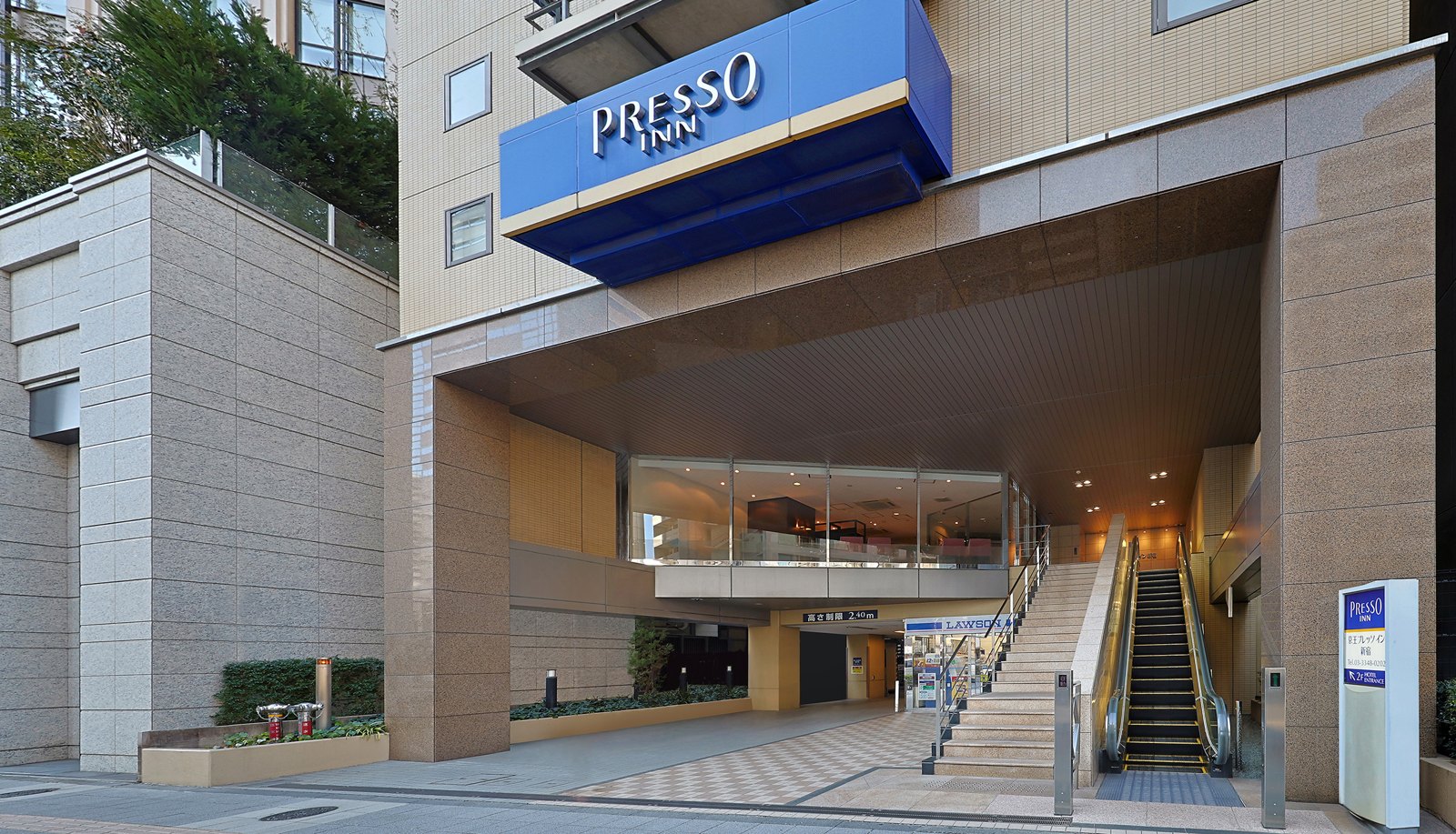
The half-year before the failure, by contrast, was strong. According to reference figures in the same document, the hotel business posted operating revenue of about ¥30.0 billion for the first half (April to September; plan ¥29.3 billion, prior year ¥28.7 billion) and operating profit of about ¥6.0 billion (plan ¥4.8 billion, prior year ¥5.8 billion), with the explanation that “room rates continued to rise from the previous year, resulting in higher revenue and profit versus plan” and that “the impact of the system failure on second-quarter results was minor.” The company notes that these reference figures may be revised depending on the investigation and the auditor’s interim review. Given that the attack was detected on September 26, with only five days left in the first half, the impact can be expected to show up in the numbers from the second half onward.
At the time of the attack, nine Keio Presso Inn properties were in operation: Shinjuku, Otemachi, Nihonbashi Kayabacho, Gotanda, Ikebukuro, Tokyo Kudanshita, Akasaka, Tokyo Station Yaesu and Hamamatsucho. Kanda closed on September 13, 2026 in line with a plan announced in October 2025 and is unrelated to this failure. Keio Plaza Hotel (京王プラザホテル), also part of the Keio Group, has likewise posted a notice on its official website about a system failure caused by the ransomware attack.
From September 26 to December: the timeline from published materials
Laid out as a timeline, the impact clearly did not stop at reservations; it spread step by step to front desk operations, payments, customer inquiries and accounting. Everything below is based on materials published by Keio Corporation and Keio Presso Inn.
| Date | Published event | Source |
|---|---|---|
| September 26, 2026 | A ransomware attack on Keio Group servers is detected in the early morning. Measures to prevent further damage, such as cutting off networks, are taken, and an investigation begins with the police and outside experts. Rail and bus operations are unaffected. Keio Presso Inn announces at 9:10 that check-in and check-out will take longer, and at 23:00 that it is suspending new reservations for the time being | Keio Corp. 1st report / Keio Presso Inn notice |
| September 28 | Self check-in kiosks are shut down and procedures switch to the staffed front desk only. Smart TVs and Wi-Fi are also suspended (notice at 15:00) | Keio Presso Inn notice |
| From September 29 | Credit card payments that had been suspended at some retail stores are progressively restored at Keio Store | Keio Corp. Nov 17 disclosure |
| From October 10 | Keio Points issuance and redemption, which had been suspended, are progressively restored at Keio Store | Keio Corp. Nov 17 disclosure |
| October 16 | The company confirms that an organization claiming responsibility for the attack says it has published part of the information held by the group (2nd report) | Keio Corp. 2nd report |
| October 21 | After outside experts report that information has been published, the company reports to the Personal Information Protection Commission, judging that personal data may have leaked (3rd report) | Keio Corp. 3rd report |
| October 23 | Keio Presso Inn Wi-Fi resumes (notice at 13:30). Self check-in kiosks and smart TVs remain suspended | Keio Presso Inn notice |
| October 26 | At three properties (Nihonbashi Kayabacho, Gotanda and Tokyo Kudanshita), some credit card brands (JCB, American Express, Diners Club) and QR code payments (all services) become unavailable for the time being (notice at 12:30) | Keio Presso Inn notice |
| October 30 | Discloses that, with systems including accounting temporarily shut down, closing work is delayed and the second-quarter earnings release scheduled for November 10 is postponed | Keio Corp. Nov 17 disclosure |
| November 17 | Discloses the business progress presentation, publishing the October-December occupancy outlook for Keio Presso Inn and an expected cumulative lodging revenue decline of about ¥1.8 billion over three months | Keio Corp. Nov 17 disclosure |
| Late November (planned) | Final report on the results of the data leak investigation to be submitted to the Personal Information Protection Commission | Keio Corp. Nov 17 disclosure |
| December 4 (planned) | Postponed second-quarter earnings release | Keio Corp. Nov 17 disclosure |
| Around December (planned) | Keio Presso Inn resumes accepting new reservations | Keio Corp. Nov 17 disclosure |
Source: Compiled by the editors from Keio Corporation, “Notice and Apology Regarding System Failure Caused by Ransomware Attack” (1st to 3rd reports); Keio Corporation, “FY2026 Second Quarter Business Progress Presentation” (November 17, 2026); Keio Presso Inn, “Notice of System Failure” (last updated October 26, 2026)
On the data leak, the company said as of November 17 that it had confirmed the possibility of a leak and that a full forensic investigation by outside experts was under way. The number of records and the types of information involved have not been disclosed. Nor has the company named the organization claiming responsibility for the attack.
The occupancy outlook: about 30% lower in October, 70% in November, 80% in December
Page 7 of the same document shows monthly occupancy for all Keio Presso Inn properties. It ran at 90.4% in April, 89.2% in May, 88.1% in June, 90.4% in July and 81.7% in August, and September was 88.3% on a provisional basis as of the 25th. For October onward, the outlook versus the annual plan is “about 30% lower” in October, “about 70% lower” in November and “about 80% lower” in December. Read off the chart by the editors, these levels correspond to roughly 60% in October, 30% in November and 20% in December (the document shows no data labels, so these are read from the axis scale). The annual plan line also carries no figures.
Source: Compiled by the editors from Keio Corporation, “FY2026 Second Quarter Business Progress Presentation” (November 17, 2026). April-August are actual results, September is a provisional figure as of September 25, and October-December are the company outlook (read from the chart by the editors)
The scale of ¥1.8 billion is easier to grasp when set against the company’s hotel business plan. The full-year plan for the hotel business (announced May 13) calls for operating revenue of ¥61.1 billion and operating profit of ¥8.8 billion, so ¥1.8 billion is equivalent to about 3% of full-year planned operating revenue. Looking at the second half alone, the denominator becomes ¥31.8 billion (the full-year plan of ¥61.1 billion minus the first-half plan of ¥29.3 billion), and the ratio rises to about 6%. Note, however, that the hotel business also includes other properties such as Keio Plaza Hotel, so these ratios do not represent the revenue decline rate of Keio Presso Inn on its own.
| Comparison (hotel business, operating revenue) | Amount | ¥1.8bn as share | Calculation |
|---|---|---|---|
| FY2026 full-year plan (announced May 13) | ¥61.1 billion | about 3% | 1.8 ÷ 61.1 = 2.9% |
| Second-half plan (full-year plan − first-half plan) | ¥31.8 billion | about 6% | 61.1 − 29.3 = 31.8; 1.8 ÷ 31.8 = 5.7% |
| First half (April-September) reference figure | about ¥30.0 billion | — | Plan ¥29.3 billion; prior year ¥28.7 billion |
Source: Compiled by the editors from Keio Corporation, “FY2026 Second Quarter Business Progress Presentation” (November 17, 2026). Ratios calculated by the editors. First-half figures are reference values and may be revised
What stands out is that the company also laid out a path to recovery. The document states that “by resuming new reservations as soon as the system is restored, results are expected to turn toward recovery.” Occupancy that fell when bookings stopped will begin to come back when bookings resume. The booking curve, examined next, is the key to understanding this symmetry.
Why occupancy moves so much within months: Tokyo business hotels add 34 points in the last 45 days
Business hotel bookings concentrate just before the stay date. In MetroEngines Research data for Tokyo business hotels for October 2026 stays (541 hotels / 78,615 rooms, based on listings on major booking sites, average of 31 stay dates), occupancy (estimated from OTA-listed inventory) was 61.6% at 45 days before the stay date, 70.7% at 30 days, 83.1% at 14 days, 88.1% at 7 days and 95.8% on the day before. At 45 days out, only about 64% of the day-before level, or roughly two-thirds, had been booked; the remaining 34 points or so accumulated in the final 45 days, and about 25 points of that in the final 30 days.
Source: MetroEngines Research; compiled by the HotelBank Editorial Team. Tokyo, business hotels. October 2026 stays = 541 hotels / 78,615 rooms; September 2026 stays = 550 hotels / 79,533 rooms (based on listings on major booking sites; monthly average across stay dates)
| Days before stay date | October 2026 stays | September 2026 stays |
|---|---|---|
| 45 days before | 61.6% | 51.9% |
| 30 days before | 70.7% | 60.2% |
| 14 days before | 83.1% | 72.9% |
| 7 days before | 88.1% | 79.3% |
| Day before | 95.8% | 90.3% |
| Gain from 45 days before to day before | +34.2pt | +38.4pt |
| Gain from 30 days before to day before | +25.1pt | +30.1pt |
| Coverage | 541 hotels / 78,615 rooms | 550 hotels / 79,533 rooms |
Source: MetroEngines Research; compiled by the HotelBank Editorial Team. Occupancy (estimated from OTA-listed inventory) is an estimate based on how inventory sold on OTAs is taken up and differs from actual property-wide occupancy
Note: Booking curve = the change in OTA rooms remaining toward the check-in date. Lead time (LT) = days until check-in. OCC (occupancy) = rooms sold as a share of total rooms in the area (an estimate based on OTA sales inventory). The curves in this article cover 45 days before the stay date through the day before.
The shape is the same for September stays (550 hotels / 79,533 rooms). Occupancy rose 38.4 points from 51.9% at 45 days out to 90.3% on the day before, and 30.1 points even from 30 days out. The level is lower than in the peak month of October, but the structure of late-surging bookings is shared. In other words, the bookings visible a month and a half before the stay date are only part of the total; the rest sit in the future as “bookings still to come.” The basics of reading a booking curve are explained in What Is a Booking Curve? Tokyo Business Hotels Go 61.6% to 95.8%.
With this shape in mind, it becomes clear what happens when new bookings are cut off. Reservations already on the books at the time of the halt remain, but the bookings that would have come in afterward never accumulate. Counting from September 26, October stay dates were 5 to 35 days out at the time of the halt, November stay dates 36 to 65 days out, and December stay dates 66 to 96 days out. For October, bookings were cut off after a fair amount had already accumulated, whereas for most of November and for December, the halt came before bookings had started to arrive in earnest even across the market as a whole. The longer the halt lasts, the more the remaining bookings for the affected months are limited to those made early, and the wider the gap grows. The outlook Keio Corporation presented, about 30% lower in October, 70% in November and 80% in December, can be described as consistent with the shape of this curve.
That said, what is shown here is the average shape for Tokyo business hotels as a whole, not how bookings actually come in at Keio Presso Inn. Depending on the share of corporate contracts and member bookings, and the mix of multi-night stays, each property’s curve can run earlier or later. The comparison in this article is limited to explaining a structure: the more a segment relies on late bookings, the faster a booking halt shows up in occupancy.
It hit a peak season and a rising-rate phase: Tokyo business hotel ADR up 14.0% YoY in October
The booking halt coincided with one of the strongest demand periods of the year for the Tokyo lodging market. The estimated settled ADR for Tokyo business hotels was about ¥17,500 (N=913) in October 2026, a finalized month, up 14.0% from about ¥15,300 a year earlier. November stands at about ¥19,700 (N=904, +19.4% YoY) and December at about ¥18,000 (N=894, +18.4% YoY), but these two months are estimates based on listed rates at the time of the survey and cannot be read with the same precision as a finalized month. Year-on-year changes by segment in Tokyo are analyzed in detail in Tokyo City Hotel ADR: −10.3% Sep to −0.7% Oct; Business Hotels +14.0%.
Source: MetroEngines Research; compiled by the HotelBank Editorial Team. Estimated settled ADR for Tokyo business hotels (tax-excluded equivalent). November and December 2026 are estimates based on listed rates at the time of the survey
| Stay month | 2025 | 2026 | YoY | Properties covered (2026) | Basis |
|---|---|---|---|---|---|
| October | ¥15,348 | ¥17,491 | +14.0% | N=913 | Finalized month |
| November | ¥16,540 | ¥19,742 | +19.4% | N=904 | Estimate based on listed rates at time of survey |
| December | ¥15,211 | ¥18,014 | +18.4% | N=894 | Estimate based on listed rates at time of survey |
Source: MetroEngines Research; compiled by the HotelBank Editorial Team
Keio Corporation also described its first-half hotel business by saying that “room rates continued to rise from the previous year,” which matches the direction of the market as a whole. When rates are rising, the lodging revenue lost on each unsold room is larger too. Even with the same drop in occupancy, the monetary impact differs depending on whether it falls in a peak season and where rates stand, and operators should keep this in mind as a premise when building their own estimates.
Knock-on effects on operations: front desk, payments, inquiries and accounting
The published materials show that operations other than reservations were also affected. According to the Keio Presso Inn notice, self check-in kiosks were shut down on September 28, and check-in and check-out switched to the staffed front desk only. The company advises that procedures take longer than usual. At limited-service hotels designed around reduced staffing, a kiosk outage translates directly into a rethink of front desk staffing.
On payments, on October 26, a month after the incident, some credit card brands and QR code payments became unavailable for the time being at three properties. In-room smart TVs and Wi-Fi were also suspended, with Wi-Fi resuming on October 23. In addition, the inquiry form has stopped accepting submissions, and the company has announced that it cannot confirm the receipt status or content of inquiries sent before the failure.
At the group level, the temporary shutdown of systems including accounting delayed closing work, and the second-quarter earnings release was postponed from November 10 to December 4. The company says it will pay the interim dividend of ¥11.0 per share as planned. Card payments at retail stores and Keio Points were also affected, but both were progressively restored at Keio Store from September 29 and October 10, respectively. Rail and bus operations have not been disrupted.
Recovery timelines in the statistics: just over half within a month; only 20 of 99 restored from backups
Incidents like this are not peculiar to the lodging industry. According to the National Police Agency’s “Threats in Cyberspace in 2025”, reported ransomware cases stayed high at 226 in 2025, with small and medium-sized companies accounting for about 60% of victims. In IPA’s “10 Major Information Security Threats 2026”, “damage from ransom attacks” also ranks first in the organizational category.
A survey the National Police Agency conducted among affected companies and organizations shows how recovery time and cost are distributed. Of 107 valid responses on the time needed for recovery, 60 (just over half) took less than a month, while 7 took two months or more and 25 were still recovering at the time of the response. On total investigation and recovery costs, 46 of 89 valid responses, more than half, reported ¥10 million or more. On backups, only 20 of 99 valid responses were able to restore from them.
| Question (valid responses) | Category | Count | Share |
|---|---|---|---|
| Time required for recovery (N=107) | Immediate to under 1 week | 29 | 27% |
| 1 week to under 1 month | 31 | 29% | |
| 1 month to under 2 months | 15 | 14% | |
| 2 months or more | 7 | 7% | |
| Still recovering | 25 | 23% | |
| Total investigation and recovery cost (N=89) | Under ¥1 million | 16 | 18% |
| ¥1 million to under ¥5 million | 18 | 20% | |
| ¥5 million to under ¥10 million | 9 | 10% | |
| ¥10 million to under ¥50 million | 32 | 36% | |
| ¥50 million to under ¥100 million | 9 | 10% | |
| ¥100 million or more | 5 | 6% | |
| Result of restoring from backups (N=99) | Restored | 20 | 20% |
| Could not restore | 79 | 80% |
Source: Compiled by the editors from National Police Agency, “Threats in Cyberspace in 2025” (March 2026). Shares calculated by the editors (may not total 100% due to rounding)
Keio Presso Inn stopped taking new reservations on September 26, and resumption is scheduled for around December, so the halt will exceed two months. Against this distribution, it falls on the “two months or more” side. Responses that took a month or longer to recover, or were still recovering at the time, total 47 (44%), confirming that outages measured in months are not unusual in the statistics either.
Points for lodging operators to review in normal times: four layers of reservations, front desk, payments and restoration
To sum up so far: the impact of a booking halt is determined not by “the number of days stopped” but by “the volume of bookings that would have come in while stopped,” and the higher a segment’s share of late bookings, the faster it shows up in occupancy. The following are general review items that can be drawn from the published facts and statistics in this case; they are not an assessment of any particular company’s response.
| Review point | What to confirm | Corresponding published fact / statistic |
|---|---|---|
| Alternative booking channels and a target time to resume | If your own booking channel stops, which of phone, corporate desk or external sales channels will keep taking bookings? How many days will you set as the target for resuming bookings? | New bookings suspended from September 26; resumption planned around December |
| Protecting the existing reservation ledger and offline access | Are reservation lists and payment status for today onward regularly exported in a form you can consult even when core systems are down? | Stays on existing reservations accommodated as scheduled |
| Front desk staffing switchover plan | Procedures for staffed check-in if automated kiosks stop, and arrangements for extra staff at peak times | Self check-in kiosks shut down; procedures at staffed front desk only |
| Payment redundancy | Alternatives when some card or QR code payments are unavailable, and the wording of advance notices to guests | Three card brands and QR code payments unavailable for the time being at three properties |
| Alternative inquiry channels | Contact points if forms or e-mail stop, and how to trace inquiries received before the failure | Inquiry form suspended; inquiries from before the incident cannot be confirmed |
| Verifying backup restoration | Not whether backups are taken, but whether you regularly test that they can actually be restored. Is there storage isolated from the network? | NPA survey: only 20 of 99 were able to restore |
| Continuity of accounting and closing work | Monthly closing if accounting and settlement systems stop, and the knock-on effect on disclosure schedules | Earnings release postponed after accounting systems were temporarily shut down |
| Scope of cyber insurance coverage | Beyond investigation and recovery costs, is lost income from scaled-back operations covered? Waiting periods and limits | NPA survey: investigation and recovery costs of ¥10 million or more in 46 of 89 |
Source: Compiled by the editors from materials published by Keio Corporation and Keio Presso Inn and from National Police Agency materials
The first thing operators should check is alternative booking channels and a target for resuming bookings. Because Tokyo business hotels add about 25 points in the final 30 days, a one-month halt means losing the chance to capture roughly a quarter of the bookings for stay dates over the following month. If you know your own booking curve by stay date, you can estimate in advance “how many points occupancy will move in which stay month if bookings stop for N days,” which gives you a basis for deciding how much to invest in alternative channels.
Next, it is effective to make sure the existing reservation ledger can be consulted outside the core system. In this case, stays on existing reservations were accommodated as scheduled, which suggests that keeping reservation information accessible is the foundation for protecting near-term lodging revenue. For the front desk, procedures and backup staffing for days when kiosks cannot be used should be prepared with arrival peaks on busy days in mind.
From an investor’s perspective, the case shows once again how heavily limited-service hotel earnings depend on the continuity of booking intake. When evaluating properties or operators, there is room to add items such as the diversity of booking channels, the frequency of backup restoration tests and the scope of insurance coverage to the checklist, alongside track records on occupancy and rates. On coverage in particular, the meaning changes significantly depending on whether lost income from scaled-back operations is covered, not just investigation and recovery costs. The same logic applies to building preparedness for business continuity, including natural disasters, into the evaluation of a hotel site.
What comes next: final report in late November, earnings on December 4, bookings resuming around December
The company has announced three upcoming milestones. In late November, the results of the data leak investigation are to be submitted to the Personal Information Protection Commission as a final report, and on December 4 the postponed second-quarter earnings are scheduled for release. Then, around December, Keio Presso Inn is expected to resume accepting new reservations. All of these are plans based on what was published as of November 17, 2026, and may change.
Once bookings resume, the nature of the booking curve means reservations will start coming in for the nearest stay dates first. Because Tokyo business hotels accumulate heavily between 30 days out and the day before, the distance between the timing of resumption and stay dates over the year-end holidays and January will shape how quickly recovery takes off. At the December 4 earnings release, the focus is likely to be how much of the examination of the impact on full-year results is disclosed.
Frequently asked questions
Q. Is ¥1.8 billion the decline in Keio Presso Inn’s profit?
A. No. It is an expected decline in lodging revenue, not profit. Keio Corporation says a decrease in lodging revenue of about ¥1.8 billion is expected cumulatively over the three months of October to December, and that the impact on full-year results is “currently under examination.”
Q. What is happening with existing reservations?
A. Keio Presso Inn has announced that stays already booked will be accommodated as scheduled. What has been suspended is acceptance of new reservations from September 26 onward; check-in and check-out are handled at the staffed front desk, and the company advises that procedures take longer than usual.
Q. When will new reservations resume?
A. Keio Corporation’s November 17 document says they are “scheduled to resume around December 2026.” No specific date had been announced as of that day.
Q. Why does occupancy fall so sharply when there are existing reservations?
A. Because business hotel bookings concentrate just before the stay date. For Tokyo business hotels, October 2026 stays saw occupancy (estimated from OTA-listed inventory) climb about 34 points from 61.6% at 45 days out to 95.8% on the day before (541 hotels / 78,615 rooms). When bookings stop, that late build-up is lost.
⚠ Note on ADR for future dates: ADR in this article is the average of selling prices published on OTAs at the time of the survey and will change as the check-in date approaches. Please note that prices currently set high may fall through last-minute discounting.
Summary
The Keio Presso Inn case showed, in published figures, that the failure of a single function, taking reservations, can move occupancy and lodging revenue substantially for months ahead. In the company’s outlook, occupancy versus the annual plan falls about 30% in October, 70% in November and 80% in December, and lodging revenue is expected to decline by about ¥1.8 billion over the three months. Behind this lies a demand profile supported by late bookings: Tokyo business hotels add about 34 points between 45 days before the stay date and the day before.
Put the other way around, once bookings can be accepted again, recovery also begins with the nearest stay dates. The implication for lodging operators is that, in addition to strengthening defenses, they should hold a concrete number of days for how quickly they can substitute each of booking intake, the reservation ledger, the front desk, payments and restoration if they stop. Knowing your own booking curve is the starting point for deciding the level of preparedness that matches those days.
Related Reading
- What Is a Booking Curve? Tokyo Business Hotels Go 61.6% to 95.8%
- Same T-45, 4.7pt Apart by T-1: Tokyo Booking Curves Read at 3 Points
- Tokyo City Hotel ADR: −10.3% Sep to −0.7% Oct; Business Hotels +14.0%
- Okayama Business Hotels Oct 2026: Wed 97.7% vs Sun 78.2%, a 19.5pt Gap
- Sendai Pageant 2026: Opening Fri 81.3%, First Sat 69.3% in Aoba Ward
- Nara Marathon Eve 12/12: Nara City at 88.9% OCC 28 Days Out
- Fukuoka Business Hotel Oct ADR +22.7% YoY, Overtaking City Hotels
References and Sources
■ Materials published by Keio Corporation and Keio Presso Inn
Keio Corporation, “Notice on Business Progress Following the Postponement of Q2 Results for the Fiscal Year Ending March 2027” (November 17, 2026; attachment “FY2026 Second Quarter Business Progress Presentation”)
Keio Corporation, “Notice and Apology Regarding System Failure Caused by Ransomware Attack” (September 26, 2026)
Keio Corporation, “Notice Regarding System Failure Caused by Ransomware Attack, 2nd Report” (October 16, 2026)
Keio Corporation, “Notice Regarding System Failure Caused by Ransomware Attack, 3rd Report” (October 21, 2026)
Keio Presso Inn, “Notice of Keio Presso Inn System Failure” (last updated October 26, 2026, 12:30)
Keio Corporation and Keio Presso Inn, “Closure of Keio Presso Inn Kanda and Future Plans” (October 16, 2025)
Keio Plaza Hotel, “Notice and Apology Regarding System Failure Caused by Ransomware Attack”
■ Government statistics and public materials
National Police Agency, “Threats in Cyberspace in 2025” (March 2026)
IPA (Information-technology Promotion Agency, Japan), “10 Major Information Security Threats 2026” (published January 29, 2026)
■ Market data
MetroEngines Research: booking curves for Tokyo business hotels (October 2026 stays: 541 hotels / 78,615 rooms; September 2026 stays: 550 hotels / 79,533 rooms) and estimated settled ADR (April 2025 to December 2026, N=894 to 924 properties)