


According to the “Notice Concerning Change of Tenant and Operator” released by Invincible Investment Corporation (インヴィンシブル投資法人, 8963) on November 13, 2026, Comfort Hotel Toyama Ekimae (コンフォートホテル富山駅前, 150 rooms) and Comfort Hotel Tsubamesanjo (コンフォートホテル燕三条, 132 rooms) will switch their tenant-operator to Iconia Hospitality in 2027, and their leases will move from a fixed-rent structure to a fixed-plus-variable rent structure. Fixed rent falls from ¥71.8 million to ¥61.3 million a year at Toyama Ekimae and from ¥64.0 million to ¥40.2 million at Tsubamesanjo, while projected annual rent in the stabilized year (year 3) is put at ¥234.9 million (+227.0% vs. current) and ¥150.3 million (+134.6%). This article breaks that single timely disclosure down to the level of individual lease terms and examines how a design that “lowers the fixed floor to capture the upside” affects the REIT’s rental income, set against acquisition prices, room counts and area rate levels.
• ADR (average daily rate) = an estimated settled rate (tax-excluded equivalent) calculated by applying segment-specific adjustment factors to the lowest-plan rate each property publishes on OTAs (per room, two guests per room, tax included). Checked against property-level results disclosed by listed hotel REITs (91 properties, most recent 3 months), the median error is about 7%. These are estimates and differ from each property’s actual settled rates and accounting figures.
• Area-level ADR (prefecture / municipality) is the median of the estimated settled rates of the properties covered (the level of a typical property in the area).
• Where listed prices are mentioned, they are the per-room rate for two guests per room (tax included).
• OCC (occupancy) = rooms sold as a share of total rooms in the area (an estimate based on OTA sales inventory).
• Source: MetroEngines Research (continuously tracks OTA published rates for about 168,000 properties in Japan, of which about 27,000 are confirmed operating)
Room stock in this article covers lodging facilities with 10 or more rooms (excluding leisure hotels) within a 1,000m radius of Comfort Hotel Toyama Ekimae; “operating” means properties with selling prices confirmed on major booking sites in the most recent 3 months (September 2026 to November 2026) (as of November 16, 2026, compiled by MetroEngines Research).
Room stock in this article covers lodging facilities with 10 or more rooms (excluding leisure hotels) within a 1,000m radius of Comfort Hotel Tsubamesanjo; “operating” means properties with selling prices confirmed on major booking sites in the most recent 3 months (September 2026 to November 2026) (as of November 16, 2026, compiled by MetroEngines Research).
- — ¥234.9M and ¥150.3M: projected annual rent in the stabilized year (year 3) at Toyama Ekimae and Tsubamesanjo — +227.0% and +134.6% over current fixed rent of ¥71.8M and ¥64.0M (disclosed figures).
- — Fixed floor cut by −14.6% and −37.2%: fixed rent under the new leases is ¥61.3M and ¥40.2M. Variable rent accounts for about three-quarters of stabilized-year rent.
- — 0.88 correlation between monthly fixed rent and rates: Toyama Ekimae’s fixed rent slopes from ¥8.0M in October to ¥2.3M in January, tracking the seasonality of Toyama City’s estimated settled ADR (November 2025 to October 2026).
- — Gross rent / acquisition price 7.3%→24.0% and 6.3%→14.9%: before expenses and capex, so not an NOI yield. Toyama City’s estimated settled ADR rose +17.2% YoY in October 2026 (N=57 properties).
- — Rent only reaches the fixed floor if revenue falls about 40% short: in a conservative simplified estimate that treats operating costs as fixed, revenue −10% means rent −18.6%.
The Disclosure in Brief — 20-Year Fixed-Term Leases Expire, and the Structure Moves from “Fixed” to “Fixed + Variable”
First, the disclosed facts. Both properties have been operated by Greens Co., Ltd. as tenant-operator under 20-year fixed-term building leases that began in 2007. The Toyama Ekimae lease is due to end on April 24, 2027, but is scheduled to be terminated by mutual agreement as of March 31, 2027; the Tsubamesanjo lease expires on June 30, 2027. The REIT’s asset manager says it solicited successor tenants, compared proposals from several candidates that applied, and selected Iconia Hospitality K.K. (ICN in the disclosure; renamed from MyStays Hotel Management Co., Ltd. in July 2025).
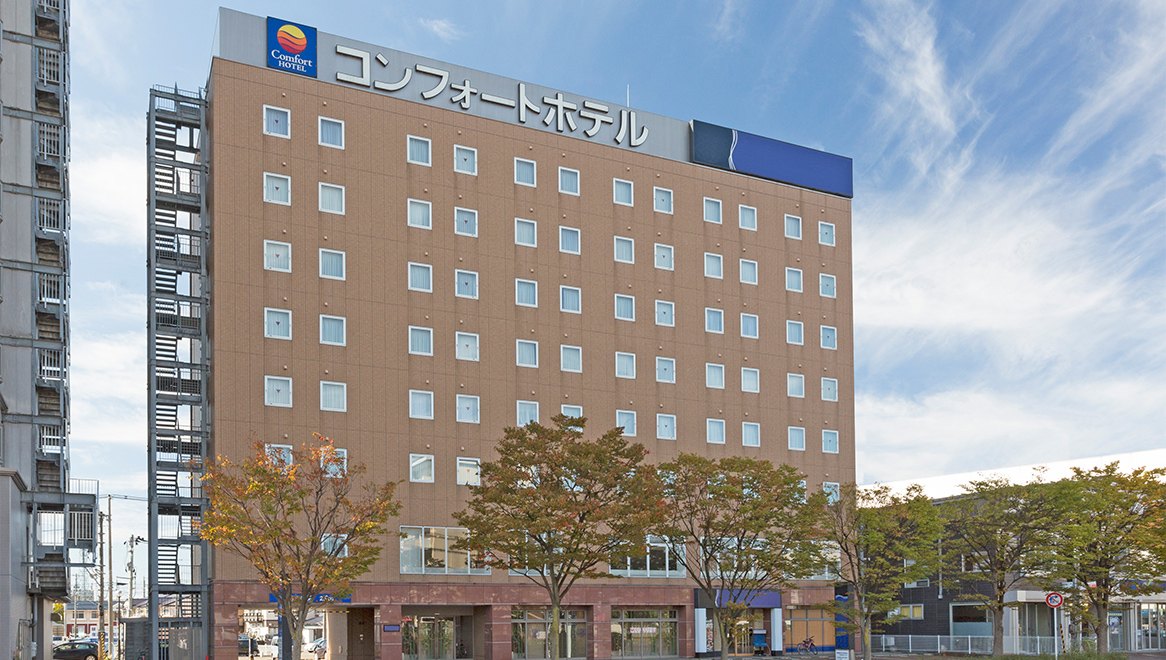
Both new agreements are 10-year fixed-term building leases combined with management agreements, running from April 1, 2027 to March 31, 2037 for Toyama Ekimae and from July 1, 2027 to June 30, 2037 for Tsubamesanjo. The properties are also scheduled to be renamed “Hotel MyStays Toyama Ekimae (tentative)” and “Hotel MyStays Tsubamesanjo (tentative)” on the respective start dates. The current leases are long-term fixed-rent contracts signed in 2007, and current rent is a flat ¥5.98 million and ¥5.34 million a month. The difference in rent levels is best read as a product of the contract structure — fixed versus fixed-plus-variable — rather than of better or worse operations. How revenue is split under each rent structure is covered in Hotel Leasing Explained: Lease vs MC and Rent Types at 4 J-REITs.
| Item | Toyama Ekimae (before) | Toyama Ekimae (after) | Tsubamesanjo (before) | Tsubamesanjo (after) |
|---|---|---|---|---|
| Tenant-operator | Greens Co., Ltd. | Iconia Hospitality K.K. | Greens Co., Ltd. | Iconia Hospitality K.K. |
| Lease term | Apr 25, 2007 – Mar 31, 2027 (early termination by agreement planned) | Apr 1, 2027 – Mar 31, 2037 (10 years) | Jul 1, 2007 – Jun 30, 2027 | Jul 1, 2027 – Jun 30, 2037 (10 years) |
| Rent structure | Fixed rent | Fixed rent plus variable rent | Fixed rent | Fixed rent plus variable rent |
| Fixed rent (annual) | ¥71.8M (¥5.98M a month) | ¥61.3M (set month by month) | ¥64.0M (¥5.34M a month) | ¥40.2M (set month by month) |
| Variable rent | — | Calculated semiannually | — | Calculated semiannually |
| Projected annual rent, stabilized year (year 3) | — | ¥234.9M (+227.0% vs. current) | — | ¥150.3M (+134.6% vs. current) |
| Leased area | 3,305.64㎡ | 3,305.64㎡ | 2,873.90㎡ | 2,873.85㎡ |
| Share of the property’s total leasable area | 100.0% | 100.0% | 92.8% | 92.8% |
Three Layers of Rent — Lowering the Fixed Floor While Widening the Share of the Upside
The first thing that stands out in this renewal is that fixed rent actually goes down. Fixed rent at Toyama Ekimae falls by ¥10.5 million (−14.6%) from ¥71.8 million to ¥61.3 million a year, and at Tsubamesanjo by ¥23.8 million (−37.2%) from ¥64.0 million to ¥40.2 million. Comparing the rent floors alone, the REIT gives up ¥34.3 million a year of guaranteed income across the two properties.
On the other hand, projected annual rent in the stabilized year was disclosed as ¥234.9 million for Toyama Ekimae and ¥150.3 million for Tsubamesanjo. Fixed rent accounts for only 26.1% of that at Toyama Ekimae (61.3÷234.9) and 26.7% at Tsubamesanjo (40.2÷150.3), meaning variable rent carries the remaining roughly three-quarters. Combined, stabilized-year projected rent for the two properties is ¥385.2 million, ¥249.4 million above the current ¥135.8 million. In other words, the REIT lowers its guaranteed floor by ¥34.3 million in exchange for going after a projected ¥249.4 million of upside linked to operating performance.
Each property’s leased area represents 0.3% of the REIT’s total leasable area, and the disclosure describes the impact on results for the fiscal period ending June 2027 as minor. For Toyama Ekimae, the new lease covers only the three months of April to June in the June 2027 period, and fixed rent over that time totals ¥19.2 million (7.5 + 7.9 + 3.8) — nearly the same as three months under the current lease (¥17.9 million). The impact is likely to show up in the numbers from the December 2027 period onward, when variable rent is booked for a full half-year.
Fixed Rent Sloped by Month — Heavy in Peak Months, Light in Slow Months
A term that is easy to overlook is that the new fixed rent is set at a different amount for each month. At Toyama Ekimae, October is the largest at ¥8.0 million, followed by May (¥7.9 million), August (¥7.7 million) and April (¥7.5 million), while January is only ¥2.3 million and February ¥2.6 million. The largest month is about 3.5 times the smallest, and five months — April, May, August, October and November — exceed the current monthly rent of ¥5.98 million. At Tsubamesanjo, August is the largest at ¥5.0 million and December the smallest at ¥1.9 million; every month is below the current monthly rent of ¥5.34 million.
This monthly slope closely matches the seasonality of area rates. According to MetroEngines Research, Toyama City’s estimated settled ADR in 2026 peaked in spring, summer and autumn — ¥8,000 in May, ¥8,500 in August and ¥8,400 in October — with troughs of ¥6,100 in January and ¥5,900 in February. Setting monthly ADR for the latest 12 settled months (November 2025 to October 2026) against Toyama Ekimae’s monthly fixed rent gives a correlation coefficient of 0.88, showing that fixed rent is weighted toward April–May, when the Tateyama Kurobe Alpine Route opens, the summer holidays and the autumn travel season. For the tenant, fixed costs fall in the months when revenue comes in, which steadies cash flow; for the REIT, lightening the fixed burden in slow months can be read as a way to make the whole contract more sustainable.
The Variable Rent Formula — What Remains of Operating Profit After Fees and Fixed Rent Becomes Rent
The disclosure spells out how variable rent is defined. For each six-month period (January–June and July–December), variable rent equals operating profit for the period (gross revenue minus operating and general administrative expenses, excluding the management fee) minus the management fee and fixed rent; if the result is negative, it is set at zero. Put differently, fixed rent plus variable rent equals “operating profit − management fee,” so most of the hotel’s operating profit accrues to the REIT as rent. For another example of a structure that passes operating results through to rent, see our analysis of KDX’s acquisition of ibis Styles Tokyo Bay.
| Step | Description | Accrues to |
|---|---|---|
| 1. Gross revenue | All hotel revenue, including room revenue | — |
| 2. Operating and general administrative expenses | Labor, utilities, sales commissions, etc. (excluding the management fee) | Hotel operating costs |
| 3. Operating profit (1 − 2) | Aggregated semiannually | — |
| 4. Management fee | In principle, 2% of monthly gross revenue + 0–6% of revenue referred through the head-office sales division and the company’s own website + 4–6% of the remaining monthly operating profit (specific rates not disclosed) | Operator |
| 5. Fixed rent | Toyama Ekimae ¥61.3M a year / Tsubamesanjo ¥40.2M a year (set month by month) | REIT |
| 6. Variable rent (3 − 4 − 5) | Zero if negative | REIT |
This structure belongs to the same family as the REIT’s existing leases with ICN. According to the disclosure, as of the announcement date the REIT has lease agreements with ICN covering a total of 101 hotels (including agreements with ICN subsidiaries). In the REIT’s monthly results for September 2026, its 101 domestic hotels posted occupancy of 85.2%, ADR of ¥15,461 and RevPAR of ¥13,178 (+6.8% YoY). The two properties, whose fixed rent meant monthly operating results were never reflected in rent, now join this variable rent framework. Note that ICN is funded by a fund managed by an affiliate of sponsor Fortress Investment Group LLC, and the asset manager discloses that it treated the transaction as one with a quasi-related party and followed the procedures set out in its internal rules.
Measured Against Acquisition Price and per Room — Gross Rent Rises from 7.3% to 24.0% in Toyama and 6.3% to 14.9% in Tsubamesanjo
Next, we gauge scale by dividing rent by the investment amount and room count. According to our J-REIT property holdings data (as of November 9, 2026; N=110 domestic properties of Invincible Investment Corporation), Toyama Ekimae was acquired in July 2015 for ¥979 million and Tsubamesanjo in January 2016 for ¥1,010 million, giving acquisition prices per room of ¥6.53 million (¥979M ÷ 150 rooms) and ¥7.65 million (¥1,010M ÷ 132 rooms).
Dividing annual rent by acquisition price, Toyama Ekimae rises from 7.3% currently (71.8÷979) to 24.0% in the stabilized year (234.9÷979), and Tsubamesanjo from 6.3% (64.0÷1,010) to 14.9% (150.3÷1,010). Note, however, that these are gross ratios before leasing expenses such as property taxes, insurance and repairs, and before capital expenditure — they are not NOI yields. Under variable rent, the split of responsibility for operational renewal capex may also change, so evaluating them as yields will have to wait for the NOI disclosed in financial results (for a sense of renewal capex levels, J-REIT IR disclosures put hotel capital expenditure at roughly ¥130k–¥620k per room per year).
| Metric (calculation) | Toyama Ekimae current | Toyama Ekimae stabilized year | Tsubamesanjo current | Tsubamesanjo stabilized year |
|---|---|---|---|---|
| Annual rent | ¥71.8M | ¥234.9M | ¥64.0M | ¥150.3M |
| Rent / acquisition price (annual rent ÷ acquisition price) | 7.3% | 24.0% | 6.3% | 14.9% |
| Of which: fixed rent only / acquisition price | 7.3% | 6.3% | 6.3% | 4.0% |
| Annual rent per room (÷ rooms) | ¥479k | ¥1.566M | ¥485k | ¥1.139M |
| Rent per available room-night (÷ rooms ÷ 365 days) | ¥1,311 | ¥4,290 | ¥1,328 | ¥3,120 |
| Monthly rent per ㎡ of leased area | ¥1,810 | ¥5,922 | ¥1,856 | ¥4,358 |
Per available room-night, current fixed rent was almost identical at the two properties — ¥1,311 at Toyama Ekimae and ¥1,328 at Tsubamesanjo. In the stabilized year this is projected to become ¥4,290 and ¥3,120, a gap that likely reflects the difference in rate levels between the two markets.
Demand-Side Support — Toyama City’s Estimated Settled ADR Up 17.2% in October, Both Hotels Running at High Occupancy
A switch to variable rent pays off when area rates and occupancy are rising. According to MetroEngines Research, Toyama City’s estimated settled ADR was ¥8,400 in October 2026 (N=57 properties), up 17.2% from ¥7,100 a year earlier. Following August (+13.7%) and September (+15.6%), that makes three straight months of double-digit growth — gains that a fixed-rent contract never passed through to rent.
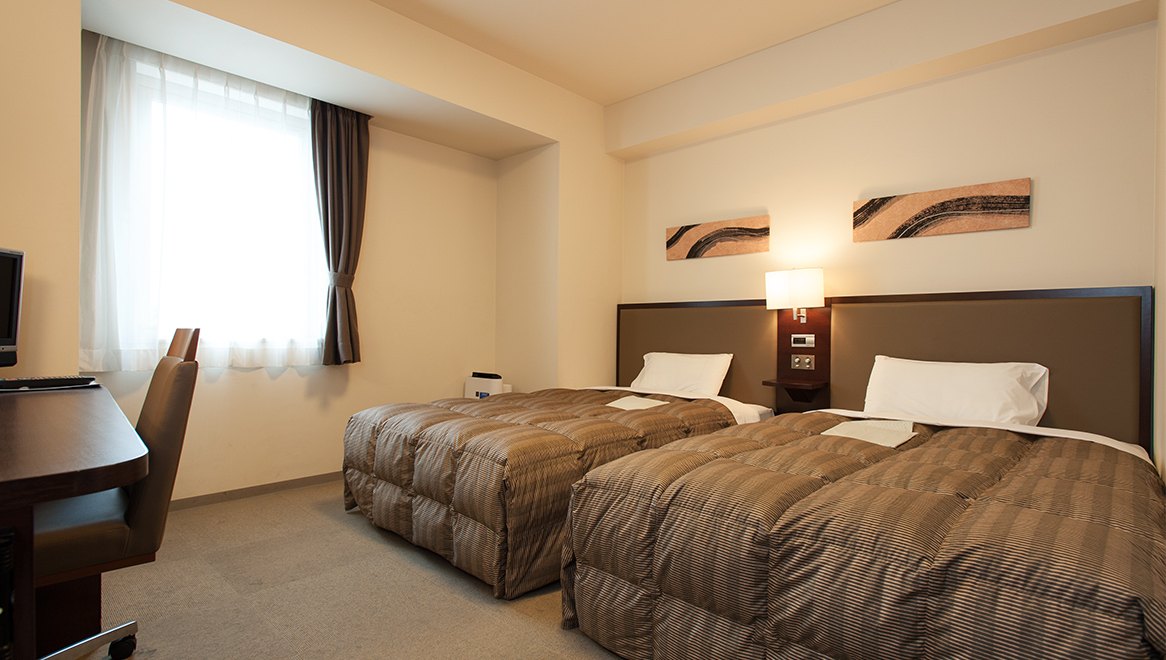
Tsubame-Sanjo Station sits on the border between Tsubame City and Sanjo City, and the property itself is located in Sanjo City. In October, estimated settled ADR rose in Tsubame City to ¥7,100 (N=4 properties, +10.2% YoY), while Sanjo City came in at ¥5,900 (N=9 properties, −8.2%). Both cities have few properties in the sample and swing widely from month to month, so these figures should be treated as indicative with a wide margin.
At the property level, too, both hotels show strong demand. Occupancy in October 2026 (OTA listed-inventory basis, estimated) was 96.1% at Toyama Ekimae (1 property / 150 rooms, based on major booking-site listings) and 91.9% at Tsubamesanjo (1 property / 132 rooms, same basis) — both above 90%. Estimated settled ADR that month was ¥10,900 at Toyama Ekimae (+27.0% YoY) and ¥7,500 at Tsubamesanjo (+3.2%). Prefecture-level occupancy (same basis, estimated) was 93.4% for business hotels in Toyama Prefecture (33 properties / 4,833 rooms) and 88.7% for business hotels in Niigata Prefecture (51 properties / 6,137 rooms), so both properties ran at or above the level of same-segment hotels in their prefectures. The high occupancy built up over 20 years under the current tenant can be said to be the foundation that makes variable rent viable under the next lease.
| October 2026 | Est. settled ADR | Same month last year | YoY | Sample |
|---|---|---|---|---|
| Toyama City | ¥8,376 | ¥7,148 | +17.2% | N=57 properties |
| Comfort Hotel Toyama Ekimae | ¥10,884 | ¥8,570 | +27.0% | 1 property / 150 rooms |
| Tsubame City | ¥7,140 | ¥6,482 | +10.2% | N=4 properties |
| Sanjo City | ¥5,883 | ¥6,406 | −8.2% | N=9 properties |
| Comfort Hotel Tsubamesanjo | ¥7,511 | ¥7,277 | +3.2% | 1 property / 132 rooms |
Location and Supply — Land Prices Near Toyama Station Up 6–10%, Rooms Within 1km Up 38% in 9 Years
Whether rent keeps beating expectations also depends on the strength of the location and on surrounding supply. According to the MLIT Real Estate Information Library, the official land price (as of January 1, 2026) at Sakuramachi 2-chome, Toyama City — about 290m from the Toyama Ekimae property — was ¥654,000/㎡, up 6.2% year on year, and the prefectural land price survey (as of July 1, 2026) at Ushijima-machi, north of the station, was ¥500,000/㎡, up 9.9%. The surroundings are mainly commercial zones with floor-area ratios of 500–600%, and land prices continue to rise around the Hokuriku Shinkansen station. In Tsubamesanjo, the prefectural land price survey at Sugoro 2-chome, Sanjo City — about 210m from the property — was ¥76,500/㎡ (+0.4%), and the official land price at Idomaki 3-chome, Tsubame City was ¥110,000/㎡ (+0.9%), showing only modest increases.
On the supply side, there are 34 operating lodging facilities with 4,649 rooms within a 1km radius of the Toyama Ekimae property (43 facilities and 5,091 rooms on a listed basis). Tracking the properties whose opening year is known, room count rose 38.4% in nine years, from 3,417 rooms in 2017 to 4,728 in 2026, with six properties and 829 rooms opening in the 2020s (two properties with 55 rooms whose opening year is unknown are excluded from the annual series). Even so, the city’s ADR is growing at double digits year on year, which shows that demand around the Shinkansen station has absorbed the added supply. Within 1km of Tsubamesanjo there are 7 operating facilities with 1,252 rooms, a modest 12.5% increase from 1,113 rooms in 2017. All are business hotels, and the seven operating properties each have 101 rooms or more — a market of similarly sized properties side by side.
| 1km radius | Operating | Listed basis | Rooms in 2017 | Rooms in 2026 | Change |
|---|---|---|---|---|---|
| Toyama Ekimae | 34 properties / 4,649 rooms | 43 properties / 5,091 rooms | 3,417 rooms | 4,728 rooms | +38.4% |
| Tsubamesanjo | 7 properties / 1,252 rooms | 8 properties / 1,332 rooms | 1,113 rooms | 1,252 rooms | +12.5% |
What Does Stabilized-Year Rent Assume? — Back-Calculating the Revenue Required (Simplified Estimate)
So what level of revenue do projected rents of ¥234.9 million and ¥150.3 million assume? The disclosure gives no revenue or profit assumptions, so here we back-calculate using three ratios of rent to gross revenue (rent ÷ gross revenue): 45%, 50% and 55%. These three ratios are assumptions set with a range, reflecting the mechanism whereby rent is what remains of the hotel’s operating profit after deducting the management fee (2% of gross revenue + 4–6% of operating profit, etc.).
| Assumed rent ÷ gross revenue | Toyama Ekimae required gross revenue | Same: revenue per room-night | Same: required ADR at 90% occ. | Tsubamesanjo required gross revenue | Same: revenue per room-night | Same: required ADR at 90% occ. |
|---|---|---|---|---|---|---|
| 45% | ¥522.0M | ¥9,534 | ¥10,593 | ¥334.0M | ¥6,932 | ¥7,702 |
| 50% | ¥469.8M | ¥8,581 | ¥9,534 | ¥300.6M | ¥6,239 | ¥6,932 |
| 55% | ¥427.1M | ¥7,801 | ¥8,668 | ¥273.3M | ¥5,672 | ¥6,302 |
For Toyama Ekimae, assuming rent at 50% of gross revenue requires ¥469.8 million a year in revenue, or ¥8,600 per available room-night — equivalent to an ADR of ¥9,500 at 90% occupancy. The hotel’s estimated settled ADR over the latest 12 months (November 2025 to October 2026) averaged ¥8,500 (simple monthly average), and under the 55% assumption the required ADR is ¥8,700, just above the current level. Tsubamesanjo looks similar: against a required ADR of ¥6,900 under the 50% assumption, its estimated settled ADR averaged ¥6,800 a month over the latest 12 months. Given that the stabilized year is year 3 of the lease, the projected rents can be read as figures set on the extension of current rates and occupancy. The view from this estimate is that they are within reach without banking heavily on extra lift from the post-rebrand distribution network or loyalty program.
Sensitivity Analysis — Rent Does Not Reach the Fixed Floor Until Revenue Falls About 40% Short
Under variable rent, the REIT takes on the downside as well as the upside. So we check how far rent would move if stabilized-year revenue came in below plan. The baseline is revenue at a 50% rent-to-gross-revenue ratio (¥469.8 million for Toyama Ekimae, ¥300.6 million for Tsubamesanjo), with the conservative assumption that operating costs do not fall at all as revenue declines; 93.1% of any revenue shortfall — excluding the corresponding decrease in the management fee (about 6.9% = 2% of revenue + 5% of the remainder) — then translates directly into lower rent.
| Stabilized-year revenue | Toyama Ekimae rent | vs. projection | / acquisition price | Tsubamesanjo rent | vs. projection | / acquisition price |
|---|---|---|---|---|---|---|
| As projected | ¥234.9M | — | 24.0% | ¥150.3M | — | 14.9% |
| Revenue −10% | ¥191.2M | −18.6% | 19.5% | ¥122.3M | −18.6% | 12.1% |
| Revenue −20% | ¥147.4M | −37.2% | 15.1% | ¥94.3M | −37.2% | 9.3% |
| Revenue decline at which rent equals current rent | ¥71.8M | Revenue −37.3% | 7.3% | ¥64.0M | Revenue −30.8% | 6.3% |
| Revenue decline at which rent hits the fixed floor | ¥61.3M | Revenue −39.7% | 6.3% | ¥40.2M | Revenue −39.3% | 4.0% |
Under these assumptions, a 10% revenue shortfall cuts rent by 18.6% — a swing that did not exist under fixed rent, and one that clearly reflects a contract in which variable rent makes up about three-quarters of the total. Rent only falls to the level of current fixed rent, however, if revenue falls 37.3% short at Toyama Ekimae and 30.8% at Tsubamesanjo, and it reaches the new fixed floor only with a shortfall of about 40% at both properties. The effect of lowering the floor by 14.6% and 37.2% would surface only in a sharp drop in demand.
ADR × Occupancy Two-Way Sensitivity — Combinations That Reach Stabilized-Year Rent
Table 7 moved only the level of revenue, but in practice revenue is determined by the combination of rate and occupancy. Using the same simplified model as the previous section (baseline revenue at a 50% rent-to-gross-revenue ratio, operating costs treated as fixed, and 93.1% of any change in revenue reflected in rent), we estimated how stabilized-year annual rent changes across two axes: ADR and annual occupancy. All revenue is treated as room revenue.
| ADR (est. settled, tax-excl. equivalent) | Annual occupancy 85% | Annual occupancy 90% | Annual occupancy 95% |
|---|---|---|---|
| ¥8,000 | 144.1 | 164.5 | 184.9 |
| ¥8,500 | 165.8 | 187.5 | 209.1 |
| ¥9,000 | 187.5 | 210.4 | 233.3 |
| ¥9,500 | 209.1 | 233.3 | 257.5 |
| ¥10,000 | 230.8 | 256.3 | 281.8 |
| ¥10,500 | 252.4 | 279.2 | 306.0 |
| ADR (est. settled, tax-excl. equivalent) | Annual occupancy 85% | Annual occupancy 90% | Annual occupancy 95% |
|---|---|---|---|
| ¥6,000 | 99.2 | 112.7 | 126.1 |
| ¥6,500 | 118.3 | 132.8 | 147.4 |
| ¥7,000 | 137.3 | 153.0 | 168.7 |
| ¥7,500 | 156.4 | 173.2 | 190.0 |
| ¥8,000 | 175.5 | 193.4 | 211.3 |
At Toyama Ekimae, projected stabilized-year rent of ¥234.9 million is reached at combinations around ADR ¥9,500 with 90% annual occupancy, or ADR ¥9,000 with about 95%. The hotel’s estimated settled ADR over the latest 12 months (November 2025 to October 2026) averaged ¥8,473 (simple monthly average), and the ADR ¥8,500 / 90% occupancy cell gives ¥187.5 million a year — short of the projection, but about 2.6 times current fixed rent of ¥71.8 million. At Tsubamesanjo, ADR ¥7,000 with 90% occupancy — close to its 12-month average of ¥6,761 — gives ¥153.0 million, slightly above the projected ¥150.3 million. If the rent-to-gross-revenue ratio is set at 55%, the revenue needed for the same rent is about 10% smaller, shifting the threshold lower by about ¥870 in ADR at Toyama Ekimae and about ¥630 at Tsubamesanjo. Every cell in the tables exceeds current fixed rent (¥71.8 million and ¥64.0 million), so unless rates and occupancy break down sharply from current levels, the switch in contract structure works to push rent up.
Implications for Investors and Regional Hotel Owners
J-REIT investors
The impact shows up in the numbers from the December 2027 period onward, when variable rent is booked for a full half-year. Watch whether the two properties are added to the monthly disclosure, and how rent tracks toward the stabilized year.
Analysts
The combined uplift for the two properties is a projected ¥249.4 million a year. The lease expiry dates of the remaining fixed-rent properties could be the next source of internal growth.
Owners of regional hotels
For properties whose long-term fixed-rent leases are expiring, a combination of month-by-month sloped fixed rent and variable rent becomes an option at renewal.
To sum up, this disclosure is a case showing that even for limited-service hotels in regional cities, simply switching the contract structure can substantially change how rent looks, provided the market’s rates and occupancy are rising. From a J-REIT investor’s standpoint, the thing to track is when and to what extent the disclosed stabilized-year rent is realized, through the variable rent booked each half-year. Because variable rent is calculated for January–June and July–December, the results for the December 2027 period (July–December), when the new leases at both properties run for a full half-year, will likely be the first opportunity to confirm actual figures.
For regional owners who hold and lease out hotels, meanwhile, the contract design itself is instructive. Allocating fixed rent by month in line with seasonality is worth considering as a way to balance the tenant’s cash flow with rent certainty. And when introducing variable rent, making it profit-linked — operating profit minus fees and fixed rent — rather than revenue-linked makes it easier to capture the benefit of rising rates. In this form, however, cost increases also hit rent directly, so it is worth building into the contract a reporting framework that allows operating cost levels to be reviewed regularly.
Summary
As the fixed-rent, fixed-term leases that have run since 2007 at its Toyama Ekimae and Tsubamesanjo properties expire, Invincible Investment Corporation is cutting fixed rent to ¥61.3 million and ¥40.2 million and introducing variable rent. Projected annual rent in the stabilized year is ¥234.9 million and ¥150.3 million, lifting the gross ratio to acquisition price from 7.3% to 24.0% at Toyama Ekimae and from 6.3% to 14.9% at Tsubamesanjo. Fixed rent is sloped by month and weighted toward peak months, with a 0.88 correlation to the seasonality of Toyama City rates.
On the demand side, Toyama City’s estimated settled ADR rose 17.2% YoY in October 2026, and occupancy at both properties (OTA listed-inventory basis, estimated) exceeded 90%. In our simplified estimate, the rates needed for the projected rent sit on the extension of current levels, and rent reaches the fixed floor only if revenue falls about 40% short. How much rent this design — lowering the fixed floor to go after the upside — actually generates will be answered by the half-yearly results from the second half of 2027 onward.
Related Articles
- Hotel REIT Fixed Rent vs Rent-Cut Claims: 94% Fixed-Term, 85.6% Locked
- Hotel AGOP Explained: GOP Minus Base Fee; ADR ±5% = AGOP ±9.3%
- New Lease Standard Puts Hotel Leases on Books: ¥1.96bn per 100 Rooms
- Toyama Business Hotels Oct 2026: Sat 97.7% vs Sun 80.7% OCC Gap
- Niigata Hotel ADR Sep/Oct 2026: Business +12.6%→+10.1%, Resorts Flat
- Hotel Leasing Explained: Lease vs MC and Rent Types at 4 J-REITs
- KDX Buys ibis Styles Tokyo Bay for ¥12bn: 4.7% Yield, Variable Rent
- One REIT’s 7 Hotels Cost ¥30.9M a Room: ADR-Led Buys, GOP-Linked Rent
References and Sources
■ Data sources
Invincible Investment Corporation’s timely disclosure (November 13, 2026), monthly operating results (September 2026) and portfolio list; MetroEngines Research estimated settled ADR (Toyama City, Tsubame City, Sanjo City and the two subject properties, settled months from January 2024 to October 2026); estimated occupancy on an OTA listed-inventory basis (October 2026); room stock within a 1km radius (as of November 16, 2026); MLIT Real Estate Information Library (official land prices and prefectural land price surveys).
■ Estimation assumptions
Rent relative to acquisition price, per room and per ㎡ are gross values obtained by dividing disclosed annual rent by acquisition price, room count (150 and 132 rooms) and leased area. Required revenue was back-calculated assuming rent at 45%, 50% and 55% of gross revenue, treating all revenue as room revenue. The sensitivity analysis (Table 7) and two-way sensitivity (Tables 8 and 9) use revenue at the 50% assumption as the baseline, treat operating costs as fixed, and assume 93.1% of any change in revenue (excluding the roughly 6.9% change in the management fee) is reflected in rent. Annual occupancy of 85–95% is an assumed value.
■ Limitations
Estimated settled ADR is estimated from OTA published rates (median error of about 7% when checked against REIT-disclosed results) and differs from each property’s actual settled rates and accounting figures. Tsubame City and Sanjo City have small samples of 4–9 properties and swing widely from month to month. The disclosure gives no revenue or profit assumptions; the rent-to-gross-revenue ratio and the behavior of operating costs are the editorial team’s assumptions, not premises presented by the REIT or the tenant. Actual variable rent will need to be confirmed in financial results for the December 2027 period onward.
■ REIT disclosures
■ Market data
| MetroEngines Research & Consulting — estimated settled ADR (Toyama City N=57 properties, Tsubame City N=4, Sanjo City N=9), occupancy (OTA listed-inventory basis, estimated), room stock within a 1km radius, J-REIT property holdings data (as of November 9, 2026) |
■ Government statistics and public data
■ News, press releases and industry materials
| Iconia Hospitality, “Notice of Corporate Name Change, July 1, 2025” (Japanese) |
| Relo Hotel Solutions, “What Is GOP?” (GOP margin benchmarks by hotel type, Japanese) |