


According to MetroEngines Research data compiled as of November 12, 2026, Nagasaki Prefecture’s 2026 openings (including two properties scheduled to open later this year) total 42 properties and 657 rooms. Vacation rentals account for 19 properties, or 45.2% of the count, while 63.0% of rooms are concentrated in 8 business hotels with 414 rooms. Checking the 5 properties with 50 or more rooms (442 rooms) against operator announcements shows that 2 properties with 174 rooms are rebrands or renovations of existing hotels; net of these, new supply is at most 483 rooms. This article breaks the 42 properties down by type, municipality and opening month, then compares rates and occupancy in Isahaya and Omura (along the Nagasaki Airport and Nishi-Kyushu Shinkansen corridor), where more than half of the rooms went, with Nagasaki City to see which demand is absorbing the new rooms.
• ADR (average daily rate) = estimated settled rate (tax-exclusive equivalent), calculated by applying a segment-specific adjustment factor to the lowest-plan rate each property publishes on OTAs (per room, 2 guests per room, tax-inclusive). Checked against property-level results disclosed by listed hotel REITs (91 properties, most recent 3 months), the median error is about 7%. These are estimates and differ from each property’s actual settled prices and accounting figures.
• Area-level (prefecture / municipality) ADR is the median of the estimated settled rates of the properties covered (the level of a typical property in the area).
• Where listed prices are mentioned, they are per-room rates for 2 guests per room (tax-inclusive).
• OCC (occupancy) = share of rooms sold out of total rooms in the area (estimated from OTA sales inventory).
• Source: MetroEngines Research (continuously tracks OTA published prices for about 168,000 properties in Japan, of which about 27,000 are confirmed operating)
- — 42 properties, 657 rooms: Nagasaki Prefecture’s 2026 openings (as of November 12, including scheduled openings). Vacation rentals make up 45.2% of properties; 8 business hotels with 414 rooms make up 63.0% of rooms.
- — Net new supply of 326–483 rooms: the upper bound after deducting 2 rebranded/renovated properties (174 rooms) is 483 rooms. If the 3 properties (157 rooms) whose history could not be confirmed are all conversions, it falls to 326 rooms.
- — 348 rooms (53.0%) in Isahaya and Omura: estimated settled ADR in October 2026 was ¥6,895 in Isahaya City and ¥6,191 in Omura City, roughly half of Nagasaki City’s ¥13,991.
- — Central Nagasaki runs at about 90% Monday–Thursday: October 2026 occupancy (estimated from OTA listed inventory) was 90.4% in Isahaya and 89.9% in Omura Monday–Thursday, falling to 64.5% and 73.8% on Sundays.
- — Upside lies in rate and weekends: three 2026 openings sell at 1.20–2.05x their city median, and the 63.0% business-hotel share places Nagasaki alongside Kumamoto (63.5%) as Kyushu’s most business-oriented new supply.
Breakdown by Type — Vacation Rentals Lead in Count, Business Hotels in Rooms
First, let us split the 42 properties by type. Vacation rentals are the most numerous at 19 properties, but they total only 37 rooms, and 14 of the 19 are single-unit whole-house rentals. Business hotels, by contrast, number 8 properties with 414 rooms — 19.0% of properties but 63.0% of rooms. The same pattern holds by size: the 5 properties with 50 or more rooms hold 442 rooms (67.3%), while the 30 properties made up of 15 single-room properties and 15 properties with 2–9 rooms account for only 87 rooms (13.2%).
In other words, 2026 in Nagasaki Prefecture was a year in which “small lodgings created the count and a handful of mid-sized business hotels created the rooms.” Resort hotels (2 properties, 72 rooms), ryokan (2, 45 rooms), hostels (4, 39 rooms) and guesthouses (4, 29 rooms) fill the space in between, and no new city hotel or resort with more than 100 rooms appears in the data.
Openings are also uneven by month. February saw 5 properties with 85 rooms, March 2 with 157 rooms and April 7 with 213 rooms: 455 rooms, or 69.3% of the year’s total, reached the market in the three months around the start of the fiscal year. From September onward there were 9 properties with 91 rooms, of which 2 properties in Goto City with 23 rooms (8 rooms scheduled to open November 24 and 15 rooms scheduled for December) were still only scheduled at the time of the survey. Because listings appear several months before opening, note that counts of properties and rooms toward year-end may rise as more listings appear.
Five Properties with 50+ Rooms and a 41-Room Ryokan — Sorting New Openings, Rebrands and Unconfirmed
Next, we look at the origins of the top 6 properties that formed the backbone of room supply. A point that cannot be overlooked in any supply discussion is that existing hotels relaunched under a new name also appear in listings as “openings of that year,” and whether a building was added or only the sign changed makes a real difference to the market. The table below shows the result of checking each property against its operator’s announcements.
| Property | Rooms | Opened | Type | Location and confirmed background |
|---|---|---|---|---|
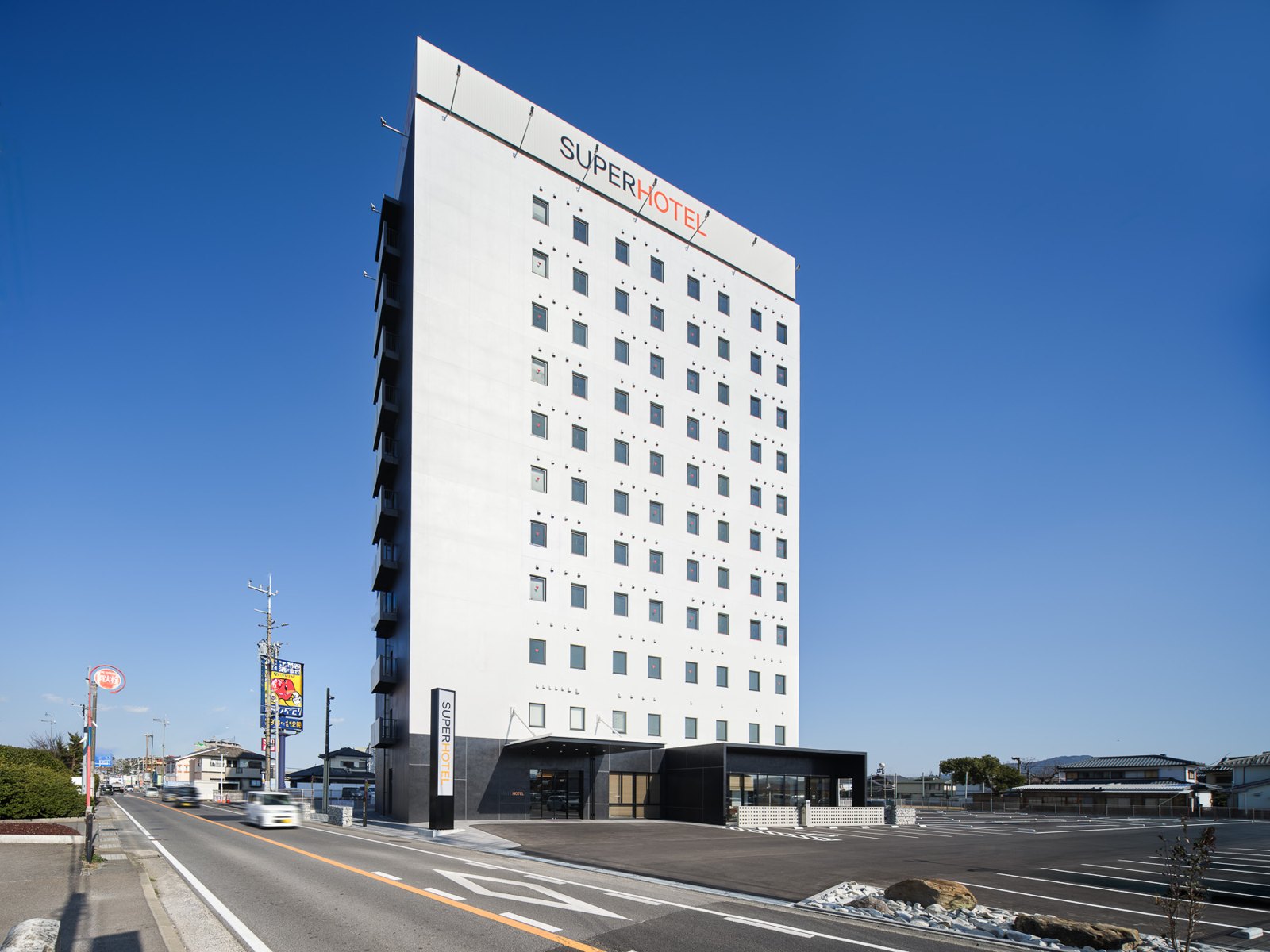
| Super Hotel Nagasaki Isahaya Natural Hot Spring (スーパーホテル長崎・諫早天然温泉) | 152 | Mar 14, 2026 | New opening | Fukuda-machi, Isahaya City. Grand opening March 14, with a natural hot-spring public bath and free parking |
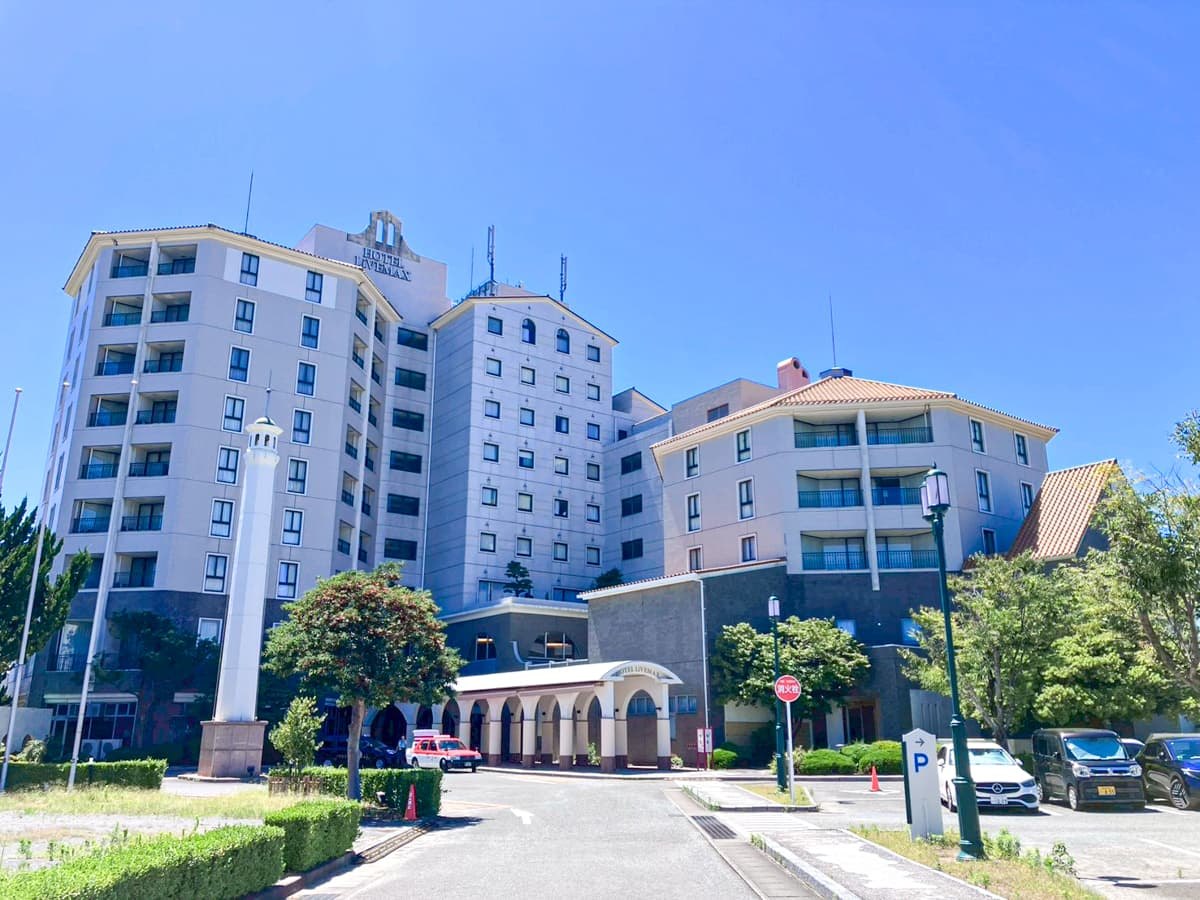
| Hotel Livemax Nagasaki Airport (ホテルリブマックス長崎エアポート) | 117 | Apr 2026 | Rebrand | Kako-machi, Omura City, about 8 minutes by car from Nagasaki Airport. The operator announced it as a “rebrand opening” |
| Hotel & Monthly Isahaya Park (ホテル&マンスリー諫早公園) | 64 | Feb 2026 | Unconfirmed | Uto-machi, Isahaya City, about 12 minutes on foot from Isahaya Station. Long-stay format with a mini kitchen and washer-dryer in every room |
| Oedo Onsen Monogatari Premium Nagasaki Hotel Seifu (大江戸温泉物語Premium 長崎ホテル清風) | 57 (listing basis) | Apr 29, 2026 | Renovation | Otori-machi, Nagasaki City, on the slopes of Mt. Inasa. Renamed from “Oedo Onsen Monogatari Nagasaki Hotel Seifu,” with all guest rooms renovated and a new premium lounge |
| Hotel Starrise Nagasaki (ホテルスターライズ長崎) | 52 | Sep 2026 | Unconfirmed | Takara-machi, Nagasaki City. North of Nagasaki Station, near the Takaramachi tram stop |
| Unzen Obama Sunset Showakan (雲仙小浜サンセット昭和館) | 41 | Jul 2026 | Unconfirmed | Kitahon-machi, Obama-cho, Unzen City, in the Obama Onsen hot-spring town |
The only confirmed new opening is the 152-room Super Hotel Nagasaki Isahaya Natural Hot Spring, the largest in Nagasaki Prefecture in 2026. Hotel Livemax Nagasaki Airport (117 rooms), on the other hand, was announced by its own operator as a rebrand opening, and Oedo Onsen Monogatari Premium Nagasaki Hotel Seifu was likewise a renovation of the same building into a higher-tier brand. The latter has 57 rooms on a listing basis, but publicly available property information also states a total of 100 rooms; here we use the listing-basis figure to keep the tally consistent.
2026 openings on a listing basis: 42 properties, 657 rooms
Of which 2 rebrands/renovations: 174 rooms (Livemax Nagasaki Airport 117 rooms, Nagasaki Hotel Seifu 57 rooms)
Net new after deduction: 483 rooms (73.5% of 657 rooms)
For Isahaya and Omura alone, 117 of the 348 rooms are a rebrand, leaving net new supply of 231 rooms.
However, these 483 rooms should be read as an upper bound. The building history of 3 properties with 157 rooms — Hotel & Monthly Isahaya Park, Hotel Starrise Nagasaki and Unzen Obama Sunset Showakan — could not be confirmed from public sources, and the remaining 36 properties with 174 rooms were outside the scope of the check. If all 3 unconfirmed properties turned out to be conversions of existing buildings, net new supply would fall to 326 rooms. A rebrand does not add rooms; instead it lifts the rate band of the same building through renovation investment, so it is better understood as a change in the “quality” rather than the “quantity” of supply.
Distribution by Municipality — 348 Rooms in Isahaya and Omura, 72 Rooms Across 14 Island Properties
So where in the prefecture did the 657 rooms go? By municipality, Isahaya City leads with 3 properties and 230 rooms, followed by Nagasaki City (9 properties, 140 rooms) and Omura City (2 properties, 118 rooms). Together Isahaya and Omura account for 5 properties and 348 rooms, 53.0% of the prefecture total, of which 3 business hotels hold 333 rooms. Central Nagasaki — home to Nagasaki Airport and two Nishi-Kyushu Shinkansen stations (Isahaya and Shin-Omura) — was thus the center of room supply in 2026.
The distribution by property count, however, looks entirely different. Goto City has 9 properties (53 rooms), matching Nagasaki City, and together with Shinkamigoto Town (4 properties, 17 rooms) and Iki City (1 property, 2 rooms), the three island municipalities account for 14 properties and 72 rooms. These are small lodgings of about 5 rooms each scattered across the islands, mainly guesthouses and whole-house rentals. Unzen City added one 41-room ryokan in Obama Onsen and Sasebo City 4 properties with 31 rooms, both modest compared with central Nagasaki.
Estimated Settled ADR — Nagasaki City +20.2% in October; Isahaya and Omura at Half That Level
Let us check the rates where supply went. Estimated settled ADR in October 2026 (municipal median) was ¥14,000 in Nagasaki City (N=63), up 20.2% YoY; ¥6,900 in Isahaya City (N=21), up 9.5%; and ¥6,200 in Omura City (N=15), up 7.7%. Relative to Nagasaki City, Isahaya is at 0.49x and Omura at 0.44x — central Nagasaki’s rates are about half those of the prefectural capital. Nagasaki Prefecture as a whole stood at ¥8,900 (N=259), up 15.3%.
| Municipality | 2026 openings | Rooms | Est. settled ADR Oct 2026 | YoY | N (properties) |
|---|---|---|---|---|---|
| Isahaya City | 3 | 230 | ¥6,895 | +9.5% | 21 |
| Nagasaki City | 9 | 140 | ¥13,991 | +20.2% | 63 |
| Omura City | 2 | 118 | ¥6,191 | +7.7% | 15 |
| Goto City | 9 | 53 | ¥8,860 | +25.4% | 18 |
| Unzen City | 1 | 41 | ¥17,969 | −0.2% | 29 |
| Sasebo City | 4 | 31 | ¥8,273 | +8.0% | 36 |
| Shinkamigoto Town | 4 | 17 | ¥8,138 | +6.3% | 9 |
| Nagasaki Prefecture | 42 | 657 | ¥8,895 | +15.3% | 259 |
That said, Nagasaki City’s +20.2% should be read in the context of the full year. The city’s 2026 rates were below the prior year for seven consecutive months from March to September, at ¥7,700 in June (−19.9% YoY) and ¥8,300 in July (−21.1%). October includes Nagasaki Kunchi (October 7–9), and while that single month came in well above the prior year, whether it marks a change in trend should be judged once finalized figures for November onward are available.
By contrast, monthly rates in Isahaya and Omura move within a narrow range. Even in 2026, when 152 and 64 rooms were added, Isahaya’s median stayed within ¥6,400–7,300 and exceeded the prior-year month in 7 of the 10 months from January to October. Omura also beat the prior year in 9 of the 10 months from January to October, with growth widening in autumn to +8.1% in September and +7.7% in October. In contrast to Nagasaki City, which swings with tourism seasonality, central Nagasaki shows a flat, year-round rate profile that reflects business demand.
Notably, all three properties that opened in 2026 are selling above their city medians. In October, estimated settled ADR was ¥8,900 at Super Hotel Nagasaki Isahaya Natural Hot Spring (1.29x the Isahaya median), ¥8,300 at Hotel & Monthly Isahaya Park (1.20x), and ¥12,700 at Hotel Livemax Nagasaki Airport (2.05x the Omura median). Added value such as a hot spring, kitchen and laundry facilities, and airport proximity is supporting rates a notch above the existing core price band.
Occupancy (Estimated from OTA Listed Inventory) — 90% Monday–Thursday in Central Nagasaki, 65–74% on Sundays
Rates at half of Nagasaki City’s level do not mean demand is thin. October 2026 occupancy (estimated from OTA listed inventory) was 88.6% in Nagasaki City (63 properties / 3,933 rooms), 85.2% in Omura City (14 properties / 509 rooms) and 82.8% in Isahaya City (15 properties / 846 rooms), against 84.2% for the prefecture as a whole (267 properties / 11,518 rooms). All figures are based on listings on major booking sites.
Splitting by day of week brings out the character of central Nagasaki. Taking a simple average of daily values, Monday–Thursday occupancy was 90.4% in Isahaya and 89.9% in Omura, almost the same as Nagasaki City’s 91.3%. On Sundays, however, it fell to 64.5% in Isahaya and 73.8% in Omura, widening the gap with Nagasaki City’s 79.1%. Weekdays fill as well as the prefectural capital while weekends leave rooms empty — a typical pattern for business locations backed by factories, offices and an airport.
*Occupancy is an estimate based on the sell-through of inventory sold on OTAs and differs from a property’s actual overall occupancy. Because the properties covered by estimated settled ADR and occupancy do not match, values obtained by multiplying the two are indicative only.
Putting these two figures together shows that central Nagasaki’s room to absorb more lies not in “weekday volume” but in “rate” and “weekends.” With Monday–Thursday already at 90%, adding more weekday rooms can capture only limited additional demand. Rather, the issues that will determine the returns on new rooms are the gap with Nagasaki City — similar occupancy at half the rate — and how to fill Sunday vacancies.
Location and Land Prices — Omura’s Commercial Land Rose 3.6%, the Highest Among the Prefecture’s 13 Cities
We also check the locations where rooms went from a land-price perspective. According to the 2026 (Reiwa 8) Official Land Price Publication released by Nagasaki Prefecture (as of January 1, 2026), the average year-on-year change for commercial land was +1.4% for the prefecture, +2.1% in Nagasaki City and +2.0% in Isahaya City, while Omura City recorded +3.6%, the highest among the prefecture’s 13 cities. Omura holds 2 of the top 3 commercial points by rate of change (Matsunami 2-chome +5.4%, Uematsu 2-chome +4.4%), and in residential land, Haraguchi-machi in Isahaya City ranked first in the prefecture at +4.7%.
| Category | Point / City | 2026 price (¥/㎡) | YoY change |
|---|---|---|---|
| Commercial, #1 by change | Matsunami 2-chome, Omura City | 64,100 | +5.4% |
| Commercial, #2 by change | Takara-machi, Nagasaki City | 494,000 | +4.7% |
| Commercial, #3 by change | Uematsu 2-chome, Omura City | 54,500 | +4.4% |
| Residential, #1 by change | Haraguchi-machi, Isahaya City | 62,900 | +4.7% |
| Commercial, city average | Omura / Nagasaki / Isahaya | — | +3.6% / +2.1% / +2.0% |
What stands out here is the gap in absolute levels. Omura’s top-rising point is ¥64,100 per ㎡, only about one-eighth of the ¥494,000 at Takara-machi in Nagasaki City. Takara-machi is where Hotel Starrise Nagasaki (52 rooms) opened in September 2026, and it posted the second-highest rate of increase among the prefecture’s commercial points. Even with rates at half the prefectural capital’s, central Nagasaki’s much lower land costs make mid-sized limited-service hotels viable, which is likely one reason 2026’s rooms concentrated in Isahaya and Omura.
It is also worth gauging the weight of new rooms against existing stock. Within a 3km radius of Super Hotel Nagasaki Isahaya Natural Hot Spring, room stock rose by 216 rooms (22.1%), from 978 rooms in 2025 to 1,194 rooms in 2026 (17 properties with 1,154 rooms in operation). The 3km radius around Livemax Nagasaki Airport in Omura City has 9 properties with 650 rooms in operation; the 117 rooms equal 18.0% of that ring, but as a rebrand they do not raise the ring’s total room count. The 1km radius around Takara-machi in Nagasaki City is dense at 21 properties with 2,080 rooms in operation, and the 2026 increase was only 67 rooms (3.2%).
*Room stock in this article covers lodging facilities with 10 or more rooms (excluding leisure hotels) within a 3,000m radius of Super Hotel Nagasaki Isahaya Natural Hot Spring; “in operation” refers to properties with a sales price confirmed on major booking sites in the most recent 3 months (September–November 2026) (as of November 13, 2026, compiled by MetroEngines Research). Omura covers the 3,000m radius of Hotel Livemax Nagasaki Airport and Takara-machi in Nagasaki City the 1,000m radius of Hotel Starrise Nagasaki, under the same conditions.
2024–2026 Comparison — From Large City Hotels in the Capital to Business Hotels in Central Nagasaki
Comparing the past two years on the same confirmed-listing basis shows that the center of gravity of supply has shifted. In 2024 there were 35 properties with 885 rooms, and two city hotels with 450 rooms — Stadium City Hotel Nagasaki (243 rooms) and Nagasaki Marriott Hotel (207 rooms) — opened in Nagasaki City, accounting for more than half of the rooms. 2025 was small at 28 properties and 206 rooms, with the largest being a 55-room business hotel. 2026, at 42 properties and 657 rooms, has the most properties of the three years, and the core of room supply has switched to business hotels with 414 rooms.
| Year | Properties | Rooms | Business hotels | City hotels | Vacation rentals | Core of room supply |
|---|---|---|---|---|---|---|
| 2024 | 35 | 885 | 246 rooms | 450 rooms | 23 rooms | 2 city hotels in Nagasaki City |
| 2025 | 28 | 206 | 111 rooms | — | 28 rooms | Small to mid-sized, 55 rooms or fewer |
| 2026 | 42 | 657 | 414 rooms | — | 37 rooms | 3 business hotels in Isahaya and Omura |
Looking to 2027 and beyond, Hilton Garden Inn Nagasaki Chinatown (313 rooms, scheduled to open in 2027) is planned near Nagasaki Shinchi Chinatown, which is expected to bring large-scale room supply back to the prefectural capital. 2026, with mid-sized business hotels added in central Nagasaki, can be positioned as a “year of business locations” sandwiched between large openings in Nagasaki City. The pipeline project is covered in detail in our analysis of the 313-room Hilton Garden Inn in Nagasaki Chinatown.
Comparison with Seven Kyushu Prefectures and Sensitivity of Net Supply and Rates — Nagasaki Is Business-Oriented Like Kumamoto, with Upside on the Rate Side
Lining up Nagasaki Prefecture’s 2026 against other Kyushu prefectures on the same confirmed-listing basis makes its character clear. Business hotels account for 63.0% of rooms in Nagasaki, almost the same as Kumamoto’s 63.5% (1,058 of 1,666 rooms). Fukuoka, by contrast, is the largest at 2,094 rooms but only 28.1% business hotels, while Oita (8.8%) and Miyazaki (18.6%) are centered on tourism and resort supply. Meanwhile, Nagasaki’s largest property has 152 rooms, smaller than Fukuoka’s (229 rooms) and Kumamoto’s (232 rooms), reflecting mid-sized business hotels dispersed across central Nagasaki.
| Prefecture | Openings | Rooms | Business hotels | Largest property (rooms) | Est. settled ADR Oct 2026 | YoY | N (properties) |
|---|---|---|---|---|---|---|---|
| Nagasaki | 42 | 657 | 414 (63.0%) | 152 | ¥8,895 | +15.3% | 259 |
| Fukuoka | 104 | 2,094 | 589 (28.1%) | 229 | ¥13,410 | +19.4% | 479 |
| Saga | 19 | 245 | 0 (0.0%) | 126 | ¥12,110 | +1.1% | 156 |
| Kumamoto | 73 | 1,666 | 1,058 (63.5%) | 232 | ¥11,293 | +8.3% | 408 |
| Oita | 64 | 480 | 42 (8.8%) | 93 | ¥15,649 | +7.1% | 470 |
| Miyazaki | 27 | 290 | 54 (18.6%) | 104 | ¥7,128 | +4.5% | 168 |
| Kagoshima | 69 | 585 | 270 (46.2%) | 151 | ¥7,034 | +7.7% | 320 |
Source: MetroEngines Research & Consulting (2026 openings based on confirmed OTA listings as of November 12, 2026, N=398 properties, including openings scheduled for later this year; estimated settled ADR is the prefectural median, tax-exclusive equivalent, finalized months). Figures for prefectures other than Nagasaki are on a listing basis without deducting rebrands or renovations
Rate growth also differs by prefecture. Nagasaki’s estimated settled ADR in October 2026 rose 15.3% YoY, second only to Fukuoka’s +19.4%. Kumamoto was +8.3% and Kagoshima +7.7%. However, Nagasaki’s growth was driven largely by Nagasaki City (+20.2%) in October, which includes Nagasaki Kunchi; central Nagasaki’s Isahaya (+9.5%) and Omura (+7.7%) fall in the same band as Kumamoto and Kagoshima.
Next, we test how much the two central figures in this article — net new supply of 483 rooms and central Nagasaki’s rates — depend on assumptions. Net new supply varies with how the 3 properties (157 rooms) whose building history could not be confirmed are treated. In the scenarios below, only the treatment of these 3 properties is changed.
| Scenario | Assumption | Prefecture net new | Share of 657 rooms | Of which Isahaya & Omura |
|---|---|---|---|---|
| Upper | All 3 unconfirmed properties (157 rooms) are new builds | 483 rooms | 73.5% | 231 rooms |
| Middle | Of the unconfirmed, only Hotel & Monthly Isahaya Park (64 rooms) in central Nagasaki is a conversion of an existing building | 419 rooms | 63.8% | 167 rooms |
| Lower | All 3 unconfirmed properties (157 rooms) are conversions of existing buildings | 326 rooms | 49.6% | 167 rooms |
Source: Estimates by MetroEngines Research & Consulting (based on confirmed OTA listings, N=42 properties) and company press releases. All scenarios deduct the 2 properties (174 rooms) confirmed as rebrands/renovations. The 36 properties (174 rooms) outside the scope of the check were all treated as new openings
Net new supply for the prefecture falls in a range of 326–483 rooms (49.6–73.5% of 657 rooms), and 167–231 rooms for Isahaya and Omura alone. In every scenario, central Nagasaki accounts for more than one-third of the prefecture’s net new supply, so the reading that supply is centered on central Nagasaki does not change.
On the rate side, we gauge the range using room revenue per available room per day, obtained by multiplying estimated settled ADR by occupancy. Rows show the Isahaya City median and the actual rates of the 2026 openings; columns show occupancy levels observed in October 2026 (Isahaya City: Sunday 64.5%, monthly average 82.8%, Monday–Thursday 90.4%).
| Est. settled ADR (Oct 2026) | Occupancy 65% | 70% | 75% | 83% | 90% |
|---|---|---|---|---|---|
| ¥6,895 Isahaya City median | ¥4,480 | ¥4,830 | ¥5,170 | ¥5,720 | ¥6,210 |
| ¥8,283 Isahaya Park actual (1.20x) | ¥5,380 | ¥5,800 | ¥6,210 | ¥6,870 | ¥7,450 |
| ¥8,865 Super Hotel Isahaya actual (1.29x) | ¥5,760 | ¥6,210 | ¥6,650 | ¥7,360 | ¥7,980 |
| ¥10,343 1.5x Isahaya City median (assumption) | ¥6,720 | ¥7,240 | ¥7,760 | ¥8,580 | ¥9,310 |
| ¥12,687 Livemax Nagasaki Airport actual | ¥8,250 | ¥8,880 | ¥9,520 | ¥10,530 | ¥11,420 |
Source: Estimates from MetroEngines Research & Consulting data (estimated settled ADR for October 2026, tax-exclusive equivalent; occupancy estimated from OTA listed inventory, October 2026). Rounded to the nearest ¥10. Because the properties covered by estimated settled ADR and occupancy do not match, read these as indicative levels
Even if occupancy rises 7 points from 83% to 90% at the city median of ¥6,895, room revenue per room per day increases only 8.6%, from ¥5,720 to ¥6,210. By contrast, selling at Super Hotel Nagasaki Isahaya Natural Hot Spring’s actual rate of ¥8,865 at 83% occupancy yields ¥7,360, 18.5% above the median × 90%. This calculation supports the reading from the previous section: whether added value can place rates at 1.2–1.3x has a bigger impact on returns than adding a few points of weekday occupancy.
Implications for Developers, Regional Banks and Operators — Weekdays Are Full; Upside Lies in Rate and Weekends
Central Nagasaki (Isahaya & Omura)
90% Mon–Thu; rates about half of Nagasaki City
Weekday volume is already deep. The 2026 openings, earning 1.2–2.0x the median through amenities such as hot springs, kitchens and airport proximity, show where the rate upside lies.
Nagasaki City
+20.2% in October; below prior year March–September
2026 openings were modest at 9 properties with 140 rooms. Activity centers on rebrands and renovations that lift rate bands, and supply is in a lull until the 313 rooms arrive in 2027.
Islands & Onsen Towns
Small lodgings: 14 properties, 72 rooms
Goto City’s estimated settled ADR rose 25.4% in October. Whole-house rentals and guesthouses of around 5 rooms each create the count, and investment units are small.
To sum up, there are three issues for operators and investors. First, when evaluating new projects in central Nagasaki, look at occupancy by day-of-week pattern rather than the annual average. In a market where Monday–Thursday is already at 90%, returns are determined less by additional weekday sales than by rate design from Sunday into Monday and by capturing weekend tourism, sports and long-stay demand. Second, rate assumptions are closer to reality when based on the actual rates of new properties with added value (¥8,300–8,900 in Isahaya, ¥12,700 near the airport in Omura) rather than on city medians.
Third, in lending and investment screening, it is useful to look separately at what an “opening” actually is. Of 2026’s 657 rooms, at least 174 are rebrands or renovations, which have not increased the area’s total room count. Supply pressure on a net-new basis is smaller than the listed figures suggest, and for existing properties, lifting the rate band through renovation is a realistic option. For break-even levels around Isahaya Station, see our analysis of supply and estimated settled ADR within 2km of Isahaya Station; for rate tiers by municipality, see the Nagasaki Hotel Investment Map 2026.
Frequently Asked Questions
Q. How many hotels opened in Nagasaki Prefecture in 2026?
A. Within the scope tracked by MetroEngines Research, the tally as of November 12, 2026 is 42 properties with 657 rooms (including 2 properties with 23 rooms scheduled to open later this year). Of these, 2 properties with 174 rooms are rebrands or renovations of existing hotels.
Q. Which new opening has the most rooms?
A. Super Hotel Nagasaki Isahaya Natural Hot Spring in Isahaya City (152 rooms, opened March 14, 2026), followed by Hotel Livemax Nagasaki Airport in Omura City (117 rooms, reopened under a new brand in April).
Q. How do hotel rates in Isahaya and Omura compare with Nagasaki City?
A. Estimated settled ADR in October 2026 (city median) was ¥6,900 in Isahaya City and ¥6,200 in Omura City versus ¥14,000 in Nagasaki City — roughly half. Monday–Thursday occupancy (estimated from OTA listed inventory) was about 90% in all three cities.
Summary
Nagasaki Prefecture’s 2026 openings total 42 properties and 657 rooms; vacation rentals created the count and business hotels created the rooms. 53.0% of rooms went to Isahaya and Omura, and net new supply excluding the 2 rebranded/renovated properties (174 rooms) is at most 483 rooms. Central Nagasaki matches Nagasaki City with about 90% Monday–Thursday occupancy, while its rates are at half the level, and the three 2026 openings are selling at 1.2–2.0x their city medians. The picture that emerges from 2026’s openings is that the upside lies not in weekday volume but in rates and weekends. Nagasaki City recovered to +20.2% YoY in October, but confirming whether this is sustained will require finalized figures from November onward.
Notes on the data: Counts of new properties and rooms are based on confirmed OTA listings (as of November 12, 2026) and cover the scope tracked by MetroEngines Research. Because listings appear several months before opening, recent and future months may increase as more listings appear. New-opening/rebrand verification was carried out for the top 6 properties; the remaining 36 properties (174 rooms) were not verified. Estimated settled ADR uses only months finalized at the time of the survey (through October 2026).
Related Articles
Recommended Reading
- West Kyushu’s 12 “Hizen” Municipalities Hold 6,324 Rooms — Sasebo ADR ¥7,376, 22 Onsen Properties and 50 Multi-Bed Properties for Longer Stays
- Nagasaki City Hotels Saw Double-Digit Declines in Estimated Settled ADR in June–July, While Business Hotels Stayed Positive for 7 Straight Months
- Ahead of Nagasaki Kunchi: Business Hotel Estimated OCC 88.8% on the Middle Night (Oct 8), 76.6% on the Final Night (Oct 9) — How Three Nights Fill and Inventory Design
- Where Lodging Grew and Shrank in 2026 — Net Change by Municipality: 3,189 New Openings vs. 1,325 Exits
References and Sources
■ Data Sources
MetroEngines Research & Consulting new-opening data (based on confirmed OTA listings as of November 12, 2026; N=105 properties for Nagasaki Prefecture 2024–2026 and N=398 properties for the 2026 comparison of seven Kyushu prefectures), estimated settled ADR (municipal and prefectural medians, finalized months only), occupancy (estimated from OTA listed inventory, October 2026), and room stock within radius rings. Land prices are from Nagasaki Prefecture, “On the 2026 Official Land Prices — Nagasaki Prefecture Edition”; property backgrounds are from each operator’s press releases.
■ Calculation Assumptions
Net new supply deducts the 2 properties (174 rooms) confirmed as rebrands/renovations, and the scenarios change only the treatment of the 3 properties (157 rooms) whose history could not be confirmed. The 36 properties (174 rooms) outside the scope of the check were treated as new openings. The room-revenue sensitivity table shows indicative values per room per day from estimated settled ADR × occupancy, with rows for the Isahaya City median and the actual rates of the 2026 openings, and columns for occupancy levels observed in October 2026.
■ Limitations
Because listings appear several months before opening, property and room counts may rise toward year-end. New-opening/rebrand verification is limited to the top 6 properties in Nagasaki Prefecture; rebrands are not deducted for other Kyushu prefectures. Occupancy is an estimate based on the sell-through of inventory sold on OTAs, differs from actual overall occupancy, and does not cover the same properties as estimated settled ADR. Estimated settled ADR is an estimate and differs from each property’s actual settled prices and accounting figures.
■ Market Data
| ・MetroEngines Research & Consulting — New-opening data (based on confirmed OTA listings, Nagasaki Prefecture 2024–2026, N=105 properties), estimated settled ADR (municipal medians), occupancy (estimated from OTA listed inventory), room stock within radius rings |
■ Government Statistics and Public Data
| ・Nagasaki Prefecture, “On the 2026 Official Land Prices — Nagasaki Prefecture Edition” (March 17, 2026) |
| ・Ministry of Land, Infrastructure, Transport and Tourism, “Official Land Price Publication” |
■ Press Releases and Company Materials